
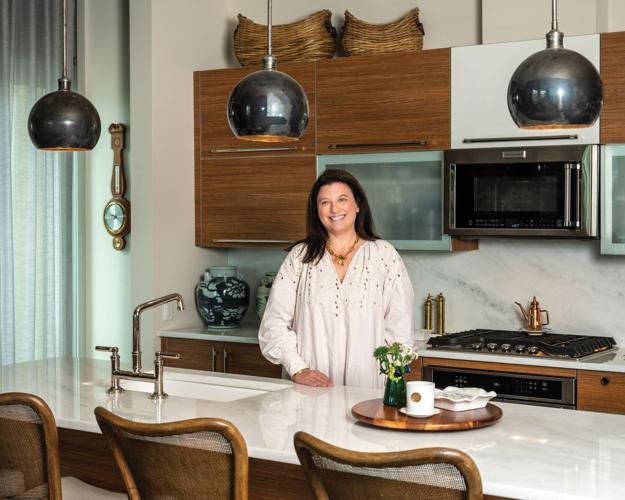
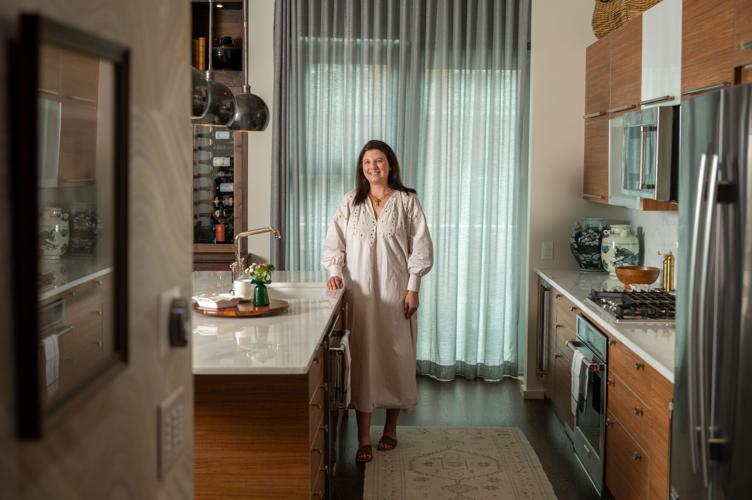
“Networking is a big, important part of this job,” says designer Elizabeth Burch, and she should know. The school-teacher-turned-entrepreneur laid the foundation of her eponymous business when she was working on her own family’s Belmont neighborhood renovation and posting updates on Instagram.
Her photographic vignettes of beautiful objects — a lamp, a vase, a stack of books — struck a chord among shelter scrollers, particularly the audience seeking a comfortable blend of traditional and modern elements.
The network responded. Friends asked Elizabeth to help pull their houses together, and she accepted their projects as practice to see what it might be like to hang out her own shingle. Elizabeth took some drawing classes and leaned into her new career interest.
Five years and 20,000 Instagram followers later, the former teacher is now the principal of a full-service design firm providing floor plans, finish-and-furnishings selection, paint, lighting and layout recommendations, project management, installation, and styling.
Before heading to the University of Alabama, Elizabeth grew up in Brentwood, in a family that inhabited the design world. Her parents owned a carpet-and-flooring store, and her mother did interior design on the side. “I was always along for the ride,” she says, remembering her mother’s projects with wallpaper books and textile samples. “Looking back, I see what she was doing.”
Changing a career can be hard at any age, Elizabeth says, but she encourages people to take the risk if they have an instinct to redirect their talents. And she credits Nashville’s design network for making it possible for her to join the industry so seamlessly.
“Designers here are very open — we share everything,” she says, referring to resources such as skilled craftspeople who can bring a project to reality. “In other cities, people say the design community is hard to crack into, but in Nashville, it’s kind of the opposite of that.”

Elizabeth networks with a group of 30 designers who meet up at different showrooms around town to explore vendors and talk about things going on. “It’s really been great to have that community,” says Elizabeth, as she prepares to visit the Schumacher showroom in New York City.
A mother of young twins, Elizabeth loves working with clients who are empty-nesters, either downsizing to a clean slate or ready to make their family house work for their next phase of life. “They know what they want, and they are waiting for someone to execute,” she explains. “They’re comfortable investing in certain pieces and doing things they’ve been wanting to do.”
For homeowners considering a refresh or glow-up with the goal of an eclectic, comfortable, layered and fun house, Elizabeth offers this advice to potential clients:
1. Hire the designer first, before getting plans drawn.
2. Research to set a realistic budget. Expect a kitchen renovation to cost north of $150,000. Book a call with Elizabeth, who is happy to talk numbers on the front end. “We like to get that out of the way first,” she says.
3. Gather inspiration and things that you like from the internet, Pinterest and Instagram. These tidbits can guide the process of building a mood board of textures, colors, metals and other elements of a personalized look.
Finally, Elizabeth offers this encouragement, which is more about building a life than about designing a house: “For people looking to change what they’re doing, it’s hard, but it can be done.”


Commented
Sorry, there are no recent results for popular commented articles.