
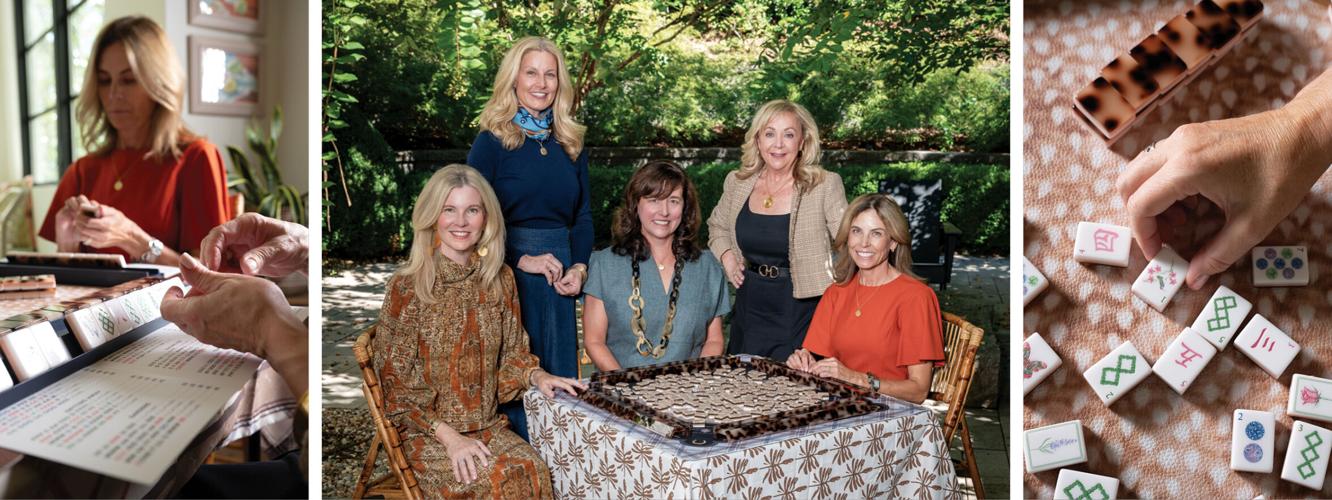
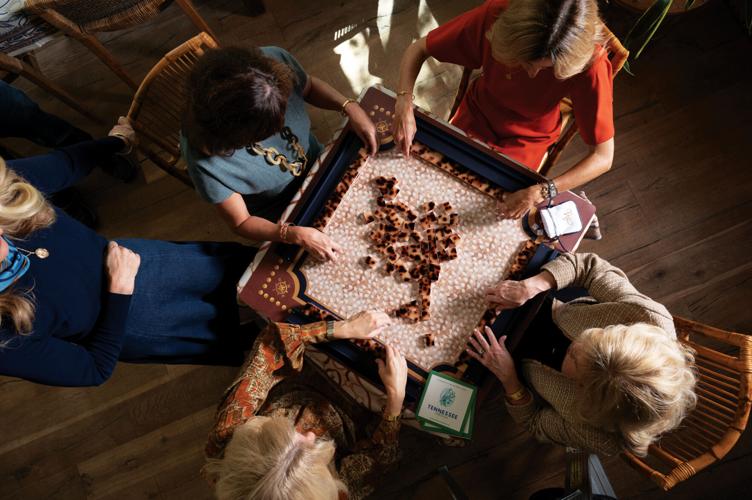
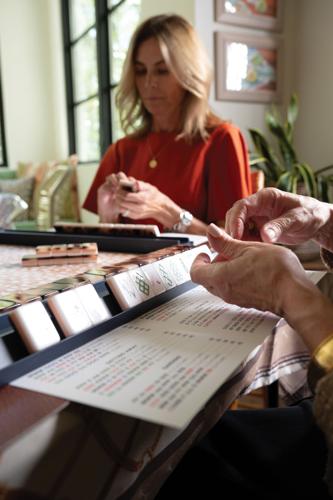
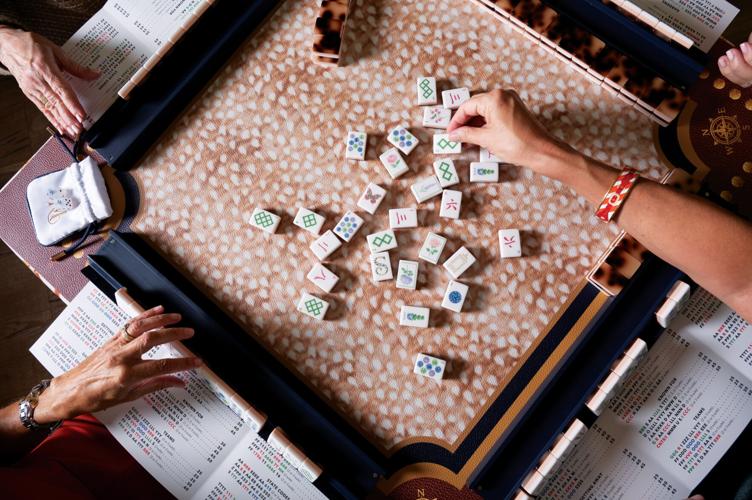
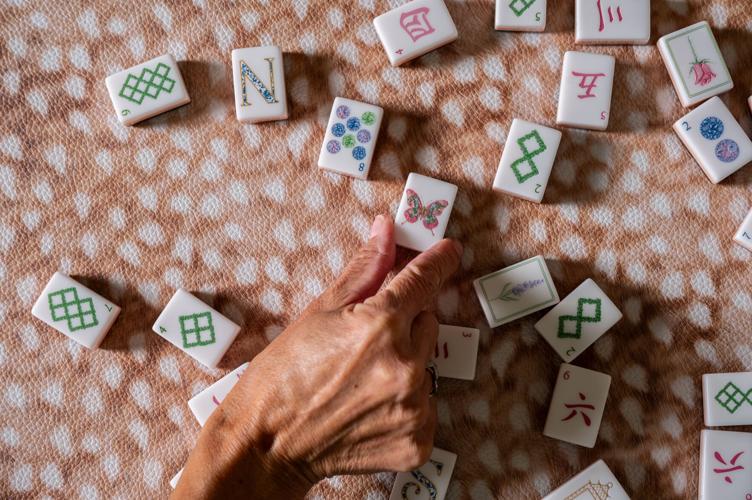
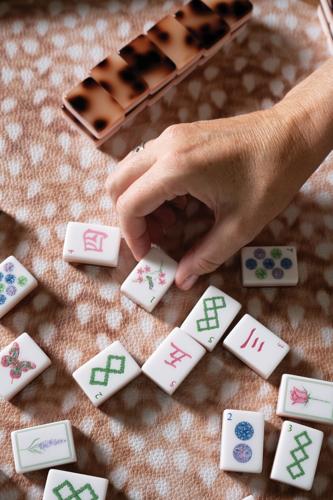
Gathered around tables of four, an artist, an architect, two former sales executives, a communications pro, an accounting wizard, an ad agency director, and others share stories and laughs. The familiar clacking of
tiles sounds like an uneven metronome, signaling the start of the weekly round of mahjong.
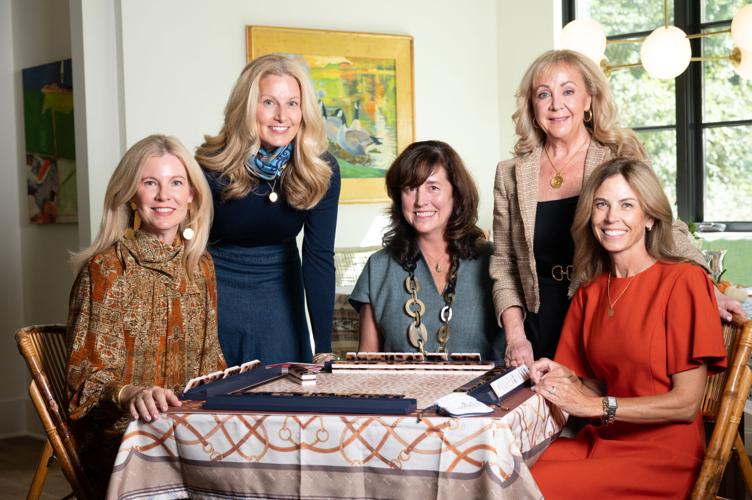
What started as a group of mom friends taking their first lesson has grown into a popular lifestyle brand called Mahjong & Magnolias. With more than 55,000 Instagram followers and a robust website, the brand offers tablescapes, recipes and entertaining ideas, and recently launched its own set of cards.
But mahjong’s popularity extends well beyond Nashville. How has the game embedded itself so deeply into American culture? And what else can it offer beyond a weekly dose of stress relief and a social lifeline for those who might otherwise lack an outlet? It turns out, quite a bit.

A Mysterious Past
While historians continue to debate the exact origins of mahjong — much like the contested origins of chess — most experts agree the game emerged in China during the mid- to late 1800s, with Shanghai playing a significant role in its development and popularity.
The game enjoyed widespread popularity in China, and in 1912, Joseph Parker Babcock, a representative of Standard Oil Company living there with his wife, fell in love with it. Upon his return to the United States in 1920, Babcock introduced mahjong to American audiences, where it quickly gained popularity.
One challenge he hadn’t anticipated was the rapid evolution of the rules, which created confusion and frustration among players. In 1923, Babcock and a group of experts published a second edition of his original book, Babcock’s Rules for Mah-Jongg, in an effort to establish consistency.

In 1937, a group of American Jewish women founded the National Mah Jongg League in New York. One of the primary differences between American and Chinese mahjong is the American version’s use of an annually updated card listing the valid winning hands. Each year, the National Mah Jongg League introduces a new card, adding fresh challenges and excitement for players.
By the 1950s and ’60s, mahjong had become a staple of suburban Jewish women’s culture. In recent decades, films such as The Joy Luck Club and Crazy Rich Asians have renewed interest in the game, while social media has helped introduce it to new generations of players.
The annual card is not the only distinction between Chinese and American mahjong. American mahjong incorporates jokers as wild tiles, while many traditional Chinese versions do not. The American game also includes a distinctive, multistep tile-passing ritual known as the Charleston.
During the Charleston, players select three tiles and pass them to the player on their right. In the next round, they pass three tiles to the player across the table, followed by a final pass of three tiles to the player on their left. Once players complete the passing sequence, the game begins.

More Than a Game
Mahjong may be enjoying a surge in popularity, but the game’s appeal extends beyond colorful tiles, friendly competition and afternoons spent around the table. Its combination of memory, strategy, concentration and social interaction has also attracted the attention of researchers studying cognitive health.
Studies involving older adults have found encouraging associations between playing mahjong and cognitive performance. A 2024 review of 53 studies examined the relationship between the game and psychological health, with findings suggesting potential benefits. However, researchers cautioned that additional studies are needed to determine whether playing mahjong itself improves cognitive function or helps protect against age-related decline.

Mahjong & Magnolias
For Jennifer Parker, Paige Cleveland, Sarah Hodrick, Mary Looney, Meg Dillard and Lyn Knopf, Wednesdays mean mahjong. At its heart, mahjong is an opportunity for gathering — a weekly chance to recharge the social battery often overlooked in today’s tech-weary society.
In 2019, the six women, who met through their children’s school, decided to take a mahjong lesson together. After years of playing, entertaining and enjoying one another’s company, the friends recognized an opportunity in March 2023 to turn their passion into a business. Drawing on their individual talents and shared love of mahjong, they developed Mahjong & Magnolias, a lifestyle brand celebrating the game, entertaining and intentional gatherings.
Today, the women have expanded their brand through partnerships, entertaining guides, recipes and a growing collection of products. Their website offers inspiration for hosting mahjong gatherings, while collaborations include Mahjong & Magnolias-branded Ella B. Candles and a Tervis drinkware collection featuring the group’s hand-painted watercolor designs.
Across centuries and cultures, mahjong has evolved, but its appeal remains rooted in strategy, friendly competition and human connection. And as new generations discover the game, the familiar clacking of tiles continues to bring people together, one hand at a time.



Commented
Sorry, there are no recent results for popular commented articles.