
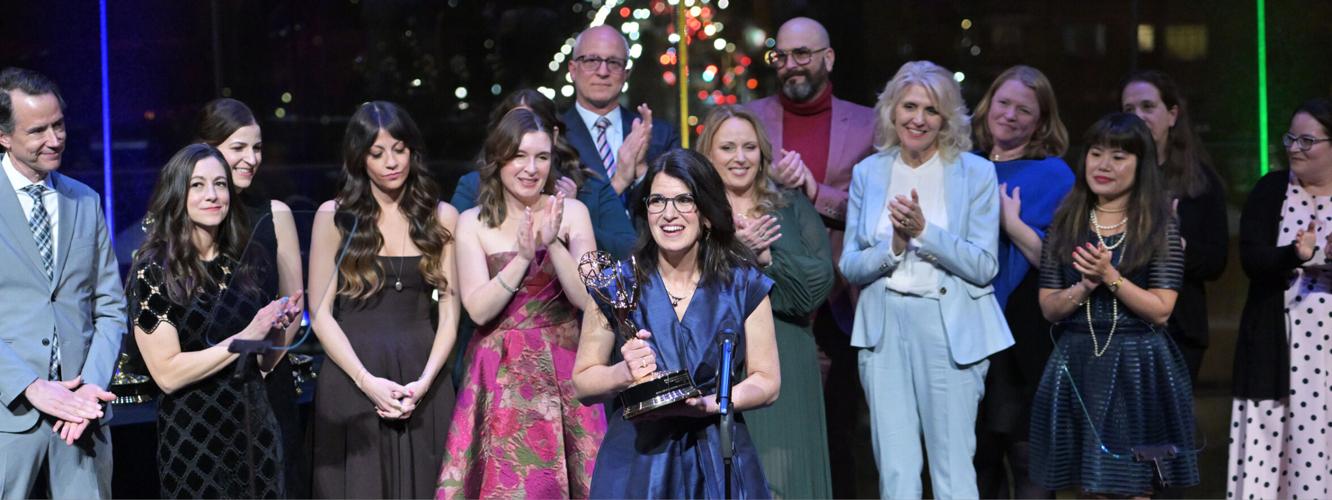
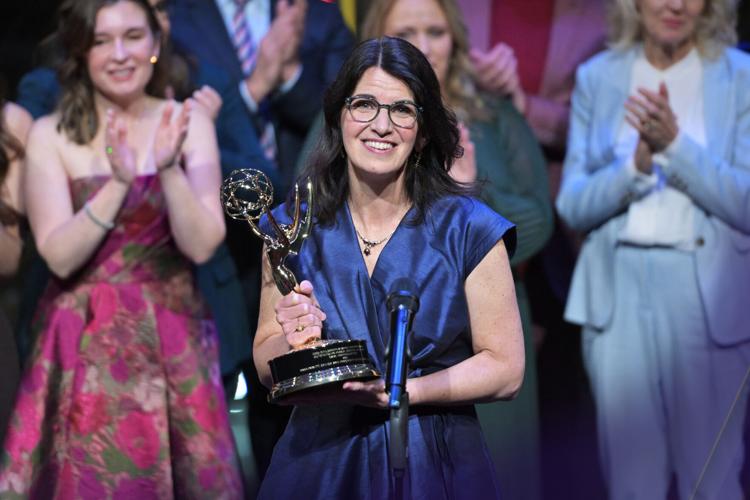
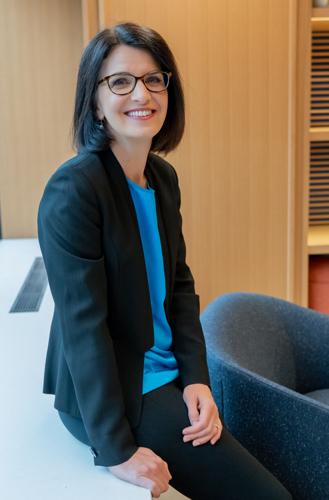

Sara DeWitt fostered her love of public media early on, watching Sesame Street and Mr. Rogers on Nashville’s WDCN 8 (now WNPT). She now serves as PBS Kids’ senior vice president and general manager, leading one of the nation’s most recognized children’s media brands.
Developing the PBS Kids website is one of the first things Sara did when joining the company in 1999 — an innovative step for children’s media. With deep knowledge of kids’ media habits, Sara saw an opportunity to expand the brand into multiple platforms, including podcasts, short-form YouTube content and the PBS Kids Games App, which now garners more than 80 million gameplays a month.
Despite federal funding cuts to public media, Sara and her team have learned to adapt to the current landscape, protecting the reliable content that helps PBS Kids rank No. 1 in parent trust. Sara caught up with Nfocus about her Nashville upbringing, the state of public media and the content kids need to develop and thrive.
I’d love to hear a bit about your upbringing in Nashville and what drew you to PBS Kids.
I lived in Nashville twice. My parents met in Nashville. My mom’s from East Tennessee, and my dad was in the Coast Guard and was stationed there.
I went to Hume-Fogg High School, and there’s so much there that really encouraged me to explore different ways of expression. There was an amazing creative writing teacher there, Bill Brown, who is a poet, who really worked with us to think about lots of things in our lives.
I remember a daycare center that no longer exists, but was in Centennial Park, and I remember the wonder of looking up at the trees and running around in that area. I remember writing things in high school about that, so I definitely see a through-line for me in children’s content based on the ways I was encouraged to explore in Nashville.
You’ve studied the media habits of children in rural communities. How has this shaped your approach at PBS Kids and your understanding of the content children need?
I did this for a year and a half, but I spent the summers living at home in Nashville and driving to rural communities in Tennessee. I was in Columbia, which is not so rural anymore. I used to go to the Saturn plant when GM was there, and I looked for youth-led organizations that were in rural communities. I spent a lot of time on the roads, really talking to kids about what was inspiring them and where they were watching media. One of the big pieces that came out of this was also about how kids were engaging with news and newspapers.
Really understanding all of the media habits of kids helped me when I got to PBS Kids to think about how, certainly at that time, people tend to think about monolithic culture, like what comes on television. But the truth is, kids are so multi-platform. They had ways of exchanging playground culture, sharing songs that would go from community to community, and now things happen much more quickly across all these different media types.
What new challenges has this past year presented to public media?
I think most people are familiar with the recession vote. That’s the vote with members of Congress to claw back funding that had already been appropriated for public media, and that certainly hit the whole system. In the last year, that was about a 40% decrease in the budget for children’s services across the country and what we do.
It could have been a moment where public media would say, “We need to stop doing kids shows, or we need to acquire other stuff, or we need to start putting ads on our content,” and realized that isn’t what has built this trust, and that isn’t what the public expects. A million new individual donors have come into the public media system. So, it doesn’t make up for the federal funding, but it says a lot about the community support that we have.
How have you and your team worked to preserve and improve the quality of children’s programming today?
It really is a desolate landscape for kids. The commercial players are all kind of backing away from kids and are much more likely to lean on the old libraries or some intellectual property that’s been around a really long time. We are in a really unique space right now at PBS Kids in that we are still very focused on the needs of kids today.
We have a great library that still can be really supportive of their learning goals — Wild Kratts episodes are not going to stop being relevant to kids. But there are also things that kids are dealing with today that are really unique, and we need to be telling timely stories to meet their needs.
We’ve continued to create new content, working with advisers and educators to make sure that we’re doing things that are developmentally appropriate, meeting the needs of kids and doing it in a way that puts kids at the center as opposed to profit at the center. We are really thinking about how we help children have a lot of fun and engage, but also learn and recognize when it's time to stop, to shut the screen off and do something else. We want to inspire them to explore the world around them.
Which PBS Kids initiative are you most proud of?
Years and years ago, we were doing a lot of gameplay work, and we were seeing how much of an uptick there was with kids playing on digital platforms. We launched a PBS Kids video streaming player. We predicted that it would serve about 5 million streams a month, and in that first month, it served 65 million streams.
It was one of those moments where we thought we were doing something experimental, and we actually tapped into a huge need. That early tech experimentation around kids, streaming and games put us in a position to be a first on a lot of these new technology programs, and I’m incredibly proud of that.
Quotes have been edited and condensed for clarity.


Commented
Sorry, there are no recent results for popular commented articles.