
Many remember nostalgic visits to the local zoo as children, being fascinated by the menagerie of animals and maybe even talking to them as if they could understand and respond. Today’s zoos still welcome regular streams of patrons — children and adults alike — to visit and learn more about their favorite species. But many modern zoos would also classify themselves as arks.
Zoos are racing to conserve species from across the world through genetic diversification, research funding and local habitat conservation — before those endangered animals are wiped out from the planet. The Nashville Zoo is at the forefront of many vital conservation efforts: Of the approximately 350 species in its care, over one-third are in a species survival program. We stopped by the zoo to learn more about the steps it’s taking to ensure the survival of the ecosystem.

Komodo dragons
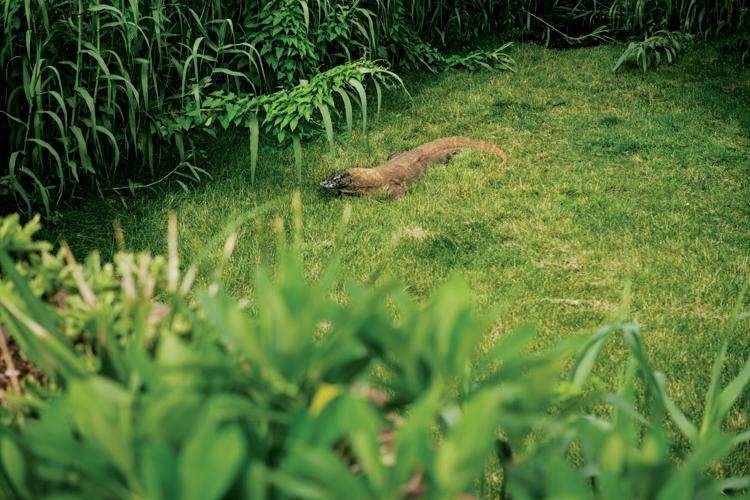
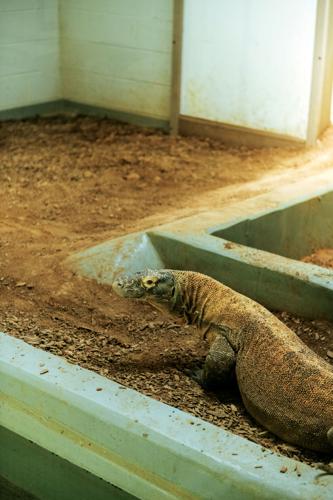
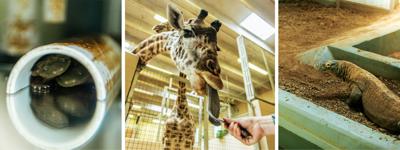
Tucked away on a winding path of the Nashville Zoo sits the recently opened Komodo dragon habitat. The enclosure, full of rich trees, dense shrubbery and lush green grass, looks like an inviting setting for an afternoon nap or a picnic — except for the 200-pound Komodo dragon in the room. The Nashville Zoo boasts the largest Komodo dragon habitat in the Americas, and the new addition is home to lizards Agnes, Olivia, Robbie, Paulie and Lil Sebastian.
The habitat and its residents are all part of a species survival program (SSP) to ensure the Komodos’ survival in the case of a major event. “Should something happen to any of the wild populations, we then have an ark, like Noah’s Ark, to potentially provide animals for that purpose,” says Nick Hanna, the Nashville Zoo’s assistant curator of ectotherms.
Komodo dragons are from Komodo, an island in Indonesia. Part of the monitor lizard family, Komodo dragons are the largest lizards in the world, topping out at 300 pounds and and up to 10 feet long. They are also considered exceptionally intelligent, able to perform tasks and recognize their own names with clicker or treat training. And they’re said to be adept at problem solving. While the Komodo is generally a solitary animal, it may form groups when hunting and taking down large prey.

Before running out and trying to purchase a Komodo dragon, keep in mind this is a protected species. That means no keeping Komodos as pets — and certainly no hunting the lizard. As an island species, the dragons are under threat. They’re currently listed as endangered because of the restricted range of their habitat and threat from human encroachment.
Enter the Komodo Survival Program — an organization whose mission is to preserve the Komodo dragon and its natural habitat. The Nashville Zoo is the largest single contributor to the organization, and Nick recently traveled to Indonesia to spend time with the group. There, he worked hands-on with the dragons in the wild — and even held a baby Komodo dragon after its weight and health check. “Holding a baby dragon in my hands … will always be a surreal moment for me in my career,” he says.
The Nashville Zoo has also helped the Komodo Survival Program buy a new boat to transport the team to Komodo and allow for more time with the dragons.

Hellbenders
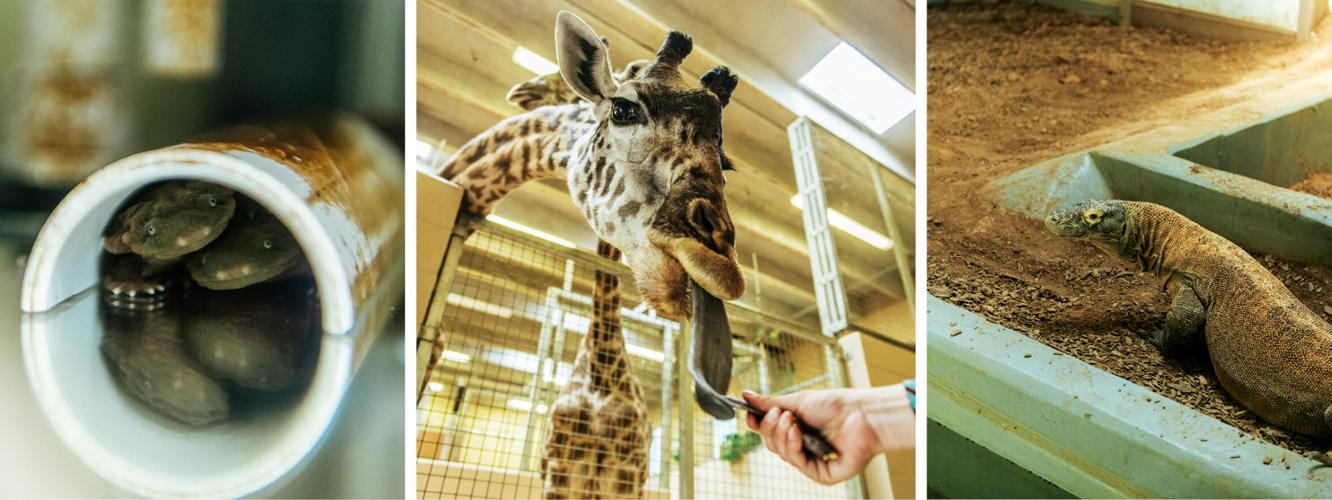
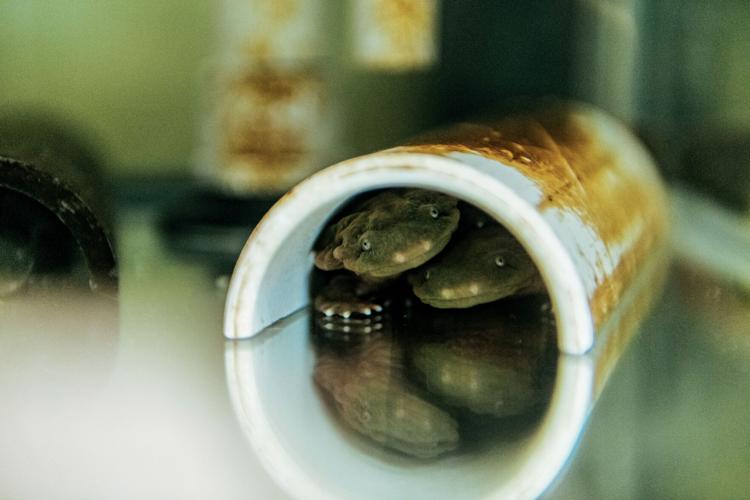
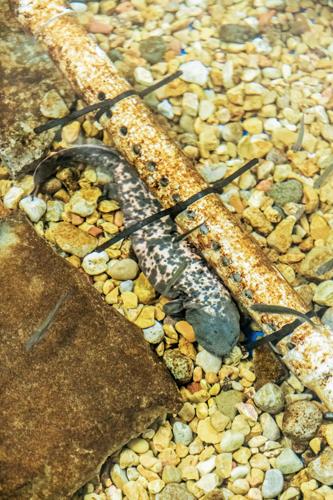
Ranging in size from 12 to 29 inches, the hellbender is the largest salamander in the Americas and the third-largest in the world behind the Chinese and Japanese giant salamanders. Making their homes under rocks or in tight places in clean, fast rivers, hellbenders prey on crawfish, invertebrates like snails and worms, and other small aquatic life. With a lifespan of up to 25 years — and sometimes even longer — hellbenders can see multiple generations in one lifetime.
Hellbender salamanders are widely recognized as an indicator species. If a river is healthy and thriving, hellbenders and their offspring are abundant. Throughout the Eastern United States, the hellbender is considered a threatened species. In Tennessee, the situation is much worse — the hellbender is listed as endangered.
Agriculture and development are creating silt runoff into the streams and river systems hellbenders call home. Invasive plants are also choking out native plants that would otherwise prevent runoff from entering the water. In gravelly river bottoms, baby hellbenders live until they are mature enough to hold their own without the protection of the gravel. When silt enters the river system, it goes directly to the bottom, filling up the gravel and leaving the babies with nowhere to live.

Behind the scenes at the Nashville Zoo, the ectotherm team is hard at work in the native Tennessee conservation trailer, trying to reverse population decline by raising baby and juvenile hellbenders they can introduce back into the wild. The walls of the trailer are lined with tanks housing hellbenders at various stages of maturity. In the middle of the trailer, a water filter hums, and a giant pool acts as the halfway house between tank life and reintroduction to the wild.
“We’re going into certain streams, with some of the Middle Tennessee populations, and collecting part of the egg masses,” says Nick, who is quick to point out they don’t collect the entire egg mass. “We raise them up past that stage where they would need that certain type of habitat to survive in. Then we release them as older animals, bigger animals.”
While their work is far from finished, Nick and the team have had four successful reintroductions so far. Most recently, the Nashville Zoo partnered with Tennessee Wildlife Resources Agency and Tennessee State University to release 27 hellbenders into a Middle Tennessee waterway. Nick counts that as a small win for the proliferation of the species.

Coral
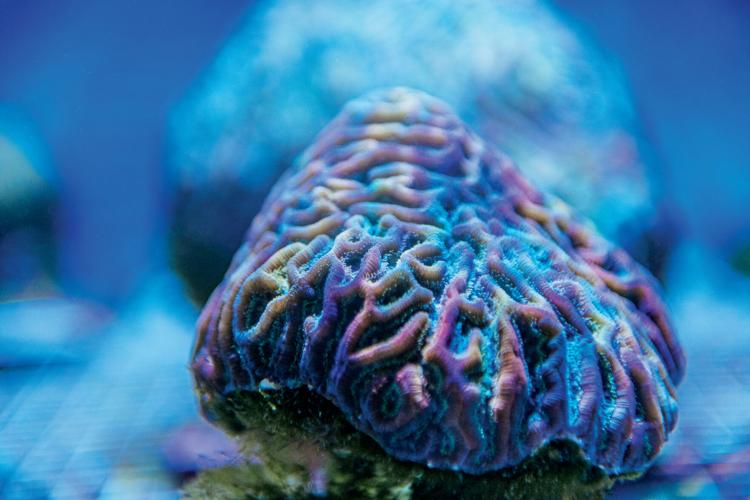
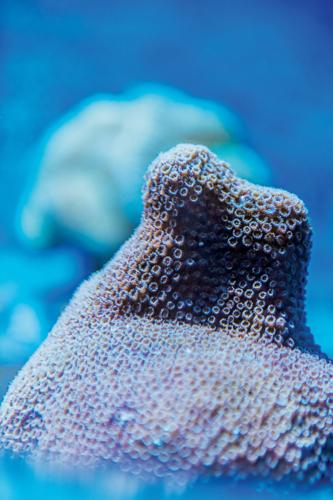
For many, coral are decorative accents for fish tanks or souvenirs brought back from vacation. Many are surprised to learn that coral — like jellyfish and sea anemones — are classified as animals. Coral polyps are small, soft-bodied creatures that form hard limestone exoskeletons. These polyps gather together in colonies, creating superorganisms. Coral polyps are clear, but thanks to a special algae called zooxanthellae, coral reefs appear in a variety of showstopping colors, even to the naked eye.
Coral reefs have often been referred to as the rainforest of the sea, both because of the biodiversity within them and because of the oxygen they produce. Reefs also have extensive longevity, with individual coral said to live over 4,000 years. “Corals don’t do anything fast,” says Chad Cogburn, the Nashville Zoo’s lead aquatics keeper. Coral reefs act as barriers to the land — protecting the shore from further damage from hurricanes, cyclones and tsunamis.
Due to climate change and other environmental factors, like pollution, coral reefs all over the world are experiencing stress, which has detrimental effects on the coral that comprise them. Closer to home, the Florida Reef is under attack from stony coral tissue loss disease. The disease — which affects the coral colony’s ability to sustain living tissue — can kill a colony within a few months or weeks. The fast-acting disease can kill large amounts of coral and has affected more than 96,000 acres of Florida’s coral reefs.

When coral are affected by this disease or other stressors, the symbiotic relationship between the coral and its algae is broken. The coral kicks out the algae, sacrificing its food source and ultimately dying. The Nashville Zoo, in collaboration with 30 other organizations, has joined the Florida Reef Tract Rescue Project in an effort to study some of the diseases affecting coral.
Behind the scenes, tanks of vibrant coral sit in the zoo’s HCA Healthcare Veterinary Center. The light in the tanks is an eerie blue that mimics the depths of the ocean, and the water is constantly kept at a balmy 72 degrees. There, Chad and others team members monitor the coral to keep them safe and protect the species should a reintroduction be necessary.
“The purpose of the program — in pulling these corals out of the water — was to get ahead of this sweep of disease making its way across the coral reef,” Chad explains. “Conservationism has gone in front of [the disease], took a couple thousand samples out and put them into safe areas. And Nashville Zoo is one of those safe areas.”

Giraffes
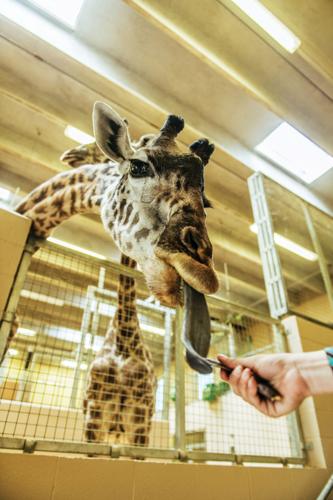
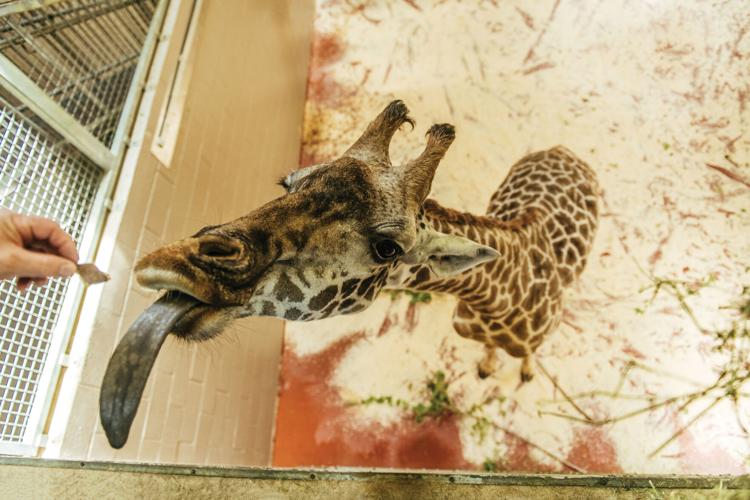
Until standing close to one, it is difficult to appreciate the size and scale of a giraffe. Perhaps this is the reason we call a group of giraffes a “tower.” It is easy to become smitten with a giraffe. With their large eyes and gloriously long lashes, imposing necks that can measure over 6 feet long, and natural curiosity, giraffes are a little like giant, hungry puppies. Giraffes regularly consume up to 75 pounds of food a day. Despite their size, giraffes are surprisingly fast and can run up to 35 miles per hour. In the wild, they move 100 miles a day.
Over the past 30 years, wild giraffe populations have declined by more than 40%. And over 50% of giraffe infants won’t survive to adulthood, according to Save Giraffes Now, an organization seeking to save giraffes from extinction. Earlier this year, Nashville Zoo hoofstock keeper Jenna Wolczyk traveled to Kenya to work with Save Giraffes Now, which has been working with zoos and keepers to understand giraffe behaviors and conservation initiatives. “I feel very fortunate I was the first keeper staff sent to work with them in the field,” Jenna says.
The organization is currently studying giraffe highway crossings in Nairobi. The Nairobi-Mombasa road is one of Kenya’s busiest highways, and many giraffes are killed in road accidents each year as they try to cross the highway to access food and birthing grounds.

Save Giraffes Now is also working on a translocation program, moving giraffes from more dangerous locations to places that can support additions to the habitat. Not only will this help protect the translocated giraffes, but it will also introduce genetic diversity — creating a healthier herd and overall population.
“Once we move these animals into a different area, we’re hoping to look at what their behaviors are like afterwards,” Jenna explains. “If they’re reproducing, then the population is stable. They have the food source they need and the safety they need.”
While Jenna was working with Save Giraffes Now in Kenya, she got to see two calves that had recently been born, and she shared that another has been born since. “There’s a lot of success that happens when you’re able to take part and see a need and get things moving,” she says.
“The mission behind zoos and aquariums in general revolves around conservation and education of conservation,” says Jim Bartoo, marketing and public relations director at Nashville Zoo. “Sharing information, sharing knowledge, sharing best practices and working together to be able to save the species is in everybody’s best interest.” This collaboration creates a vast conservation network. “I always refer to it as an ark,” he adds.



Commented
Sorry, there are no recent results for popular commented articles.