
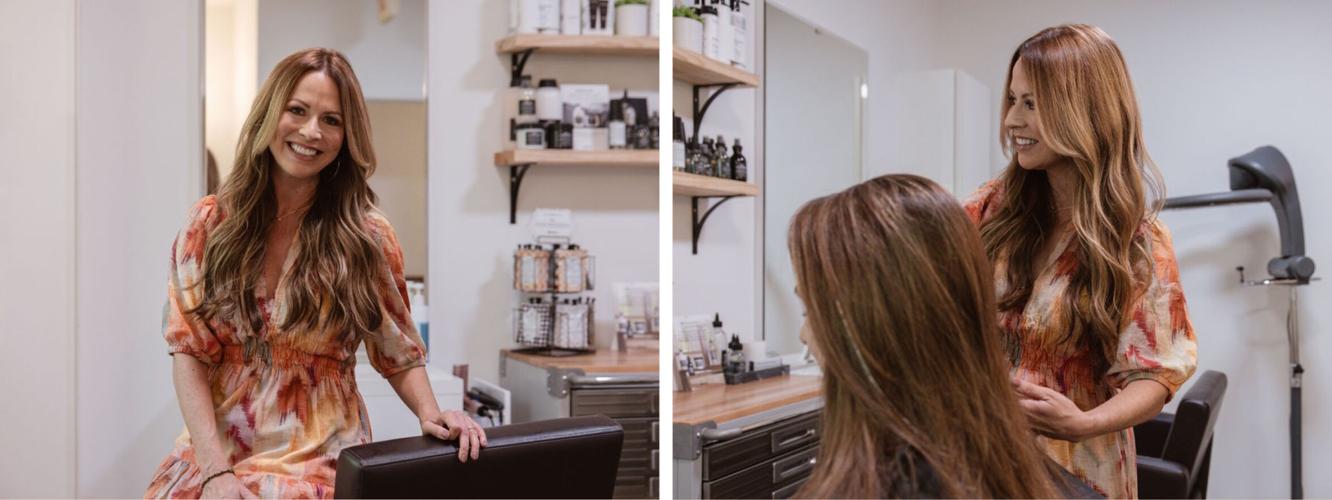


As a beauty professional for more than three decades, Susanne Post has shared many intimate conversations with clients in her chair. “We’re kind of the sounding board and trusted confidant for really exciting things and for the heavier seasons,” says Susanne, who operates Shine salon in Franklin.
As a survivor of domestic violence, Susanne co-founded Shear Haven to leverage the intimacy of her industry to help women end abusive relationships.
In partnership with YWCA Nashville & Middle Tennessee, Shear Haven launched in 2017 with a series of in-person trainings for beauty professionals to recognize, navigate and support clients experiencing domestic violence. In 2020, Shear Haven teamed up with Barbicide, the iconic brand of disinfectant in barber shops and salons, to launch on a global online platform. Suddenly, Shear Haven’s reach grew from hundreds to thousands. Today, Shear Haven’s 20-minute training video has reached 172,000 people from more than 100 countries.

“It is very isolating in an abusive relationship, when you can be cut off from the very people who might be able to support you,” Susanne explains. “And yet, what is the one consistent place that women go? The salon. Religiously, every three to six weeks. It’s not like a doctor’s appointment, where you’re in and out in 15 minutes. It’s hours with beauty professionals.”
Susanne remembers when she realized that her relationship was abusive. It wasn’t obvious to her. And she believes the education from a trusted resource saved her life.
She also remembers when she learned of a law in Illinois requiring beauty professionals to receive education about the signs of abuse. That a-ha moment led her to advocate for a similar law in Tennessee, which ranks seventh among states for the number of women killed by men. That law was passed in 2022, and now Susanne helps advocate for training in other states.
Shear Haven’s 20-minute training video, available in English, Spanish and Vietnamese, gives viewers tools to identify clients or co-workers experiencing physical or mental abuse. Subtle signs might include wearing clothing too heavy for the season (to conceal bruises), showing up to appointments with a partner, or routinely canceling standing appointments.
Training guides viewers to listen — without judging or offering dangerous advice — and, when appropriate, to offer resources.
“You don’t have to be the therapist,” Susanne says. “You can be a friend. If someone opens a window, allow them to elaborate. Be aware of resources, such as the YWCA or the National Domestic Violence hotline.”
Take the free 20-minute training at shearhaventraining.org.
To access YWCA domestic violence services, call the 24-Hour Crisis & Support Helpline at 800-334-4628 or text 615-983-5170.


Commented
Sorry, there are no recent results for popular commented articles.