





High in the snow-covered hills of Primorsky Krai — a remote region of southeastern Russia — a ghost slinks through the birch trees. Her coat is dappled with obsidian rosettes. She moves in silence — nearly invisible, and nearly extinct. Thanks to habitat fragmentation, overharvesting, poaching and low genetic diversity, she is one of approximately 84 Amur leopards left in the world.
Thousands of miles away, in a city known for honky-tonks and transpotainment, a quiet revolution in conservation is underway. Nashville Zoo has joined the crusade to help conserve and protect this and other critically endangered species with its newly opened Leopard Forest habitat.
Seeing the Forest for the Trees
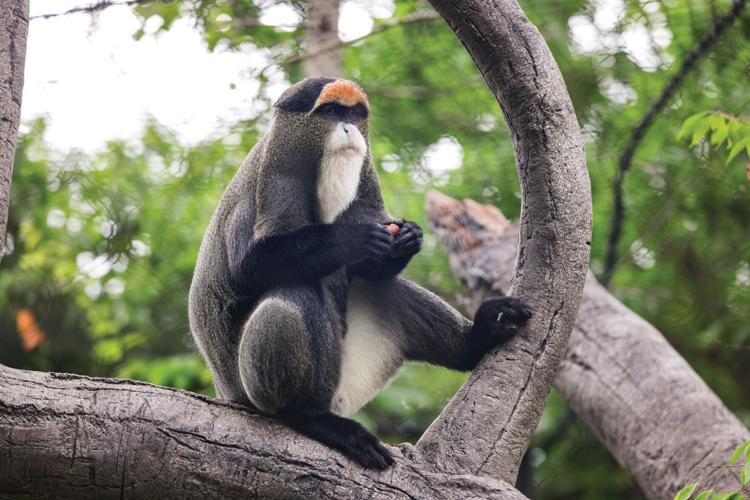
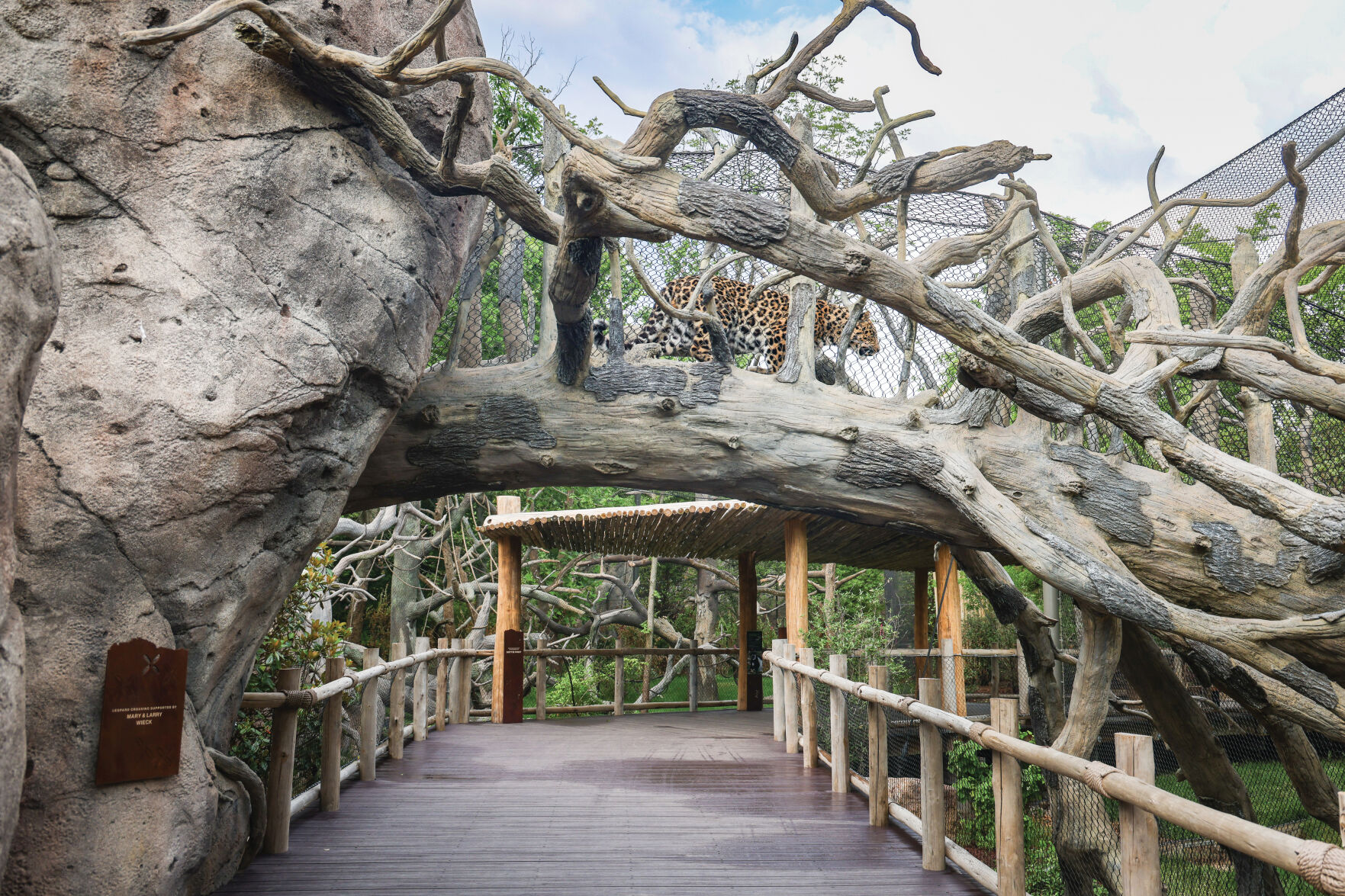
Though native to the forests along the Russia-China border, Amur leopards have found a new home in Leopard Forest — a dynamic exhibit that also features colobus monkeys, De Brazza’s monkeys, klipspringers, and the zoo’s beloved Masai giraffes.
Nashville Zoo joined the Association of Zoos and Aquariums’ Species Survival Plan program for Amur leopards, which helps maintain healthy, genetically diverse and self-sustaining animal populations in human care. Through participation in the SSP, the zoo can introduce more guests to the species — and why conservation matters. “[The exhibit is] showcasing those species so that we can inform people about what’s going on in the wild and what they can do to help,” says David Oehler, Nashville Zoo vice president.
Nashville Zoo CEO Rick Schwartz led the design of Leopard Forest, even scouring the property to identify and relocate the trees to meet the animals’ needs. He worked to create both a vibrant space for visitors and an ideal forest for the animals, favoring trees that — while from Middle Tennessee — felt reminiscent of the fauna in an African landscape.

Nashville Zoo’s Global Footprint
Leopard Forest highlights the zoo’s broader mission: global wildlife conservation. Many exhibits preserve wildlife through a program like SSP or SAFE (Save Animals From Extinction). The zoo’s staff members also have the extensive skills and connections to help with animal preservation efforts around the world.
After learning that four cheetah cubs were confiscated in Somalia, the zoo sent a team to help care for them and ensure their survival. Another team traveled to South Africa to help Save Giraffes Now relocate giraffes to safer areas, study them and help them thrive. “We work to put staff in a place where they can benefit wildlife through conservation, which is key,” David says.
Community outreach also plays a key role in animal survival programs. “You have to include the local community in any plan,” David says, noting that job creation and eco-tourism are great opportunities to engage the local community. “If you don’t have a community base, your program is not going to thrive.” The Amur leopard SSP, for example, includes the creation of a wildlife corridor that would give the animals access to spaces broken by highway construction and other development.

A Chance to Make A Difference
The Leopard Forest exhibit is the first step in a multi-phase expansion designed to educate the community about the importance of animal conservation.
And Nashville Zoo visitors have their own part to play. The Round Up for Conservation program allows guests to round up to the nearest dollar on purchases they make at the zoo, with proceeds funding animal survival programs.
With around 80 Amur leopards left in the wild and around 200 leopards in zoos worldwide, each birth in captivity — and each lesson shared with the public — could mean the difference between survival and extinction. Leopard Forest isn’t just a new exhibit — it’s a lifeline, woven between continents and species, reminding us that even the rarest creatures still have a fighting chance.


Commented
Sorry, there are no recent results for popular commented articles.