
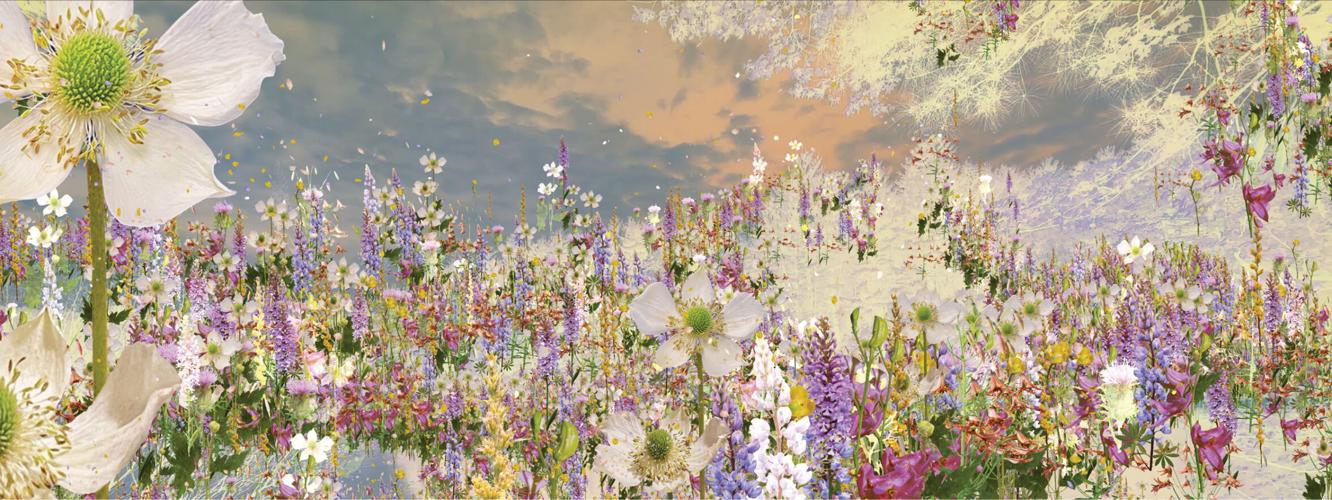
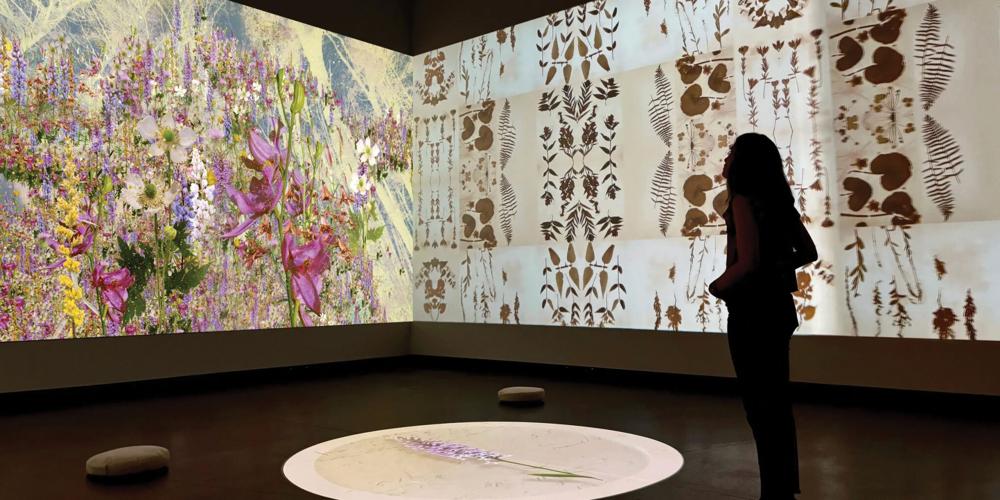
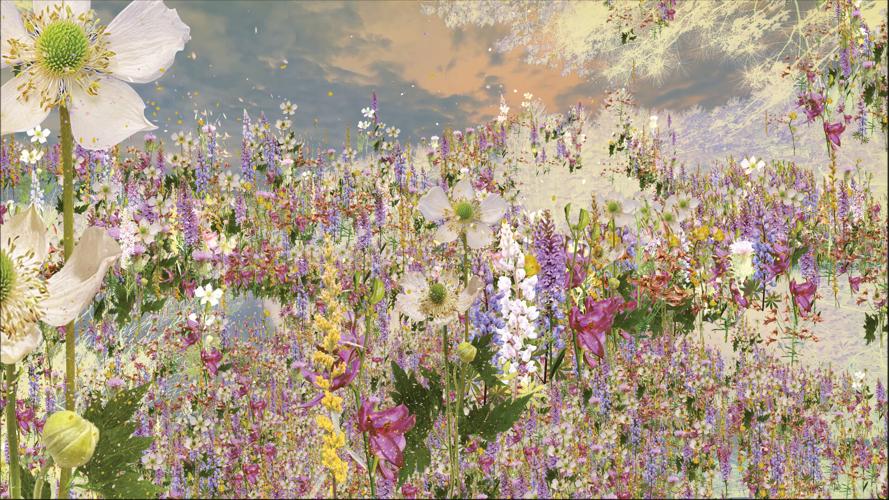
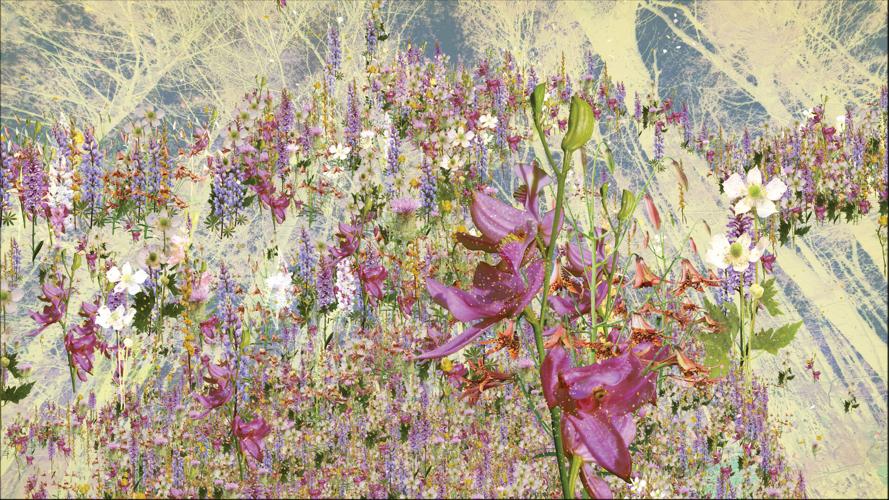

Robin Vuchnich’s new-media exhibit In Search of Thoreau’s Flowers — The Memory of a Season creates a serene scene of vibrant flora inside the Frist Art Museum.
The artist’s projections mirror a dreamy trek through the natural world, the kind philosopher and naturalist Henry David Thoreau described so eloquently in his 1854 classic Walden: “I went to the woods because I wished to live deliberately, to front only the essential facts of life, and see if I could not learn what it had to teach, and not, when I came to die, discover that I had not lived.”
But as guests move through the exhibit, they’ll notice how the blossoming world around them shifts with every step, underscoring humankind’s inescapable impact on biodiversity. “It’s tricky to help people understand how biodiversity is impacted by climate by looking at spreadsheets and data,” says Robin. “The goal of this is to do it in a creative way.”
Celebrated for his meditations on communing with nature and appreciating natural history, Thoreau avidly collected plant specimens from the region surrounding Walden Pond. His walks around the area didn’t just cultivate a relationship with nature, but also provided space to ponder cultural issues, like abolition and social justice.

But if Thoreau walked those beloved woods today, he’d find a profoundly different landscape.
“Of Thoreau’s 648 plant specimens preserved at [the Harvard University Herbaria], over half are now extinct or endangered in the Concord region because of climate change, pollution, overdevelopment and other human causes,” says Mark Scala, chief curator for the Frist.
Ecologist and entomologist Emily Meineke wanted to tell this story, and she convened a group of scientists and artists, including Robin, to do it. “[Emily] was familiar with this digital archive and was championing collaborating with artists to find ways to bring that … into the view of the public,” Robin says.
Drawing from Harvard’s collection of Thoreau’s pressed and dried specimens, In Search of Thoreau’s Flowers projects Walden Pond’s declining floral species on the walls. Using projection-mapped light, spatial augmented reality, generative art and animation (but never artificial intelligence), Robin created a visual index to represent what each specimen, now brown and shriveled, looked like in Thoreau’s time.
To enhance this immersion, she made two trips to Walden Pond to capture video of the pond and create a soundscape, complete with insects chirping, birds singing and water lapping. “There is a lot of pleasure and a … sense of an embrace with this exhibition,” says Mark. “I think everybody can bring to it their own experiences [and] ideas.”
Outside of work, Robin runs a Clarksville-based micro-flower farm, often capturing photos and videos of her plants to use in immersive installations. “The endangered flowers shown in the interactive art, I, of course, could not locate at Walden Pond because they don’t exist there anymore,” she says. “But I was able to resource them from wildflower farms in the South … and by using free citizen science databases of plant imagery.”

When Mark first experienced Robin’s work, it took his breath away. Intending to feature more artists using emerging technologies and new media, he landed on Robin’s exhibit as the perfect companion for Shimmer: Dreaming the Posthuman — a new media exhibit reimagining humankind’s relationship with nature.
“I love art that hits people emotionally first,” says Mark. And entering In Search of Thoreau’s Flowers elicits just that reaction, as the exhibit instantly surrounds viewers with incredible beauty. “You hear birds singing and bugs bugging,” Mark adds. “And then you realize that as you move around the gallery, well, the flowers are moving with you.”
While a feast for the eyes, the exhibit is also a clear call for environmental stewardship. Part of the installation uses color coding to showcase which species are extinct or in decline. “A scientist or a third grader can look at that image and say, ‘Oh my god, half of them are blacked out,’” Robin says.
She hopes the exhibit will help build empathy with other living organisms — particularly those no longer present in the landscape — and encourage viewers to recognize their impact on the natural world.
“In the end, it’s an expression of hope,” Mark says. “It’s a way of reminding ourselves that we can reverse this.”


Commented
Sorry, there are no recent results for popular commented articles.