
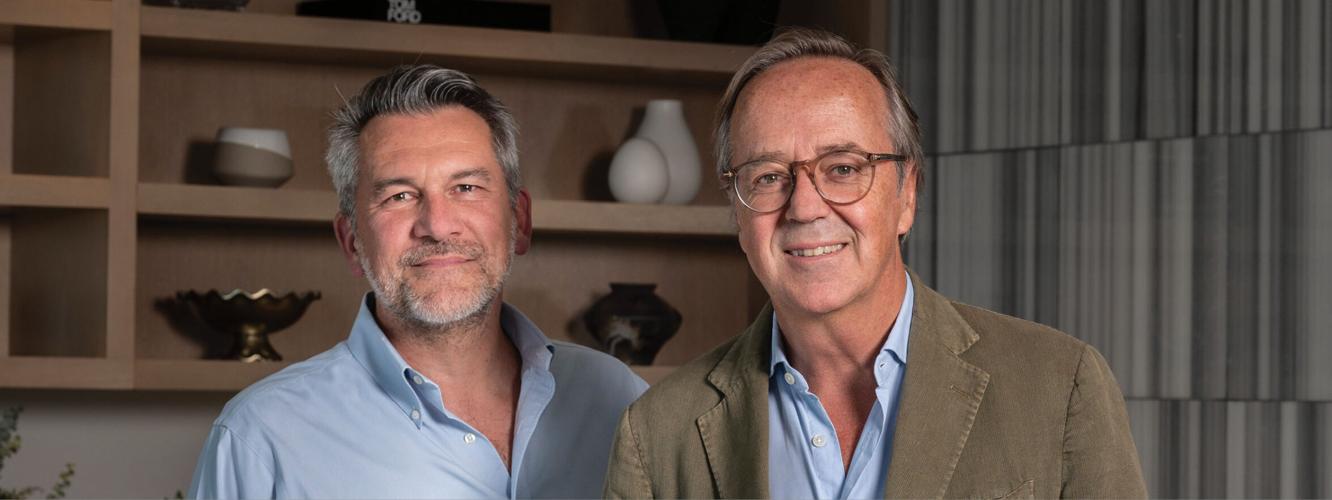
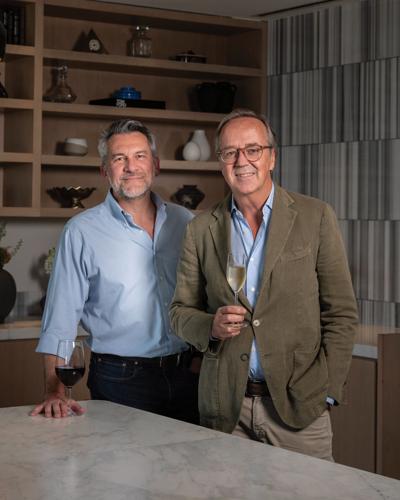

There’s a moment each year when Nicolas Glumineau makes a decision he knows he can never take back. As general manager and winemaker of Château Pichon Longueville Comtesse de Lalande and Château de Pez, Nicolas oversees dozens of individual vineyard plots in Bordeaux, each producing wines that eventually become part of a larger composition.
During blending, he and his team taste, consider and ultimately decide which cuvées belong together. For a winemaker whose wines have earned perfect scores from critics, it might seem like the moment when ratings loom largest. Nicolas insists they don’t.
“Until we get the scores, we don’t care about them,” he says with a laugh.
Instead, he thinks about the vineyard and what nature has given him. He compares the process to a conductor interpreting Mozart’s “Requiem.” The music has already been written. The conductor can’t change the notes, but what he does with them matters.
“Nature writes the part, and we play it,” Nicolas says.

That combination of inheritance and interpretation — respecting what came before while accepting responsibility for what comes next — was a recurring theme when Nicolas and Frédéric Rouzaud, president and CEO of Maison Louis Roederer, arrived in Nashville as the guests of honor for the 47th annual l’Eté du Vin.
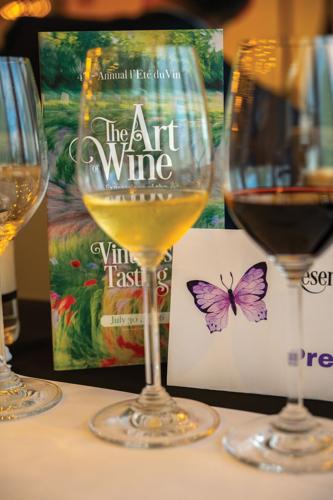
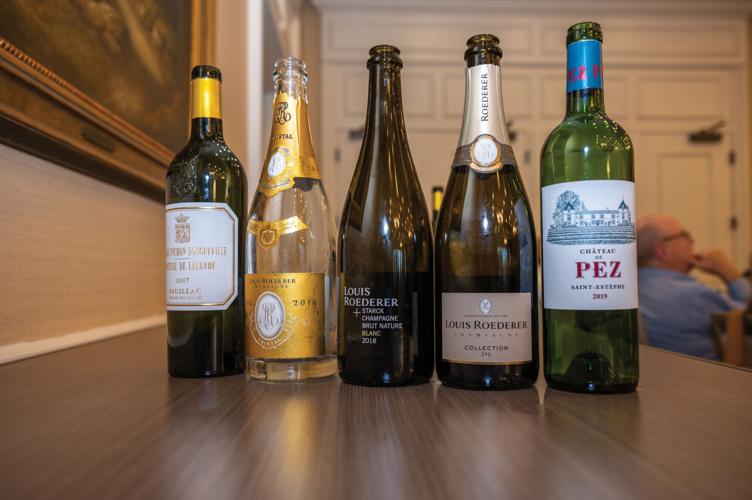
The Nashville Wine Auction’s three-day celebration, themed “The Art of Wine: Expressions of the Roederer Collection,” brought some of France’s most celebrated wines to Nashville. But for the two men charged with creating and stewarding them, wine is about much more than what ends up in a glass — it’s about time.
Frédéric represents the seventh generation of his family to lead Maison Louis Roederer, which celebrates its 250th anniversary this year — coincidentally the same year the United States turns 250. That longevity gives the family an unusual perspective in an era when many luxury brands have become part of enormous corporate portfolios.
For Frédéric, remaining family-owned allows Roederer to think in decades rather than quarters. Creating an exceptional wine requires patience, investment and an almost obsessive attention to detail. The pinot noir vines used for Cristal, he notes, are about 40 years old on average. Some wines spend years resting in Roederer’s cellars before they’re released.
“You need a family behind you to understand this contribution,” he says.
The 250th anniversary is particularly meaningful, because Frédéric sees the Roederer family as more than the people who share his name. Generations of employees have devoted their careers to the Champagne house, sometimes following parents and grandparents who worked alongside his own family.
“It’s really a family spirit,” he says.
For Nicolas, thinking generationally has become considerably more complicated. The devastating wildfires France experienced this summer offered a stark reminder of a changing climate. Nicolas spoke of the speed and severity with which conditions have changed, particularly during the past decade.
For winemakers, those changes present questions they can’t answer in a single growing season.

“Is the decision we take today the right one for the next decades?” he says. “Who knows? There are questions I have no answer to.”
The uncertainty doesn’t diminish his enthusiasm for the work. If anything, it deepens it.
“It’s stressful and challenging, but at the same time, it’s very fascinating,” Nicolas says. “We create the future of our vineyards.”
That future grew a little larger right before Frédéric arrived in Nashville. The Roederer Collection had just acquired a Burgundy estate, adding another storied French wine region to a portfolio that already extends well beyond Champagne. Yet for all the discussion of terroir, vintages, vineyards and centuries of tradition, both men kept returning to something considerably less technical — people.
Nicolas has visited Nashville several times, and he’s watched relationships formed over a bottle of wine become friendships that continue long after the last glass has been poured. Many people he met here have ended up visiting him in France.
“Thanks to wine, we create a friendship and a relationship that is very strong,” he says. “We fly around to promote wine, but to meet people who share the same idea of what friendship can be.”
Frédéric describes his family’s mission in similar terms. Making great wine matters, of course. But so does what happens when someone opens the bottle. “The vision is really to make not only wine, but wine that brings extra pleasure, extra emotion,” he says. “It’s all about sharing.”

That philosophy made Nashville an especially fitting destination for a visit. For 47 years, l’Eté du Vin has brought winemakers, collectors and supporters together around the table, using the pleasure and fellowship of wine to support organizations fighting cancer.
This year, the Nashville Wine Auction raised a record $2.65 million during its annual three-day celebration. For Frédéric, that purpose transforms an already joyful experience into something more meaningful.
“Wine is all about culture,” he says. “It’s all about life. It’s all about sharing. It’s all about joy.” Those who work in that world, he believes, also have a responsibility “to give back to society what we inherited.”
It is another expression of the long view. The wine has been made — now comes the sharing.



Commented
Sorry, there are no recent results for popular commented articles.