
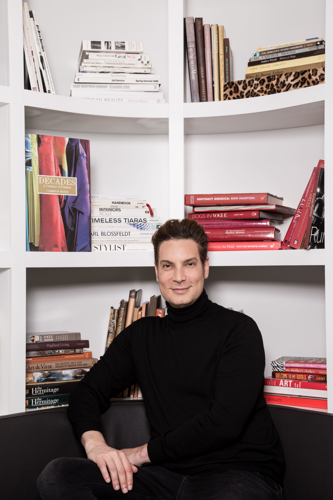

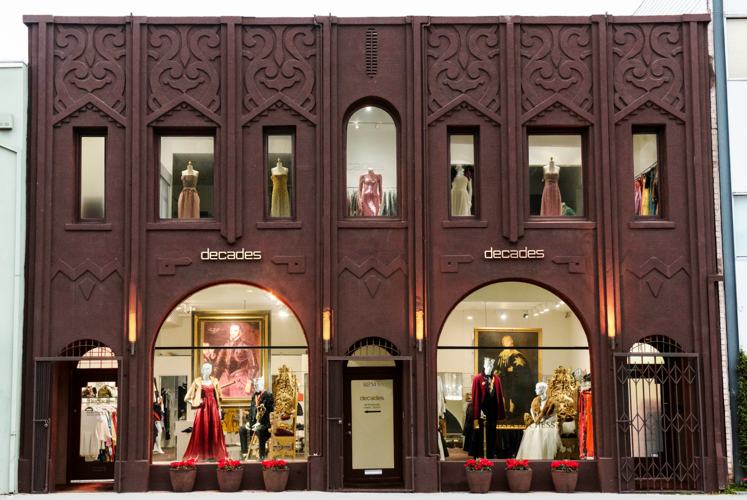
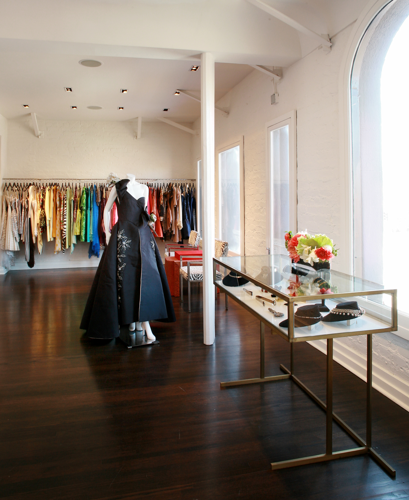
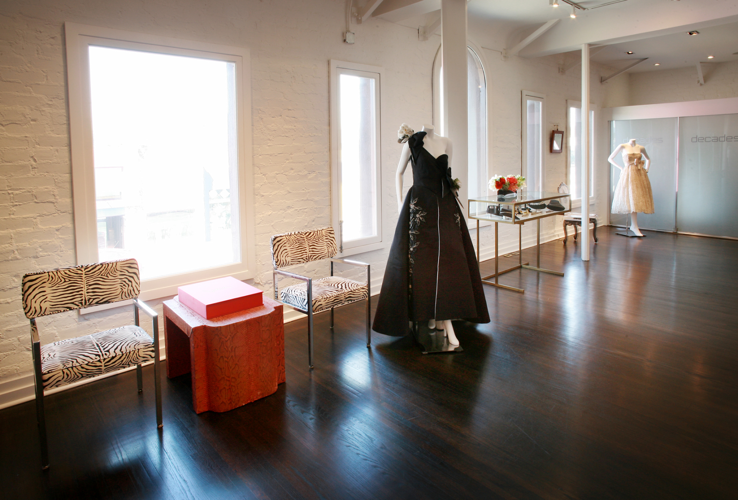
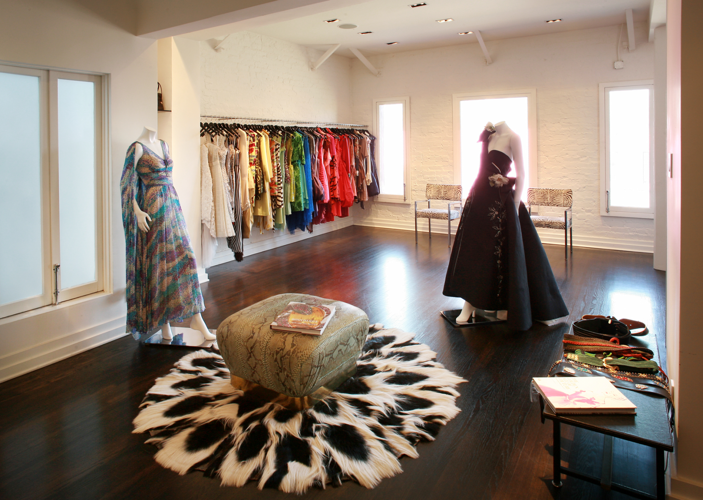
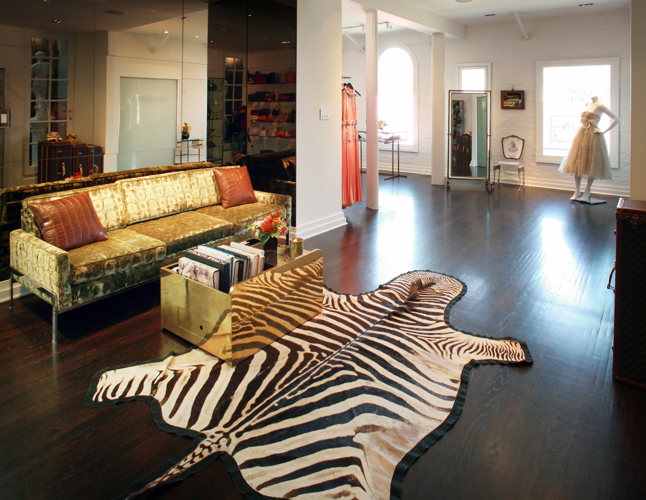

Cameron Silver is one of the most foremost vintage experts in the country, and since 1997 has owned Decades, the exclusive boutique on LA’s Melrose Avenue. His pieces are seen on stars on the red carpet and on anyone looking to complement their modern wardrobe or move out of their comfort zone. He is also the author of Decades: A Century of Fashion, now in its third printing.
This year, Cameron has been traveling the South bringing his sartorial knowledge, visually stunning book and, of course, vintage treasures. He will be in Nashville for two events on Sept.16 and17 at Noelle. Sunday, Sept. 16, he will discuss fashion trends from the 20th century, and guests can pre-shop his pop-up installation featuring a wide array of luxury vintage clothing and accessories for women, personally selected by Cameron for his Nashville audience. On Monday, Sept. 17, the pop-up is open to the public from 9 a.m.-4 p.m.
Before he started packing vintage dresses, jewelry and accessories to bring to Noelle, he chatted with us about quintessential vintage style, his favorite find and what he’ll be doing in Nashville.
Tell us aboutthe tour you’re doing now.
My book just went into a third printing. For the third printing, there’s yet another tour. I’m doing more and more of these trifecta events where I do a book signing and a discussion on the history of fashion,and then we add a little touch of Decades, my store in LA, and do a mini trunk show. So that’s what I’ll be doing in Nashville.
We’re thrilled you’re coming here! How did Nashville get on your list?
Well, Nashville has certainly been on my radar as a fashion-loving city. … I do a lot of events in the South. I mean, a lot. I’m delighted that I’m able to come to Nashville and meet, discuss and celebrate style and fashion history and fashion presence and also fashion future.
Is it too soon to ask what vintage items you’ll be bringing with you?
I don’t know the exact edit, but I can give you some examples. There will be pieces that I think are quintessential for a woman’s wardrobe — everything from a Chanel jacket to an Hermès scarf to a great little black dress. There will be examples of all the decades. There might be a ‘30s chiffon bias-cut dress, … and then there might be a great ‘80s power-suited Thierry Mugler jacket. There will be fashions inspired by my book, but at the same time, they’ll also be accessible. There will be a range of price points … Everyone [gets] to play, so it’s very inclusive.
What advice would you give someone who wants to build a vintage wardrobe?
When it comes to vintage, I believe in those iconic moments. You start off with the iconic pieces. Then the fun thing about vintage is that it helps you get those unexpected additions into your wardrobe. Certain things that are fundamentals, like the things that I originally suggested — the Chanel jacket, the little black dress. I would add the goddess dress, some great costume jewelry. It doesn’t all have to be high-end designer, obviously, but with vintage, you want those quintessential pieces, and then you want those unexpected pieces — those things like, "I never thought I would want this." The beauty of vintage is that it helps you get outside of your comfort zone a little bit. We give you those building-block, iconic pieces and then add in those pieces that are like "Whoa!" — the conversation pieces.
Once we havesome fundamental and unexpected pieces, how do we incorporate those with an existing wardrobe?
Well, my philosophy with vintage is that it has to look modern. When I say "get a ‘30s bias-cut dress," I’m not proposing that you wear it with a ‘30s shoe and ‘30s hair. I’m suggesting, how do we make this look modern? Are you doing it with a sneaker and a cropped denim jacket? It’s all about making sure that the vintage looks modern and that the styling is contemporary. … The motto of my store is "vintage that looks modern." So when you’re curating your collection, and you look like you’re in a Halloween costume — you’ve made a mistake unless it’s Halloween. But if you look like you’ve just stepped out of the editorial or you’re ready to be paparazzi’d by a street-style photographer, you’ve nailed it. … That really is quintessential modern style now. Modern style is not about, you know, head to toe wearing one designer. It’s about mixing up an expensive piece with an inexpensive piece, mixing a vintage piece with a new piece. That’s really what the 21st century has provided us — the way of dressing.
What is the biggest or best stash you ever found, and where or how did you find it?
There was a massive collection in Spokane, Washington, that came to me because the former stylist of the Dixie Chicks was from Spokane, and I flew up, and it was a woman who had been married to two different fashion executives in the ‘60s and ‘70s. It was insane. I mean, it was Yves Saint Laurent couture, Givenchy couture, Hermès, Leiber. It was amazing.
One of the reasons that I like getting out of the two major metropolitan coasts of LA and New York is that it’s everything in between where the most interesting style is happening … And sometimes the most fun are the anonymous people with great style. …Maybe somebodywill say, "Help me curate my collection," and I’ll be blown away by what’s been acquired over a lifetime.
After you find clothes, how do you determine which pieces go into Decades?
Well, we first ask ourselves, "Does this look modern? How is the condition? What is the significance of the design?"It’s very easy to get seduced by a label, but just because it’s got a great designer label doesn’t mean it’s good. We make sure it’s at a fair market value price point. That’s really important; we don’t want to undersell things, and we don’t want to oversell them. And obviously the question the way we dress today is: "Does it work with a pair of jeans?" That’s always a consideration. Condition is so important because we really have to be careful to present pieces that are very wearable.
You talk about neo-vintage. Who are some designers that fall into that?
Neo-vintage is really recognizing the future collectibles or the current designers that are no longer helming their brands. So think about Alber Elbaz at Lanvin or Phoebe Philo at Céline. I mean, certainly Tom Ford for Gucci is certifiably vintage and collectible. But I also love the pieces that got away. Maybe it’s a three-year-old Proenza Schouler or a Raf Simons for Dior that you missed in the store. Those are the contemporary pieces that I think are the real future collectibles, the new vintage, the neo-vintage.
Do you have a favorite decade for fashion?
For me, it’s the 1970s because that’s really where I became aware of fashion. … In 1973, American fashion had a global presence because of the fashion show at Versailles, where Halston, Oscar [de la Renta], [Bill] Blass, Anne Klein and Stephen Burrows presented their clothes. I think ‘70s American fashion is amazing. It’s so effortlessly elegant, and, in a sense, all we’re really doing season after season is versions of that sort of American chic of the ‘70s. I mean, I bet international designers do it. Everybody wants to do that Halston look.
Is that what brought you into the Halston line that you do for QVC?
Yes. I had always told headhunters, “You know, the only thing that really interests me brand-wise is Halston because it is closest to my personal DNA,” and I have such respect for what Halston did, not only as a designer but as a business person. I mean, he was such a superstar. Aesthetically, it so parallels the style I like. … If you think about what Halston did, he was the first American luxury brand. He was the first American internationally recognized designer. He is one of the faces of the 1970s, not just for fashion, but for cultural and history. It’s an honor to celebrate his genius several days a week on QVC.
The ticketed event entitles the buyer to a seat at the talk followed by Q-and-A, vintage shopping and refreshments. A limited number of tickets are available here. Questions regarding the event or ticket information can be emailed to dkress@keep.shop.
Photographs courtesy of Cameron Silver


Commented
Sorry, there are no recent results for popular commented articles.