
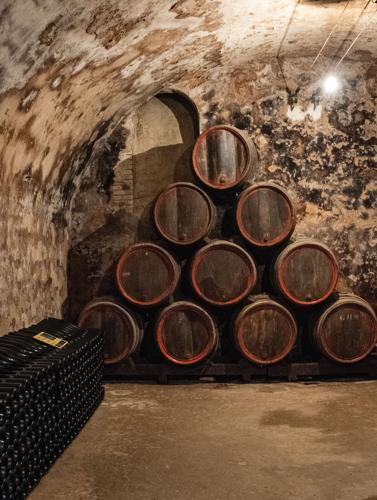

Following the cellar master down the narrow staircase, my senses immediately came alive. The walls — their unmistakable white chalk damp to the touch — surrounded us. The familiar scent of a wet basement filled the air as the temperature dropped with each step. Along the dimly lit corridor, where low lighting protected the golden elixir stored beneath the earth’s surface, rows of unlabeled bottles lined the walls. These vessels held one of France’s national treasures — Champagne.

History
France’s Champagne region — before it became the bucolic setting for producing coveted sparkling wines — was home to the Gauls, the Celtic people who inhabited what is now modern-day France. The Romans later claimed the region as part of their empire. Both civilizations carved caves deep into the chalky soil, some stretching for miles. The Romans, however, introduced grapevines to the region and taught the Gauls how to cultivate the fruit and make wine.
The Gauls and Romans produced traditional still wines in the Champagne region. The sparkling wine we know today emerged only after a fortunate accident. Historians believe Benedictine monks at Saint-Hilaire in western France made the discovery after bottling white wine that hadn’t finished fermenting. The carbon dioxide they trapped created the bubbles that later became Champagne’s defining characteristic.
After its serendipitous creation, Champagne continued to evolve. Early Champagnes were remarkably sweet, with some containing more than 200 grams of sugar per liter to satisfy the tastes of 18th- and 19th-century consumers. As palates shifted toward drier wines, producers gradually reduced the dosage, giving rise to today’s classifications — brut nature, extra brut, brut, extra dry (extra sec), dry (sec), demi-sec and doux — each defined by its residual sugar content. A modern brut Champagne, the style most commonly consumed today, contains less than 12 grams of sugar per liter.
Even now, the Champagne region continues to balance centuries-old traditions with a global industry that exports millions of bottles around the world.
Major Houses
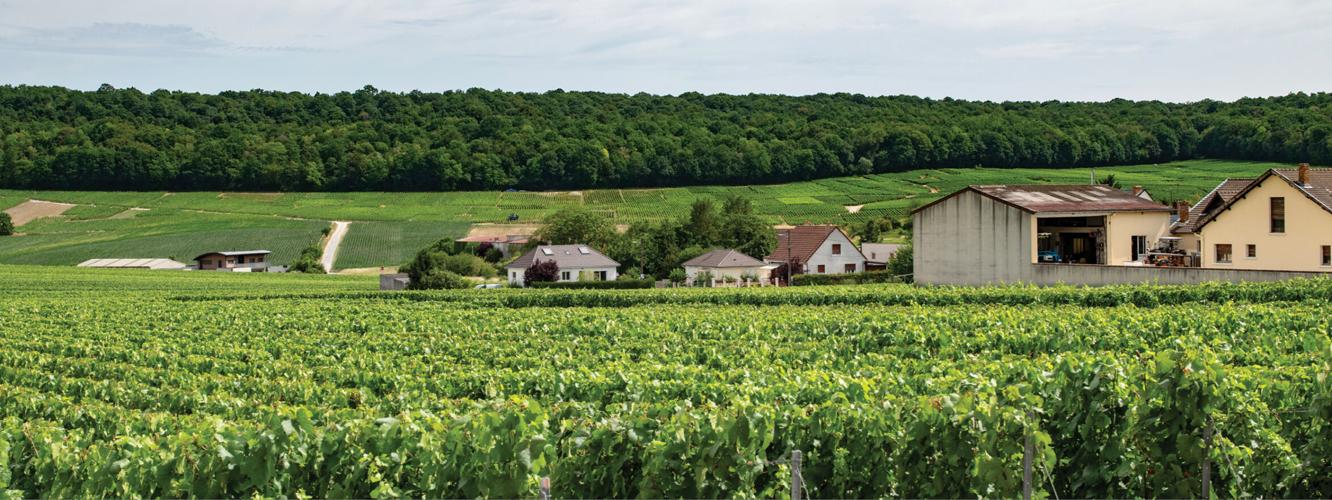
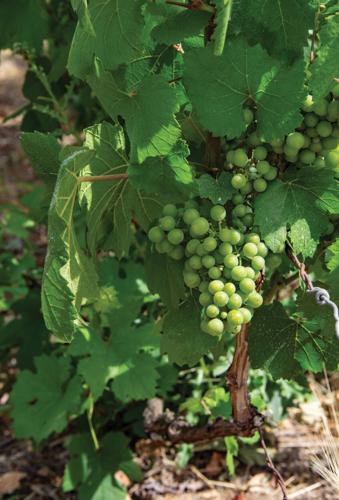
The Champagne region unfolds in a patchwork of emerald vineyards and golden wheat fields stretching across gently rolling hills. At the end of many vineyard rows, bright rose bushes bloom. The flowers supposedly serve as an early warning system, often showing signs of disease before the vines themselves. The region’s terroir varies across its principal growing areas, including the Côte des Blancs, Montagne de Reims and Vallée de la Marne, with differences in soil and topography favoring particular grape varieties.
While visitors often associate Champagne with celebrated names such as Taittinger, Moët & Chandon, Veuve Clicquot, Laurent-Perrier and cooperative Nicolas Feuillatte, those iconic houses represent only part of the story. More than 16,000 families own vineyards throughout the region, with roughly 14,000 selling grapes to Champagne producers. In total, the region is home to more than 2,000 Champagne houses representing approximately 400 brands.
In Épernay, the capital of the Champagne region, the tree-lined Avenue de Champagne is often called the most expensive street in the world. The UNESCO World Heritage Site (designated in 2015) is home to some of the industry’s most well-known Champagne houses. And beneath the road and its surrounding streets, 110 kilometers — approximately 68 miles — of chalk cellars hold nearly 200 million bottles of Champagne. The saying goes that you know you’ve made it if your Champagne house is on the avenue.
Many of the major brands on the Avenue de Champagne are backed by fantastic legends. One of the most notable houses — Veuve Clicquot — is named after Barbe-Nicole Ponsardin, who at just 27 took over her late husband’s Champagne house, smuggled her wine through Napoleonic War blockades and developed the riddling table that keeps Champagne clear of sediment. Pol Roger became well-known as the favorite wine of Winston Churchill, who famously (and perhaps apocryphally) consumed 42,000 bottles of Champagne in his lifetime. The house created a special, black-bordered label to mourn the statesman after his death.
And of course, there’s the legendary Dom Pérignon. Although many credit the monk with inventing Champagne, historians instead recognize him for refining many of the techniques that elevated its quality. The Dom Pérignon label itself is a much more recent creation, with its first vintage released by Moët & Chandon in 1936.
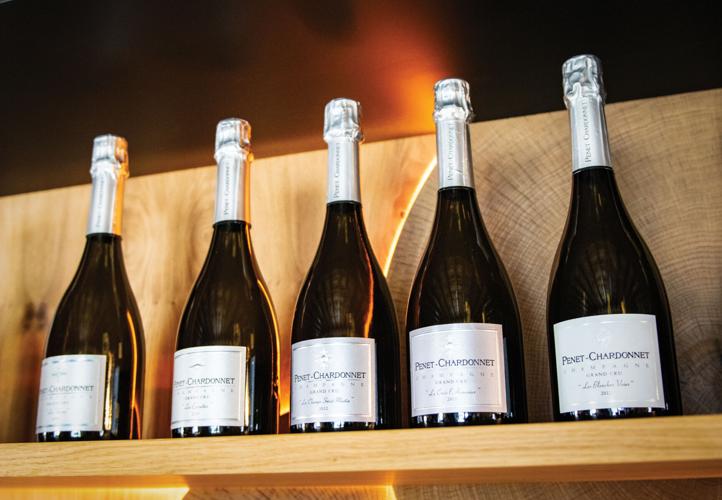
While the celebrated houses dominate many wine lists, some of the region’s most memorable discoveries come from family-owned producers whose names rarely leave Champagne.

Champagne
The Champagne region’s history isn’t only about wine — it’s a 2,000-year-old story of celebration that unfolds against a recurring backdrop of war. Storied points of interest abound, and many visitors find it difficult to balance historic tours and Champagne tastings.
In the early years, the region saw the War of the Succession of Champagne from 1216 to 1222. Érard of Brienne-Ramerupt and his wife, Philippa of Champagne, claimed the county against its underage heir, Theobald IV — but were ultimately defeated by Theobald and his mother, Countess-Regent Blanche of Navarre. From 1914 to 1918, armies fought four devastating battles in Champagne during World War I, causing extensive soldier and civilian casualties.
During World War II, German forces occupied Champagne and requisitioned millions of bottles, while producers struggled with labor shortages and scarce supplies. Some growers and houses resisted by concealing their finest wines, delaying shipments and protecting their cellars as best they could. The region’s survival became another chapter in its long history of endurance.
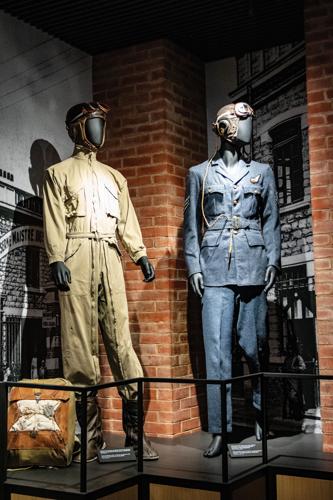
And it’s because of World War II that Reims holds one of the most important moments in world history. In the early hours of May 7, 1945, German Gen. Alfred Jodl signed the instrument of unconditional surrender in a Reims schoolhouse serving as Gen. Dwight D. Eisenhower’s headquarters. This brought the war in Europe to its end, and the surrender took effect the following day. A portion of the schoolhouse has since become the Museum of the Surrender, and visitors can enjoy a self-guided tour through French, British, American and German memorabilia as they make their way to the historic room.
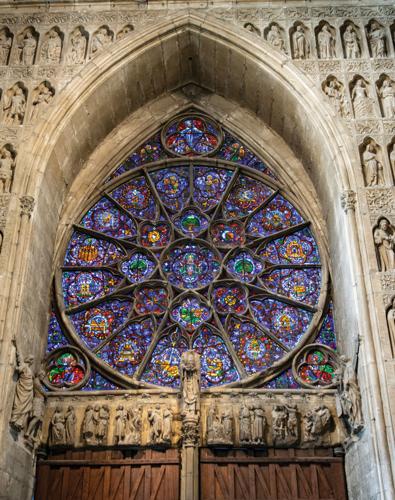
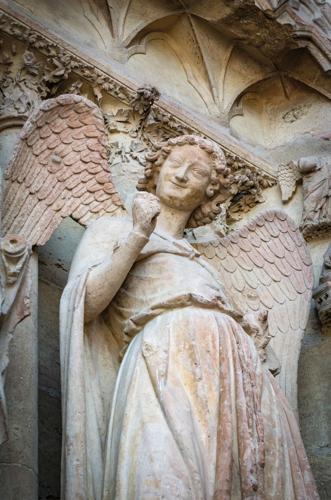
Visitors can venture further back in history by exploring Notre-Dame de Reims, where Clovis I was baptized around the end of the fifth century, establishing the city’s enduring connection to the French monarchy. The cathedral’s soaring Gothic architecture, limestone façade and celebrated Smiling Angel — damaged during World War I and later restored — make it one of France’s most historically significant churches.

Royal Champagne Hotel
After days of exploring the historically rich region, it’s only fitting to have an elevated setting to relax and reflect. The Royal Champagne Hotel offers travelers just that.
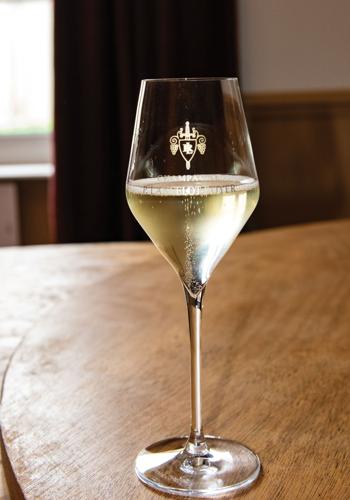
The hotel’s caring team — seemingly equipped with three staff members for every guest — warmly greets visitors, and no request is too much. Travelers can unwind with a crisp glass of Champagne, resetting the mind and relaxing the senses after a long international flight. The hotel’s spa offers additional rest and rejuvenation for the travel-weary.
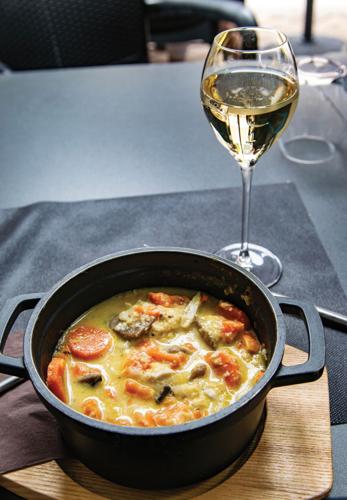
The restaurants at Royal Champagne Hotel & Spa embrace refined French cuisine while showcasing the flavors of the Champagne region. Whether enjoying a leisurely breakfast overlooking the vineyards or a multicourse dinner paired with exceptional Champagnes, every meal reflects the elegance and hospitality that define the region.
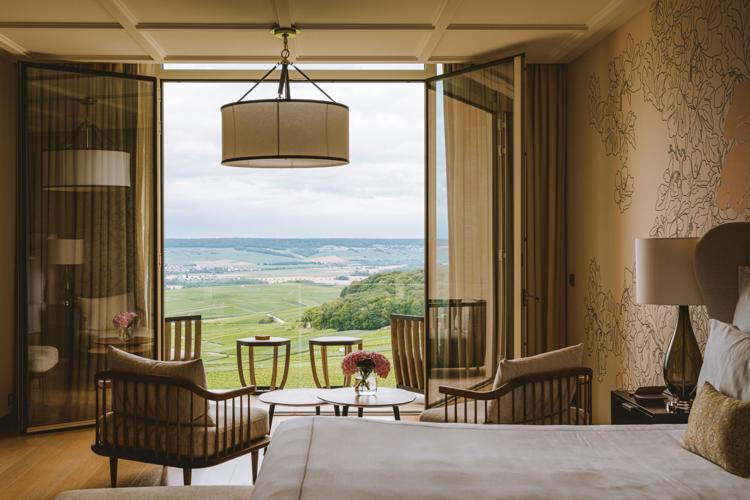
The hotel’s spacious rooms — complete with Juliet balconies and soothing neutral palettes — offer sweeping views of Épernay and the Champagne countryside below. Many guests enjoy sunset views while raising one last glass for the evening and taking in the serenity of the moment.
Sitting on the terrace overlooking vineyards that once saw armies march across them, it became clear to me that Champagne’s greatest luxury isn’t simply what’s poured into the glass — it’s the resilience of a region that has reinvented itself time and again while remaining unmistakably Champagne.


Commented
Sorry, there are no recent results for popular commented articles.