
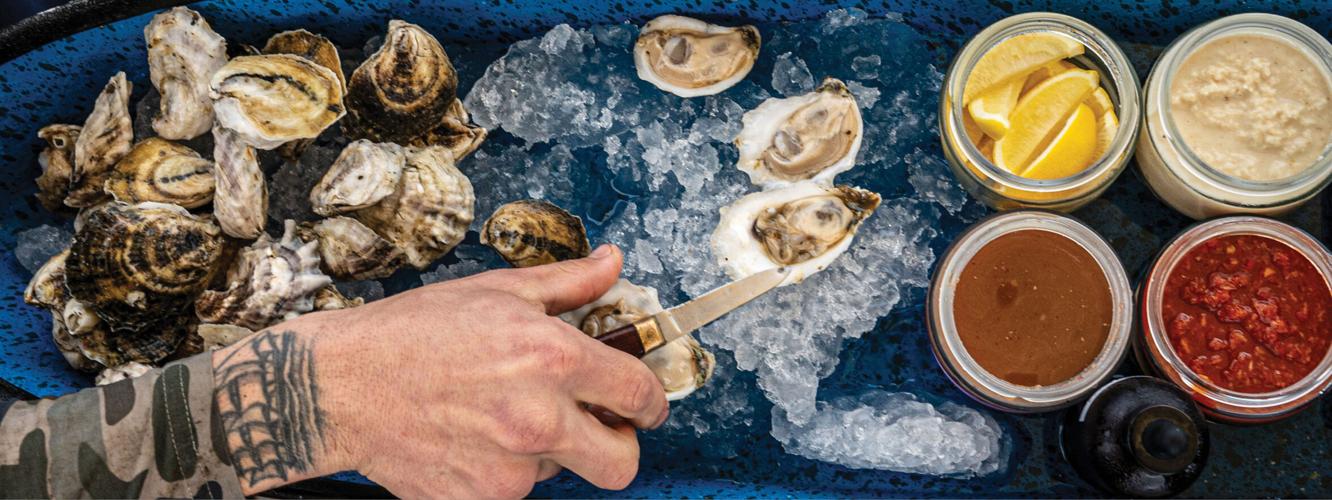

Deep in the coastal waters and estuaries of Louisiana lives one of New Orleans’ trademark culinary delights — oysters. Oysters have long been a mainstay of the working-class dining table and have recently ascended to the white-clothed tables of the city’s top eateries.
But lately, oystermen and fishermen keep uttering the phrase — “you’re losing it as you’re looking at it” — as they battle climate change and habitat erosion to secure their catches. As waters rise due to global warming, politicians have worked to slow the loss of coastal wetlands using river divergence. All the changes also impact the broad diversity of aquatic life that call Louisiana’s waters home.
In an effort to raise awareness and sustain a precious commodity, the Four Seasons Hotel New Orleans has created a unique way for guests to learn about oyster farming through its Oysters Take Flight program.

In the fathoms below
In New Orleans, oysters are as much a part of the cultural tapestry as jazz, beads and beignets. It was here in the 1840s that many Croatian-Slavonian immigrants settled. In the new world, men found work as fishermen — more specifically, oystermen — to earn enough money to bring their families over from Croatia. Oysters became a staple in the diet of the new Americans who fished and consumed the large, meaty bivalves found in the Louisiana waters.
Cold-blooded Eastern oysters, or Crassostrea virginica, live in the warm waters of Louisiana’s estuaries, bays and bayous. As seed oysters, the bivalves sink to the bottom of the water, where they affix to hard surfaces, like rocks or other oysters, and stay for the rest of their lives. In this process, oysters create a cluster called a reef. Oyster reefs provide a safe habitat for other marine life, including mussels, barnacles and sea anemones, and food for fish, like anchovies, blue crabs and herring.
For over a century and a half, oysters have been a staple in cities and towns across the Gulf Coast. However, more and more life in supporting waterways is being threatened by climate change. Oysters need conditions that are just right for their survival. If the water isn’t salty enough, the oysters can’t thrive and populations shrink. If the water is too salty, the oysters become more vulnerable to certain bacteria. The erosion of Louisiana’s wetlands makes the water saltier, while river divergence adds too much freshwater to the mix. And as water temperatures rise, so do disease and mortality rates for aquatic life — including indicator species, like oysters.

Four Seasons Hotel New Orleans
In the bustling downtown area of Canal Street looms the Four Seasons Hotel New Orleans. The imposing icon sits on the banks of the mighty Mississippi River — standing sentinel for decades, as ships and barges have meandered by. Once the International Trade Mart — New Orleans’ equivalent of the World Trade Center — the building was eyed for demolition. A small-but-mighty group of residents petitioned to save the culturally and historically significant building. In 2014, the building earned a spot on the National Register of Historic Places list. Not long after, Four Seasons purchased the building and converted it into a hotel and luxury residences, which opened in 2021.
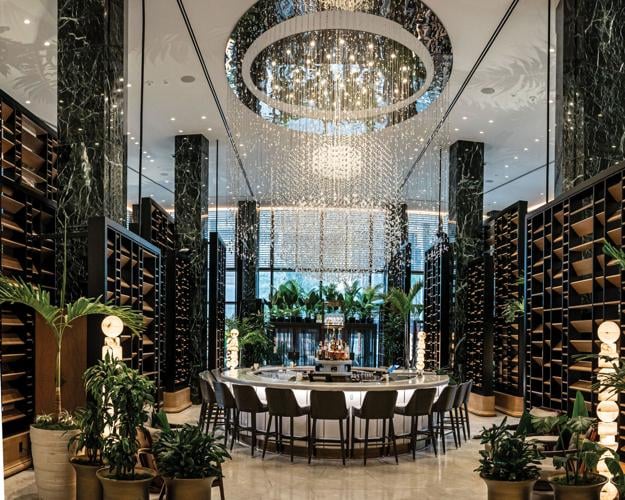
With an emphasis on restoring and preserving the historic elements of the property, the hotel offers a nod to mid-century modern elegance and style. One of the show-stopping features is the stunning crystal chandelier — hand-crafted in the Czech Republic — that floats above the oval lobby bar. The expansive guest rooms — many offering views of the mighty Mississippi — are richly furnished with a soothing neutral palette, making guests feel immediately at home in their surroundings. The spa experience is tranquil and serene, with a whole host of treatments available to help guests relax and unwind.

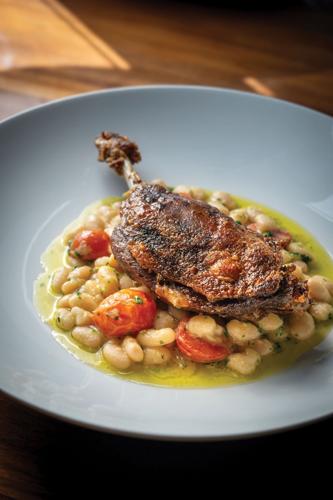
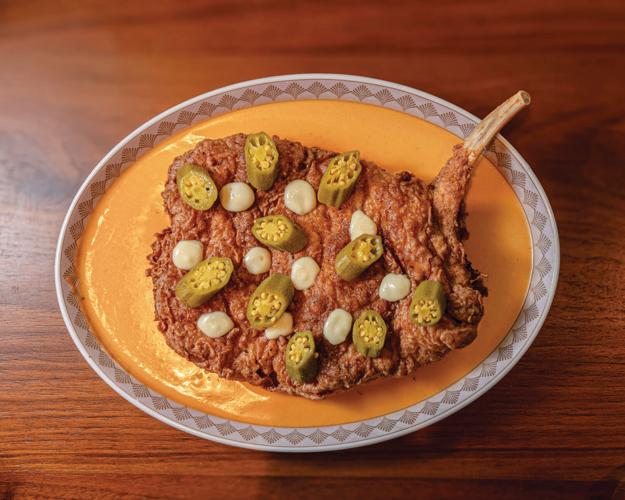
Not-to-be-missed experiences include the hotel’s culinary hotspots, Miss River and Chemin à la Mer. Miss River is chef Alon Shaya’s “love letter to Louisiana,” showcasing local specialties and Cajun flavors. The restaurant has an almost Parisian-cafe feel, with dishes that are approachable, comforting and delivered to the table by a warm and inviting team. The menu offers outstanding signature dishes like clay pot dirty rice, salt-crusted Gulf red snapper, duck and andouille gumbo, and a massive fried bone-in pork chop — making repeat visits (or having friends who share) a must.
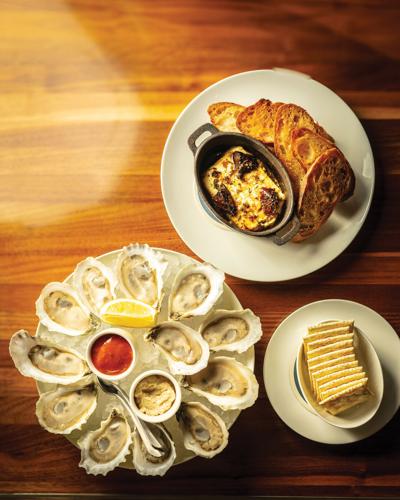
The crown jewel of the Four Seasons Hotel New Orleans dining is Donald Link’s Chemin à la Mer. Sweeping views of the Mississippi play a supporting role to the star of the show — the cuisine. An award-winning chef, Donald has developed some of the top restaurants in New Orleans — like Herbsaint and Peche, to name a few. His Chemin à la Mer features a healthy selection of fresh oysters, as well as dishes like filet mignon with dauphinoise potatoes, blistered cherry tomatoes and béarnaise sauce, or blackened Gulf snapper with sweet corn and summer bean succotash.

Oysters Take Flight
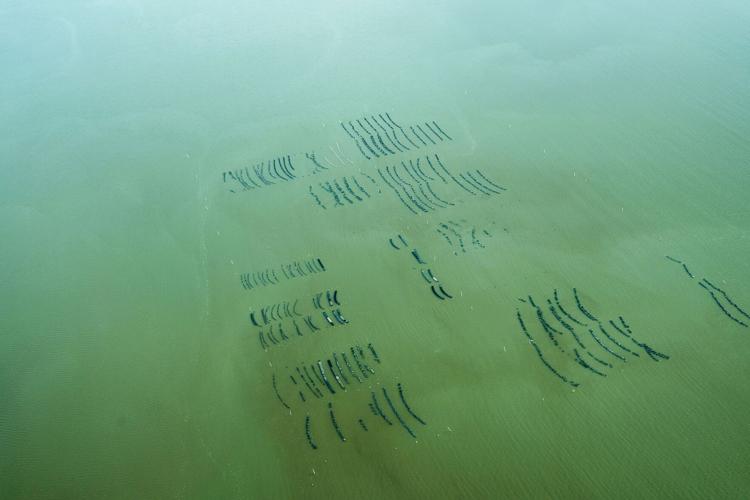
Oyster farming is thought to date back to the ancient Romans. The practice, while prevalent on the East Coast, is relatively new to Louisiana. To raise oysters, farmers fill floating baskets with seed oysters that grow until they’re ideal for market. The floating cages not only provide protection from predators, they’re also portable — easily moved out of the path of oncoming hurricanes.
One of the core tenets of Four Seasons Hotels and Resorts is a commitment to conservation. Each property identifies green initiatives that support the local economy and furthers education through engaging programs for guests. In partnership with Little Moon Oysters, the Four Seasons Hotel New Orleans created the Oysters Take Flight program to help guests learn about oyster farming — all while enjoying Champagne and delicious cuisine. “Our latest experience, Oysters Take Flight, offers an unparalleled educational adventure that combines our rich culinary heritage with our commitment to coastal sustainability,” says Mali Carow, general manager of the Four Seasons Hotel New Orleans.

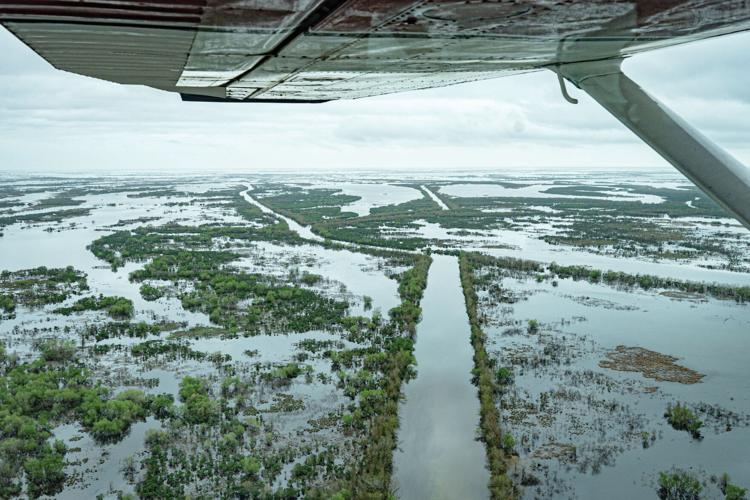
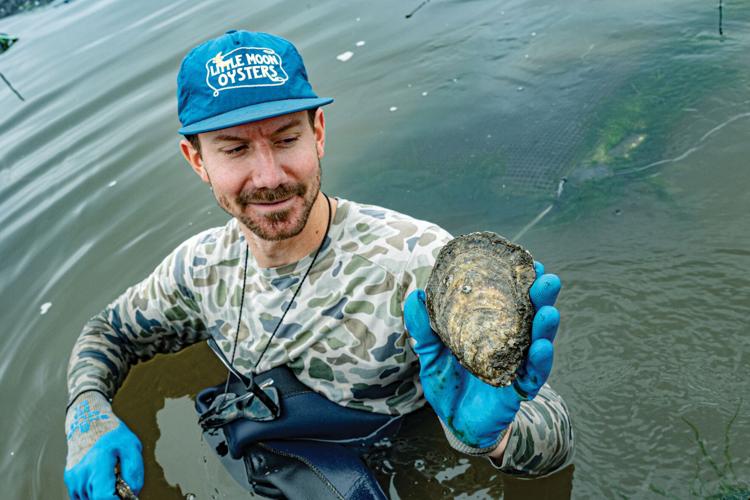
The program begins when Four Seasons guests board a chartered seaplane that flies over Louisiana’s lush and mystical coastal marshland as the pilot expertly describes the geography below. When the seaplane softly touches down, a boat arrives with Four Seasons team members, Chemin à la Mer chef Justin Koslowsky and Little Moon Oysters founder Ryan Anderson — plus a variety of culinary treats and crisp Champagne to enjoy. As guests arrive at the oyster cages, Ryan quietly slips into the water and begins an engaging explanation of his process — beginning with buying the baby oysters and rotating them though the cages as they grow. He then harvests a small number of oysters for guests to taste. The flavor is extraordinary — and a welcome reminder that Louisiana produces many of the oysters consumed in the United States.
After an enjoyable afternoon, and a quick ride on the sea plane back to shore, guests enjoy a tasting in the Four Seasons’ ode to classic Gulf Coast dining, Chemin à la Mer — the perfect way to end a one-of-a-kind adventure.



Commented
Sorry, there are no recent results for popular commented articles.