
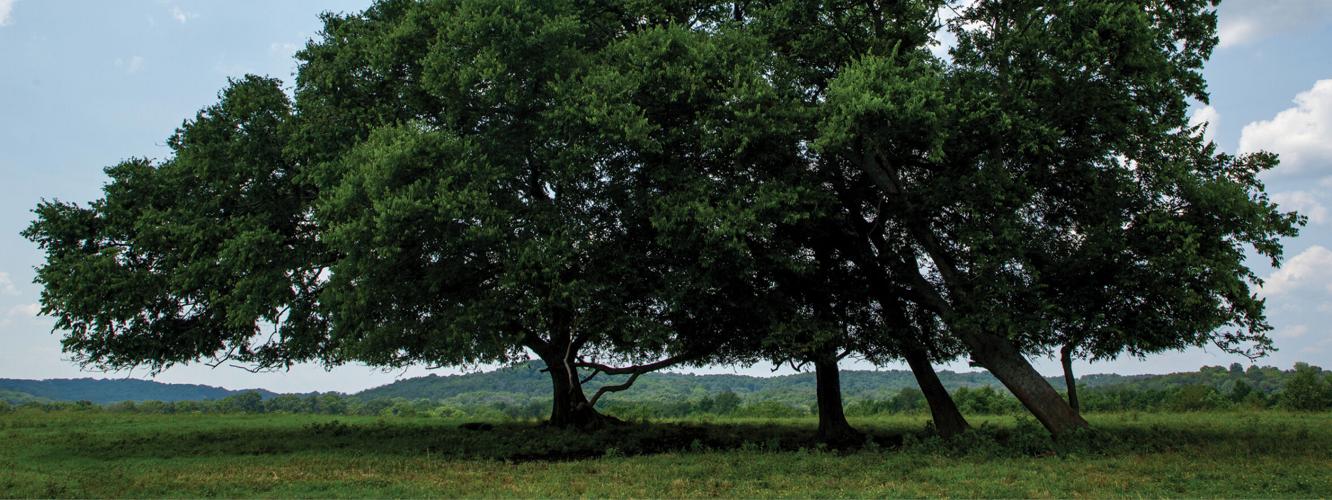
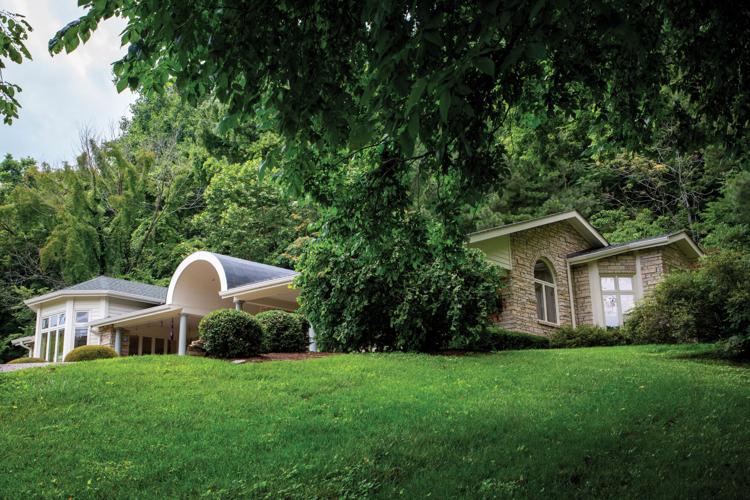
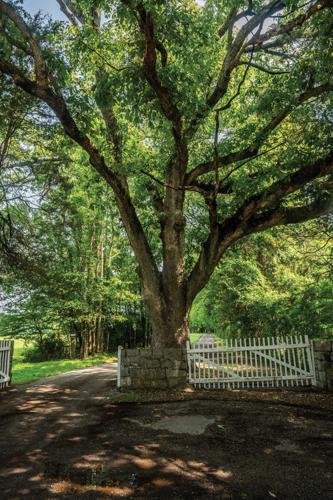
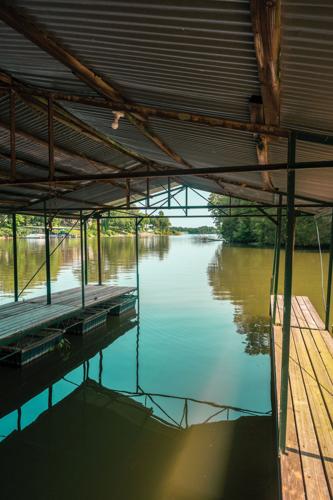
Nashville is an ever-budding metropolis. With nearly 80 to 100 people moving to the city per day, its soundscape is incomplete without the roar of construction. But let this not distract us from the rolling hills, grassy terrain and abundant wildlife Tennessee is known for. Through the Land Trust for Tennessee, several private landowners have protected these natural pockets of serenity — and the legacies they carry.
Since 1999, the Land Trust has preserved the distinct character and history of Tennessee landscapes. Through conservation easements, land acquisitions and community-focused projects, the organization protects 137,000 acres of land across 76 counties.
While the Land Trust uplifts stunning properties, it also celebrates landowners. The passionate individuals behind these plots add immeasurable value, infusing their distinct personalities into the very land they nurture.
Nfocus visited with three of these landowners to discuss their work with the Land Trust to preserve the spaces that keep Middle Tennessee green.

Karen Guy
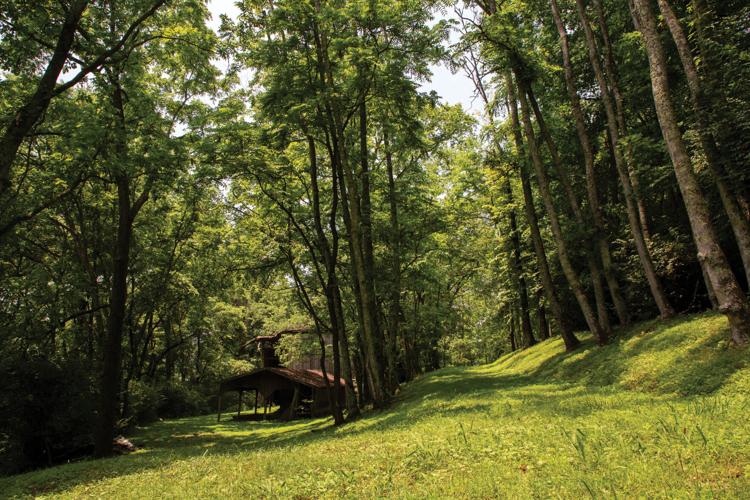
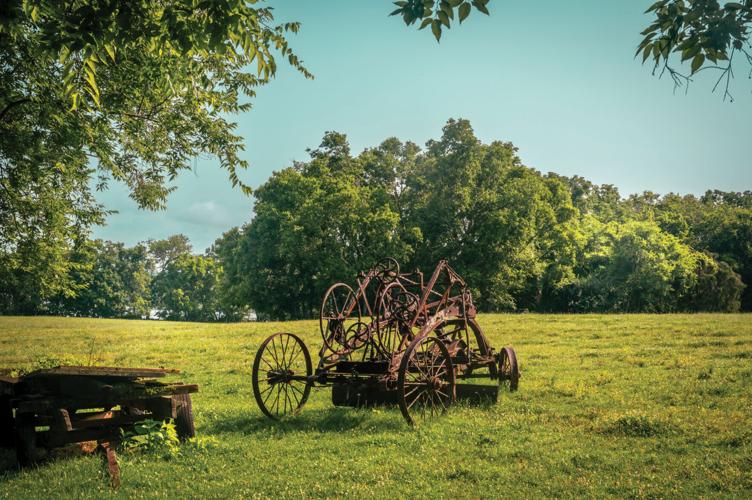
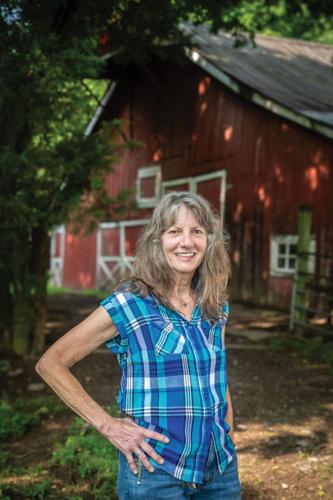
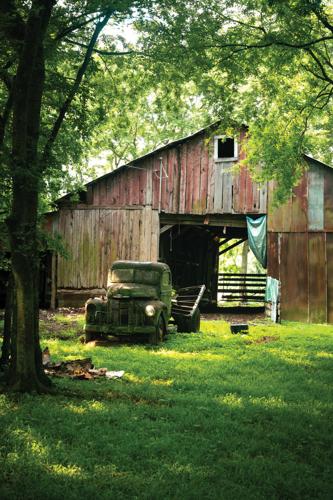
If Karen Guy invites you over to her lush, serene property, she’s bound to show you the sights with excited fervor. With farming equipment from the 1920s, a restored red barn and an aerial property map from around 1937, Hunter’s Hill Farm brims with glimpses of days gone by. “I have an intense love for this place,” Karen says. “I know every rock and tree.”
Despite rapid commercial expansion in Davidson County, sweet spots of undeveloped nature and rich history remain. Hunter’s Hill Farm is one such place. Andrew Jackson owned the land from 1797 to 1804 before moving to the property now known as Andrew Jackson’s Hermitage. His granddaughter, affectionately known as Little Rachel, raised Karen’s great-grandfather. Hunter’s Hill has always played a pivotal role in Karen’s family, as her great-aunt and great-uncle passed the farm — and its legacy — down to her. These historical ties are the crux of the land, where Karen has lived since 1979.

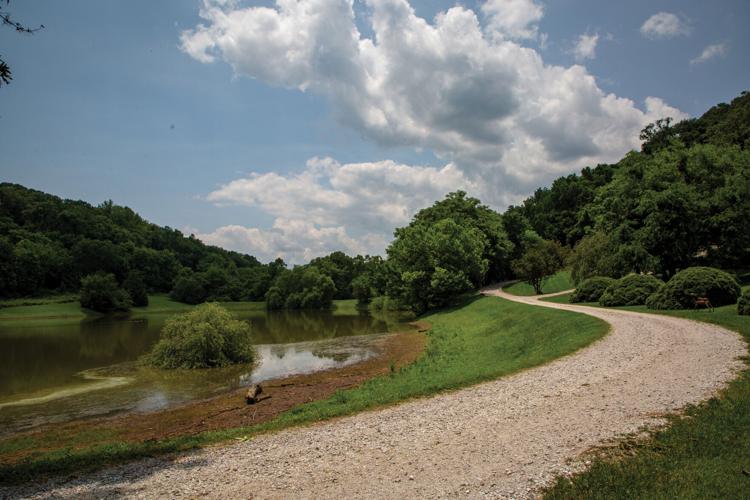
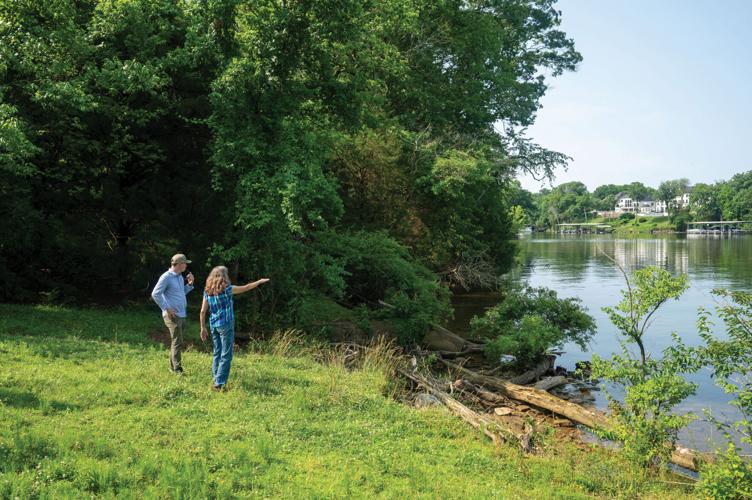
Hunter’s Hill spans 178 acres and features a mile and a half of lakefront property on the Cumberland River. Karen’s palpable love of nature urged her to connect with the Land Trust and protect her property in 2007, which has since earned Greenbelt status. And in 2018, her sister, Judy Guy, protected her farm in Wilson County, which has been in the same family for seven generations. “I saw what was happening around me,” Karen says. “I just don’t think I could have stood it if this ground was bulldozed and houses were built.”

While receiving an appraisal to justify land conservation is an accomplishment in itself, maintaining Hunter’s Hill is a collaborative process. Karen spearheads logistics and livestock care but outsources assistance with lawn upkeep. When not working on the farm, Karen’s land-focused pursuits overlap with her hobbies, which include gardening, searching for arrowheads and trail riding with her horse. Much of her contentment stems from being connected to her farm. “I think a lot of problems with people’s depression and unhappiness is [that] they’re so far removed from the land,” Karen says. “The land gives you soul and purpose.”
Since 2007, Hunter’s Hill has exemplified nature’s restorative qualities and its ability to foster community. “I knew that this place is special,” Karen says. “It’s a healing place. You get a good feeling when you come here, and you feel like you’ve gone back in time. And I think people need that.”

John Kinnie Jr.
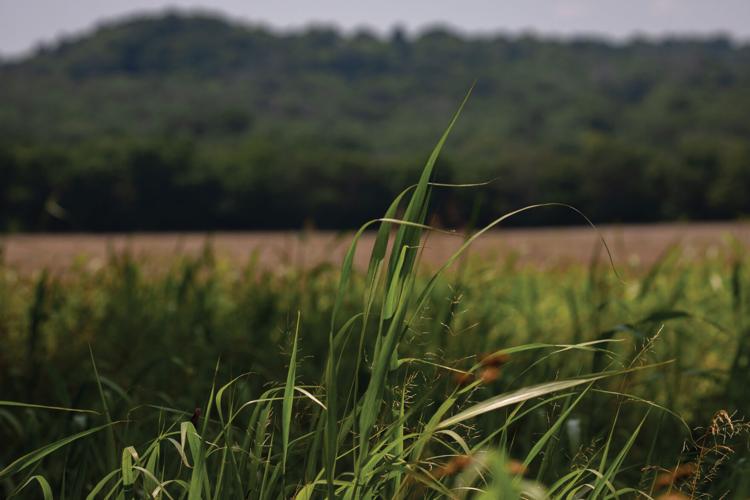
John Kinnie Jr.’s property is perhaps one of the most peaceful and secluded in Williamson County. For miles and miles, there isn’t a house in sight — only vibrant grass, flourishing trees and meticulously planted row crops.
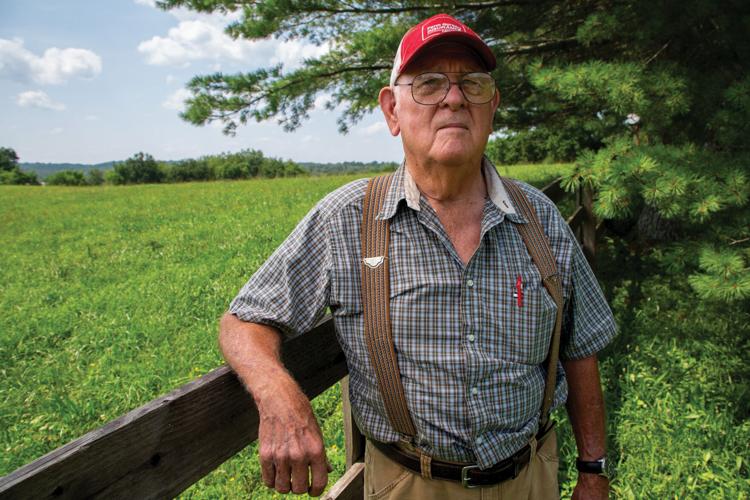
Protecting prime farmland with the Land Trust didn’t just ensure John’s property would remain untouched — it further cemented the Kinnie legacy. John’s grandparents bought the property right before the Great Depression. And from childhood, John developed his profound love of the great outdoors there. The farm has been his home for his entire life — 81 years, to be exact. “My grandparents worked hard on it,” John says. “And they were always trying to be conservation-conscious. We’ve always worked to save the soul.”

John turned to the Land Trust for support in 2022. He placed 139 acres of land into a conservation easement, which ensures the space will remain undeveloped in perpetuity. With his brother and sister owning and operating individual portions of the family farm, the total land amounts to an impressive 500 acres. John made sure to protect his portion and hopes to conserve more property with the Land Trust in the future. “This is as home as it gets,” he says.
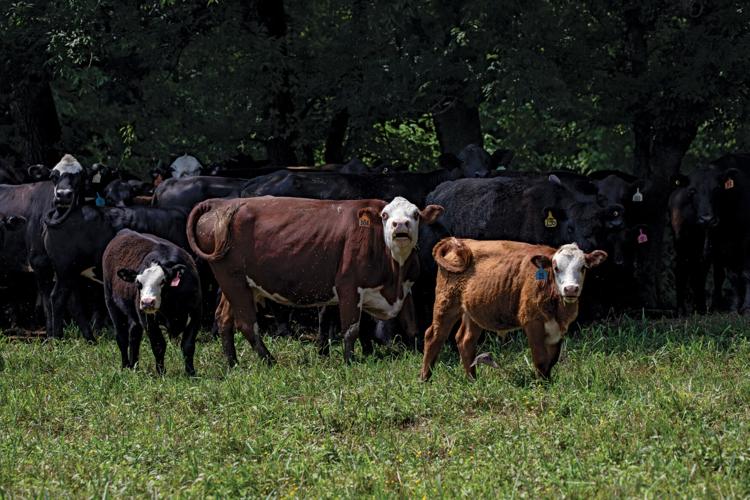
With a roughly “165-head cow-calf operation” and nearly 120 acres designated for row crop farming, there’s never a dull moment. And even when John isn’t working on the farm, he still enjoys its scenery. “If I’m not on a tractor somewhere or working with a cow, I just like to be there, listen to nature, watch the trees and the grass grow, hear the birds and watch the wild turkeys and my deer,” he says.

His conservation efforts have further preserved the land’s environmental benefits, like producing crops and providing clean air. “This country needs open [land] to produce food for us,” John says. “I don’t want to see it just grown up with houses. Since this is a unique piece of property, it just means a whole lot to me.”
When looking toward the future, John hopes more landowners will be encouraged to protect their properties with the Land Trust, as he did. “This is my heaven on Earth right here,” he says.

Emily Magid
Past a canopied, tree-lined street outside downtown Franklin lies Emily Magid’s private oasis. The property’s tranquility and stunning scenery drew Emily in when she first viewed the land. “I came across something on a Sunday,” she says. “I went and looked at it. I bought it that Thursday.” After making the space her home, she nurtured her passion for conservation. “I knew that when I moved here, I never wanted it developed,” Emily says.
As Franklin becomes an increasingly sought-after city to live in, protecting natural greenspaces has become an even bigger priority for private landowners. “There’s 300 acres next door to me, and they just sold it to a developer,” Emily says. “They are going to drop a small city in the middle of a cow pasture with absolutely no infrastructure.”

Emily preserved her Greenbelt property with the Land Trust in 2007, emphasizing that, after she passes, she wants her land to be donated to Walden’s Puddle, a nonprofit rehabilitation and rescue center. “It appealed to me, because I knew that the property would be safe,” she says. “It would always be at least 72 acres of pristine land.”
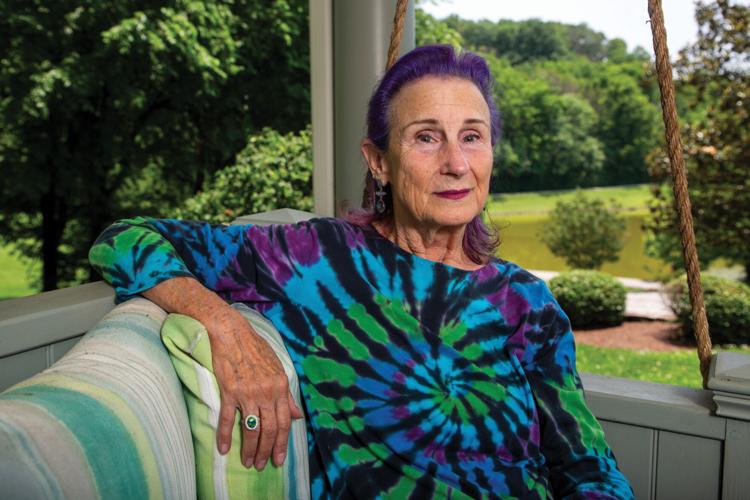
And pristine land, it is. Beautiful landscaping, intricate gardening and shaded walkways make the space a welcome sanctuary from the rest of the city. When at home, Emily enjoys sitting on her porch, listening to her wind chimes and looking out at the pond in her front yard. “I’m in nirvana,” she says. “It is just a fabulous place, and I’m so happy to be here.”

Her dedication to preservation propels her philanthropic work, where she serves as a board member for multiple organizations, including the Heritage Foundation of Williamson County, Harpeth Conservancy, Walden’s Puddle and Friends of Williamson County Animal Center. “I’m not on these boards just to be on a board,” Emily says, chuckling. “I’m a worker bee.”
When reflecting on her land and its history, Emily glows with appreciation. “There’s so much development, and here we were in this perfect little alcove,” Emily says. “I have always loved being out in the open.”


Commented
Sorry, there are no recent results for popular commented articles.