
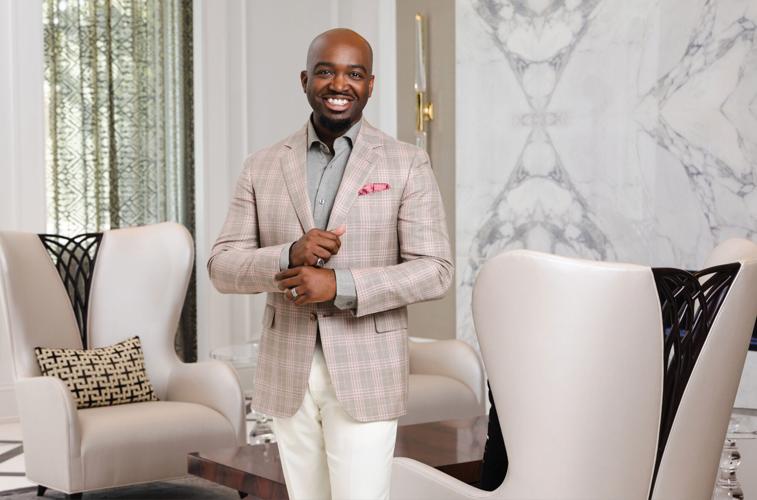
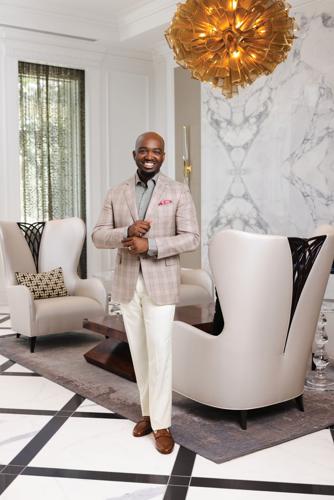

Profession: Deputy director of strategy and advancement
Nonprofit: National Museum of African American Music
Dexter D. Evans has always been surrounded by song. “I grew up in Muskegon Heights, Michigan, a small, predominantly Black city where music was everywhere,” he says. “Church choirs on Sunday. Motown on the radio. Marching band on Friday nights. Music shaped how I understood community, resilience and joy.”
Now, he harnesses his passion for music on a global stage, serving as the National Museum of African American Music’s deputy director of strategy and advancement. In 2022, Dexter launched fundraising efforts for the museum, which highlights gospel music, blues, jazz, rhythm and blues (R&B), and hip-hop. “I don’t do this for recognition,” he says. “I do it because I believe NMAAM is one of the most important cultural institutions in America, and I’m honored to help build it.”
Dexter’s passion for the arts, bridge-building skills and deep care for Nashville have helped him secure over $9 million in gift commitments and manage relationships with major corporate partners. Working directly with artists, Dexter welcomes more than 50 nationally recognized musicians into NMAAM, many of whom have donated artifacts to the museum’s collection.

“Dexter is one of the most talented fundraisers and communicators I’ve worked with in my career,” says William Jeffries, executive director of NMAAM. “He doesn’t just raise money. He builds believers.”
NMAAM narrates how Nashville would not be called “Music City” without Black music. In 1871, the Fisk Jubilee Singers performed spirituals for Queen Victoria in hopes of saving their university from bankruptcy. The power and vitality of their voices inspired the queen to dub Nashville “a great American city of music.” NMAAM emphasizes that this is where the city’s reputation came from. “Not Broadway,” says Dexter. “Not the honky-tonks. Nine Black students singing spirituals in front of a queen.”
Dexter’s time at the museum has taught him that preservation is an act of love. “Every artifact we collect, every story we tell [and] every student who walks through our doors is a statement that this history matters, that Black creativity matters and that the music people listen to every day has roots they deserve to understand,” he says.
His favorite aspect of NMAAM? “The artist moments,” he says. “When 50 Cent walks through our galleries. When Jon Batiste sits down at a piano in our lobby. When Bootsy Collins donates a piece of his history to our collection. Those moments remind me why we exist.”


Commented
Sorry, there are no recent results for popular commented articles.