
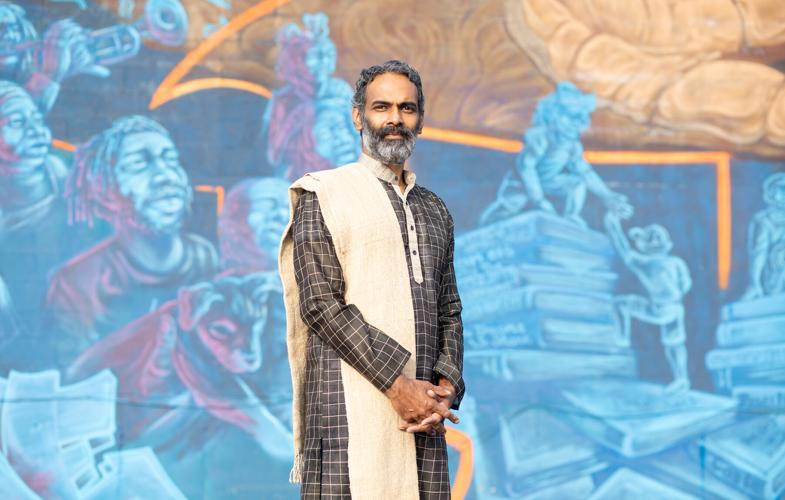
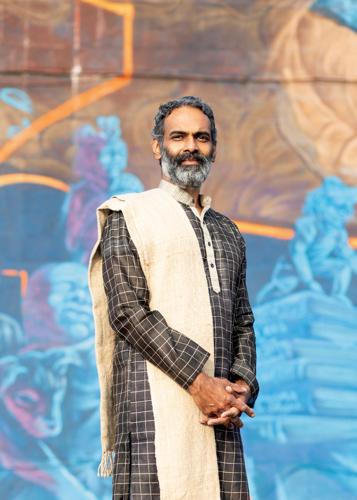

Born in Chennai, India, Daniel Phoenix Singh found an early fascination with technology and took a clear career path, majoring in computer sciences. Well into his time in higher education, and much later than is typical, Daniel discovered the unexpected — a passion for dance — and decided in his senior year to stay longer, pursuing dance as a major.
Daniel pioneered a syncretic dance style that combined his two loves — Western modern dance and Bharata Natyam, one of eight Indian classical dance forms — that culminated in the Daniel Phoenix Singh Dance Company, Dakshina. As he brought these cultural ideas together, he encountered pushback from mainstream critics and donors; even audiences had to be convinced that this art was as worthwhile as typical Western artforms. Between the institutional difficulties that can accompany interdisciplinary studies and the initial cool reception of Dakshina, Daniel realized the importance of actively championing diversity and accessibility for the arts.
After living in Washington, D.C., for 30 years, Daniel took the position of executive director at Metro Nashville Arts Commission — colloquially known as Metro Arts. He works to examine and remedy systemic obstacles to creative spaces and is committed to the redistribution of resources, access and acknowledgement to underserved artists and arts communities. The artists of Metro Nashville teach and inspire Daniel to embrace the role of “servant leader,” and he hopes to be back in dance classes and choreographing soon. Daniel is a single parent to his amazing four-year old twins and says the pair, “teach him to be a better human daily.”
The Legacy Mural can be viewed at 27th Ave. N. and Jefferson Street. More about Woke3 and his work can be found at WokeThree.com and LiberatedGrounds.com

What did you initially want to be when you grew up?
By ninth grade, I’d developed an interest in computer science; always a nerd in every sense of the word, I’m still fascinated by the subject and its applications.
What have been some of your goals as Metro Arts’ executive director?
My goal was “get to know this community,” and it’s been deeply enriching. I’ve been able to attend a Bharata Natyam performance at the Sri Ganesha Temple, local artists Thaxton Waters and Elisheba Mrozik took me on an art crawl through North Nashville, I’ve experienced shows at TPAC, and more.
What opportunities and trends are you seeing in the Nashville arts community?
Metro Nashville is ripe for a triennial festival to bring artists and communities together around shared projects and programs. I also see opportunities for dedicated and collaborative arts journalism.
Technology advancements are transforming the arts community through newer mediums — like digital and virtual art — and through conversations about artificial-intelligence-based art generators. I would love for Nashville artists to be involved early in this discussion and decide how — and if — they want to participate in these new mediums.
An underground arts community is burgeoning in Nashville: They get permits in temporary spaces, set up pop-up events, create a buzz within and through their networks, and — to rave reviews — open and close a show within one week. We should be paying attention to and helping support those pop-ups: These artists are valuable, up-and-coming innovators and researchers. They are where young adults are going for their arts exposure.
Where do you find inspiration?
I listen to podcasts voraciously — thank you, Nashville traffic — and I stay informed through supportive communities like the Arts Administrators of Color Network and the Goldenrod Arts Collective. Most influential, though, are the artists and community leaders of Metro Nashville. They inspire me to keep dreaming.
How do recent intentional steps toward DEIA (Diversity, Equity, Inclusion, Accessibility) seem to be shifting the current landscape of the arts?
DEIA efforts became increasingly visible around #MeToo, Black Lives Matter and racial injustices amplified by the Covid-19 pandemic. What I’m learning from these efforts — and what is shifting in the current landscape — is the importance of understanding which efforts perpetuate current inequities and systemic divides, and which ones are moving towards a true reform and new systems that are community-led and co-created.
At Metro Arts, I have worked hard to center the community of artists in all decision-making processes, to find equitable and restorative ways of advancing our mission, and to understand my own privilege and power — how I may be complicit in systemic problems. Artists — acting as community advocates — have guided and inspired me through their commitment to place-keeping in their communities.
How would you recommend people get involved in the local art scene?
We are so immersed in the arts that we forget how lucky we are, so let’s pause and reframe this question: How could we better recognize the ways we are surrounded by — and interact with — the arts?
People unconsciously interact with art every day: Look to the talents of grandparents who quilt; the intentionality behind your father’s favorite soup recipe; the creativity in a child’s improvisational skills as they play “dinosaur-mermaid-pirate-princess.” As you read this article, you’re actively appreciating photograph placement and the readability of fonts — art!


Commented
Sorry, there are no recent results for popular commented articles.