
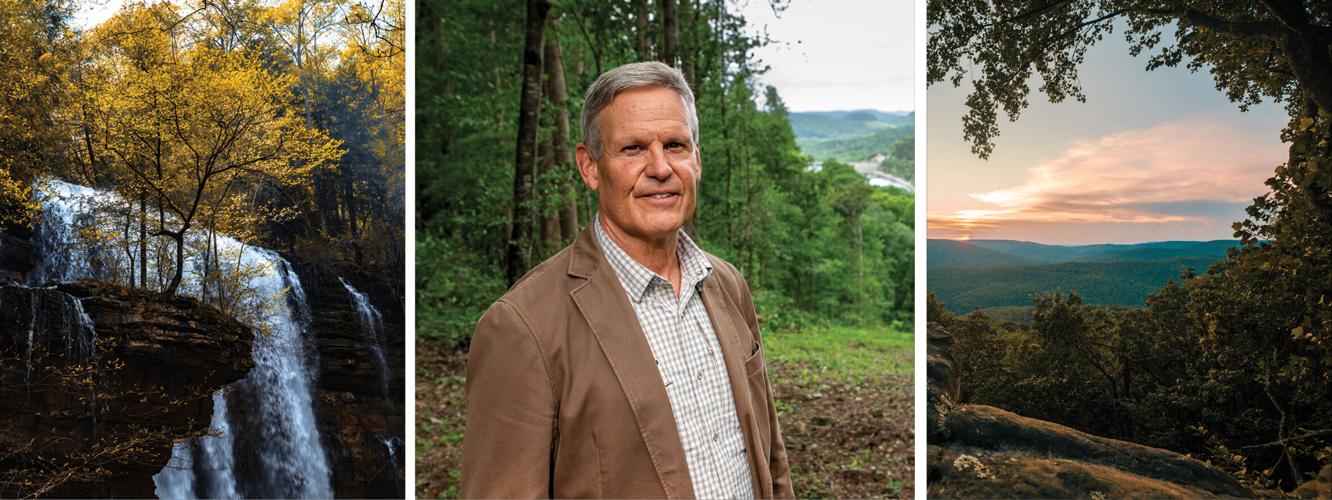
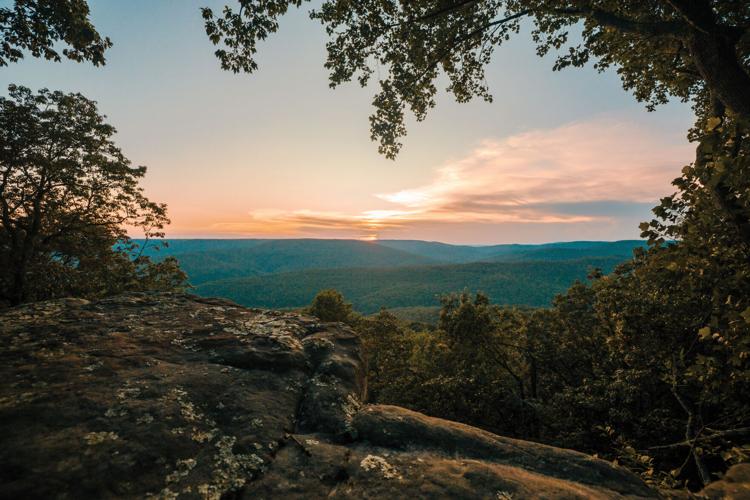
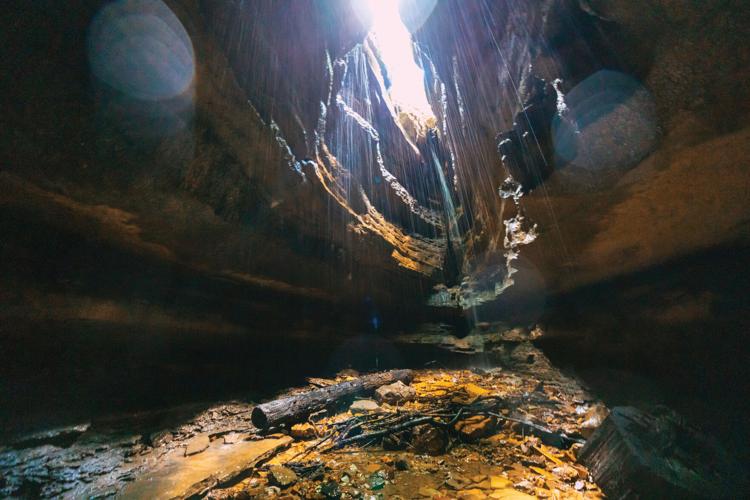
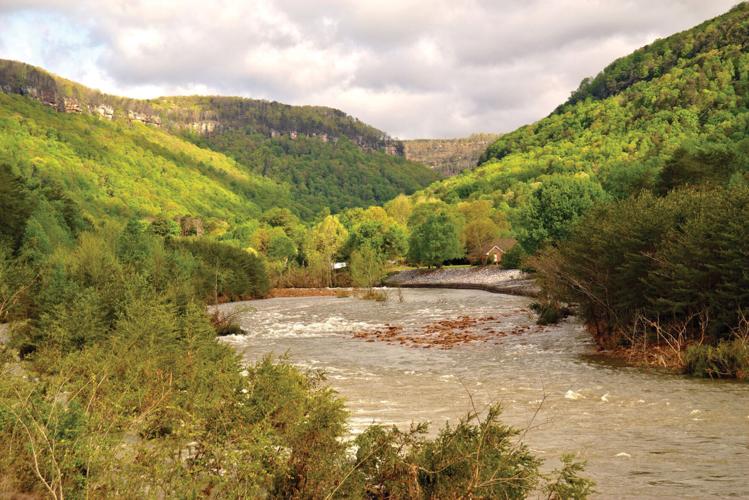
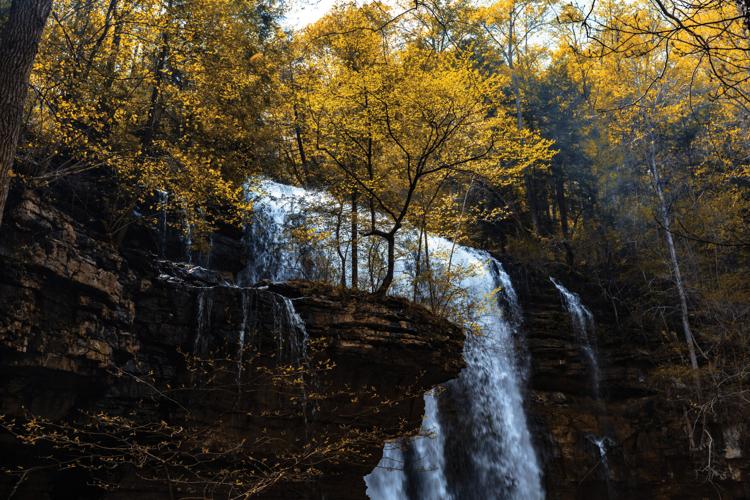

Each morning, birdsong echoes beneath Tennessee’s dense tree canopy as rivers and waterfalls continue the same rhythms they have followed for thousands of years. Along the trails of Savage Gulf State Park, hikers gather beneath towering sandstone bluffs while the Duck River winds quietly through Middle Tennessee farmland.
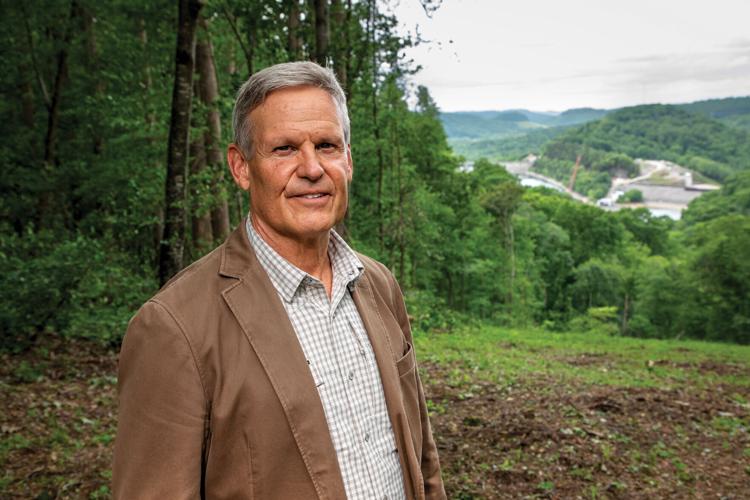
During his tenure, Gov. Bill Lee has overseen the largest expansion in the number of Tennessee state parks under a single administration — adding 14 new parks by the end of his time in office. Long before he entered politics, Lee developed a connection to Tennessee’s outdoors, spending days on his family’s farm exploring creeks, woods and pastures. When Lee was 10, a neighbor involved in bird banding taught him about protecting local birds and giving them clean water. It was at this young age that Lee recognized the importance of stewardship — a lesson he’s never forgotten.

Tennessee Identity
Agriculture remains one of Tennessee’s leading industries, contributing $103.8 billion annually to the state economy, according to a University of Tennessee study. Like Lee, many Tennesseans grew up working the land. And it was through farming and exploring the rolling acreage of his family’s Triple L Ranch that Lee’s passion for conservation took root.
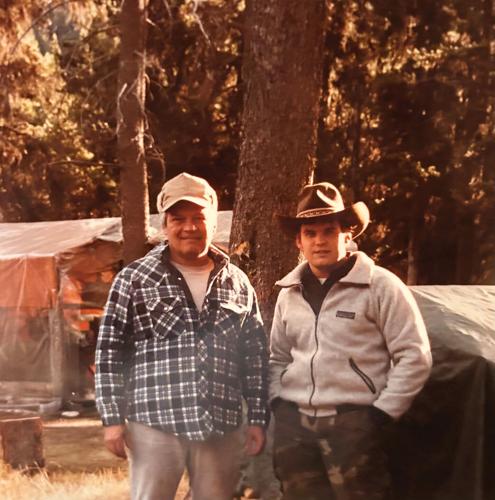
“I grew up with the woods right behind our house,” Lee explains. “I was a kid who played in the creek and swam in the river and hunted in the woods.” His father often took the family canoeing on Tennessee rivers and camping in state parks — experiences that deepened Lee’s appreciation for the outdoors and the state’s natural beauty. “When I was old enough, I developed a real deep appreciation for our natural resources,” he says.

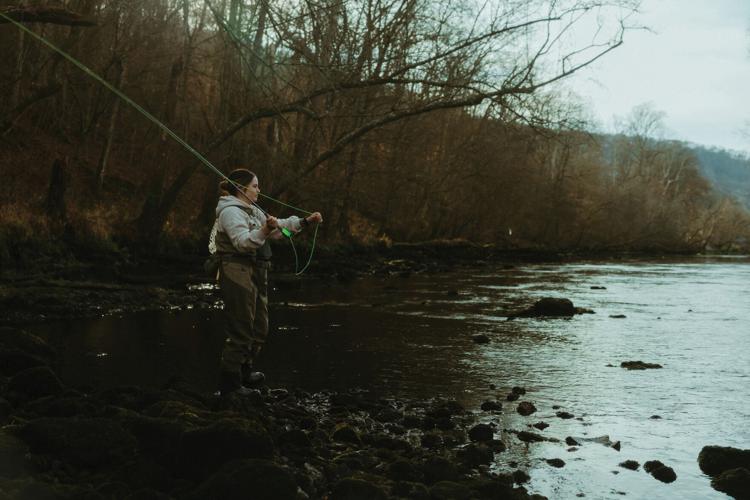
For generations of Tennesseans, state parks have served as an extension of those formative experiences — places where families camp, hike, fish and experience the state’s forests, rivers and mountains firsthand. Out-of-state visitors also recognize the natural beauty of Tennessee, making it a prime destination for outdoor enthusiasts nationwide. Each year, Tennessee’s 65 state parks welcome more than 30 million visitors and generate an estimated $1.9 billion in economic impact.
From East Tennessee’s mountains to the banks of the Mississippi River, Tennessee’s protected natural spaces have become deeply intertwined with the identity of residents and visitors alike.

Growth vs. Conservation
Tennessee consistently ranks among the fastest-growing states in the country. (The most recent U.S. Census Bureau report lists it as No. 8 in population growth and No. 10 in percent growth.) Rapid development and loss of farmland have put increasing pressure on the state’s ecosystems, waterways and rural landscapes — forcing leaders to confront the complicated balance between growth and conservation.
“You have to go at it with the understanding that you can accomplish both,” Lee says. “It isn’t easy. … But we’ve made a real effort to understand the conservation challenges that come with being one of the fastest-growing states in the country.”
Lee notes that over the past two years, Tennessee has lost nine acres of farmland per hour. Recognizing that growth will only continue in the decades ahead, Lee signed Public Chapter 470 — the Tennessee Farmland Preservation Bill — to issue grants to farmers who volunteer their land for conservation.
Protecting natural resources, like the Duck River, has also been paramount for Lee’s administration. The river, which is the most biodiverse in North America, is under threat as more people move to the area, creating an unsustainable drain on the water.
In 2024, Lee signed an executive order to help preserve the Duck River. And this year, he designated it a Class II Pastoral State Scenic River, which prohibits mining, commercial logging and landfills within two miles of the river.

State Park Expansion
After years in the private sector, Lee took office in 2019 and set out to understand the state’s park system. Working with Jim Bryson, deputy commissioner of Tennessee’s Bureau of Conservation, Lee sought to understand the needs of existing parks and expand greenspace to create new ones. “I didn’t come in with a strategy to expand parks,” Lee explains. “I came in with a strategy to understand how we could improve the situation we have in our state.”
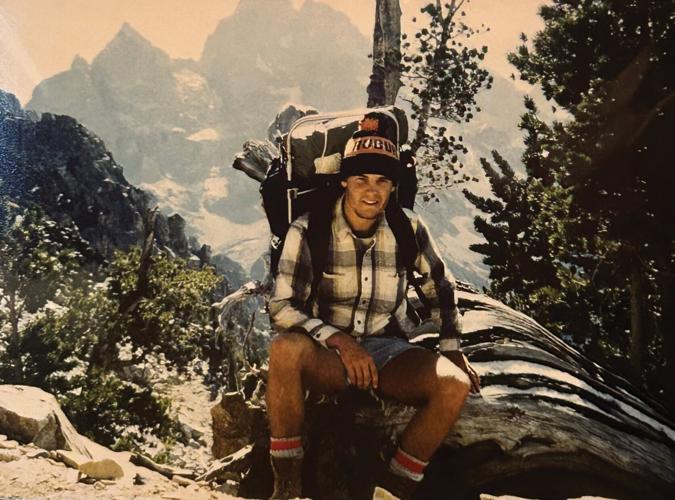
He began by developing Savage Gulf State Park — a place he’d backpacked in his youth — in 2022. “It’s a truly unique geologic area in the state,” he says. “It’s spectacular and beautiful, with characteristics you don’t find in many places in the country.”
So far, Lee has added nine state parks (about 48,762 acres) — with plans to establish six more (about 2,704 acres) by the end of his term. That will bring Tennessee’s total to 70 parks. While other Tennessee leaders, like Gov. Don Sundquist, have added more parkland in terms of sheer acreage, Lee has strategically acquired and protected land adjacent to other established parks.

One of Lee’s primary focuses has been addressing years of deferred maintenance — like updating long-neglected lodges and campsites. His administration also partnered with Rivian, making Tennessee the first state to install electric vehicle charging stations across its park system.
The crowning jewel in Lee’s expansion has been Access 2030, an initiative to make Tennessee’s parks some of the most accessible in the country. This includes adding or expanding accessible hiking trails, offering all-terrain wheelchairs, outfitting bathrooms with adult changing tables, and creating accessible canoe and kayak launches.
“We need to [enable] people to experience the trails who might not otherwise have the opportunity to do that,” Lee explains, adding that trails can be rough, and scenic overlooks can be hard to get to. “It was really important that we found a way [to ensure] — for at least some of the most beautiful places in our state — that everyone could have access.”

Impact and Legacy
While Lee’s conservation work has reshaped Tennessee’s park system, the state’s commitment to preserving public land stretches back nearly a century — to 1937, when Gov. Gordon Browning established the Tennessee state park system.
President Franklin D. Roosevelt’s New Deal kickstarted these efforts by estalishing the Civilian Conservation Corps, a work relief program focused on conserving resources and creating parks. The CCC developed Harrison Bay State Park, widely recognized as Tennessee’s first state park, and T.O. Fuller State Park (originally Shelby County Negro State Park), a state park designated for Black Tennesseans during segregation.
Subsequent leaders expanded the park system further, adding protected acreage and miles of trails. Gov. Frank Clement doubled the Tennessee state park system, establishing, among others, Henry Horton State Park, which the Duck River runs through today.

While Clement is known for protecting the Black students integrating Clinton High School, it was his political ally, Gov. Buford Ellington, who quietly desegregated Tennessee’s state parks in 1961. A decade later, Gov. Winfield Dunn signed the Natural Areas Preservation Act and the State Scenic Trails Act, protecting one of the parks Nashvillians regularly visit — Radnor Lake. The legislation also laid the groundwork for Sundquist’s aforementioned legacy work, the Cumberland Trail.
Tennessee’s conservation efforts have since expanded, encompassing trails, wildlife areas, land trusts and more. After championing Tennessee’s natural spaces as governor, former Sen. Lamar Alexander created the President’s Commission on Americans Outdoors to encourage and expand access to outdoor recreation. And while in office, Gov. Phil Bredesen protected approximately 280,000 acres of land.

Post-Office Vision
Lee recognizes his efforts are just the beginning. “It isn’t what a governor does — it’s the people in the community who understand how valuable it is what we have,” he says. “It’s what they do and who they teach and how they advocate.”
Lee acknowledges that much of this work happens outside the state capitol — in conversations between neighbors, like the one who taught him about birds so many years ago. “I’m grateful for those who lean in and who care as deeply about this as I do, if not more, and who are making this the most beautiful state in America,” he says.
With the end of his term in sight, Lee isn’t sure what will come next. “But I will always be an advocate for how we consider the land and protect it,” he says. “How we consider the importance of natural resources, and how we think about the remarkable beauty of our state.”


Commented
Sorry, there are no recent results for popular commented articles.