


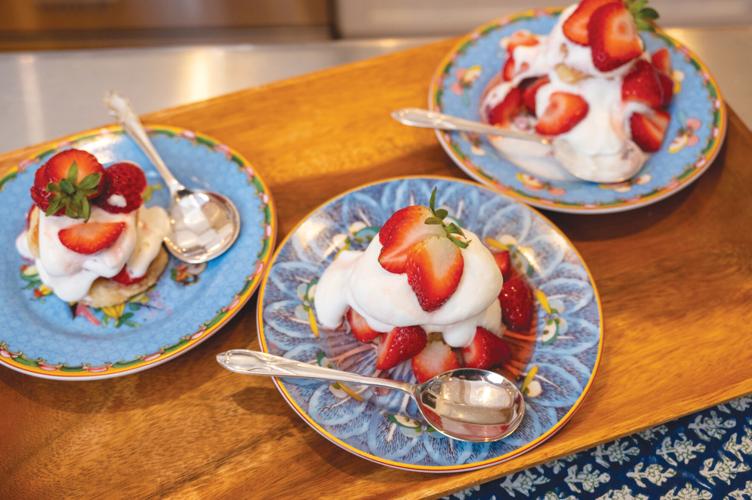
Acclaimed cookbook author Anne Byrn will tell you she is foremost a journalist. The native Nashvillian got her start interning at the Nashville Banner, was the only reporter in the house the night that Elvis died, and had a storied career as food editor for The Atlanta Journal-Constitution. You likely learned about her in the late 1990s or early 2000s as The Cake Mix Doctor, known for her bestselling cookbooks beloved for their ingenious enhancements that elevate boxed cake mixes from common to extraordinary. This was during a time when she was balancing work with raising a family, and finding good shortcuts became paramount.
In more recent years, Anne’s interest in baking shifted. She wanted to uncover the history of recipes — moreover, the people and stories behind them. That led her to writing American Cake, a compendium of 125 recipes and lore of our nation’s best cakes from colonial times to the present. In similar fashion, she followed that success with American Cookie, a collection of favorite cookies, brownies, bars and confections.
Her most recent cookbook, Baking in the American South, is also her most ambitious. In this fascinating, well-researched tome — 200 recipes and stories that explore cornbread, biscuits, yeasted breads and pastries, cakes and pies — Anne shines the light on regions of the South and their signature baked goods, as well as their bakers — known and unknown. She doesn’t sidestep: Hard stories of discrimination and assimilation are integral to the South’s complicated history. And she gives credence to why Southern baking is the finest.
From her Forest Hills home — a stone cottage built by her grandfather in 1928, where her father grew up — Anne shares a bit about her journey in bringing this important book to fruition.
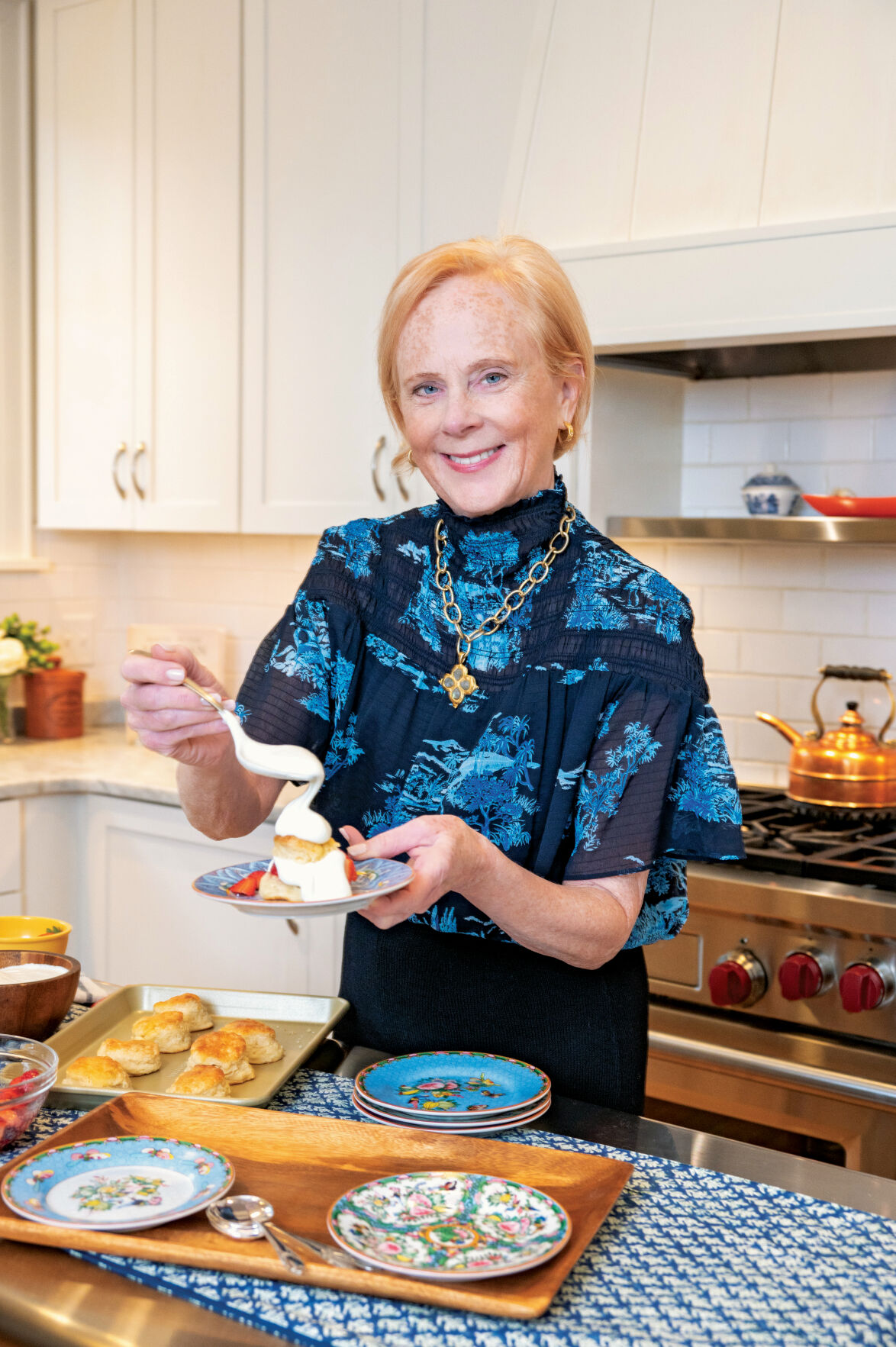
You’ve said that you’ve always been a journalist first. Tell us how you got onto the culinary path.
It starts with my mom. She was born and raised in Nashville, the youngest of five daughters in a creative family of writers and cooks. She was called Bebe — the baby — and she had the talent of being able to just look at a recipe and know if it would taste good. Cooking was her creative outlet, and she was very accomplished. And she let her children into the kitchen. I enjoyed that. That was the ’70s, the era of fondue — when cooking with artichokes, olive oil and zucchini was something new.
When I got the job as food editor at The Atlanta Journal-Constitution, I already had experience writing on deadline. Back then, I would reach out to county extension agents to get the contacts for farmers, producers, cooks so I could interview them. I discovered that tough subjects could be covered through the lens of food.
You do not shy away from those subjects in Baking in the American South. In concert with your recipe for Charleston rice waffles, you include notes on the foundation of South Carolina’s rice economy forged by enslaved peoples of West Africa. The sweet roll recipe from Herren’s in Atlanta also talks about how the city voluntarily desegregated in 1963.
I love the South, but I have a relationship with it like you have with a bad child whom you love but wish would behave differently. We still have a lot of cultural work to do. And these stories are part of our history, not to be glossed over or hidden.
Let’s talk about a primary chapter of the book, “Sizzling Cornbread,” with 22 very different recipes.
Because corn grows so easily in the South, cornbread became our first daily bread. It needed to be the first chapter. Think about all the variations: hoe cakes, spoonbread, hot water corn cakes, pones, muffins, hushpuppies … sweet versions, too, like Minnie Pearl’s corn light bread, or Ruth Jackson’s cornbread gingerbread.
Do you have a favorite?
I think we all cherish the cornbread we grew up on.
In doing your research, what were some of your “aha!” moments?
One had to do with literacy — what got written down. German settlers, I noticed, were dedicated to that, whereas Irish and Scottish were less inclined to.
I also found that, post-Civil War, women’s organizations sold recipes in collections as a means of charitable fundraising for families in need. Not only did this preserve the recipes, it became a precursor to Junior League cookbooks.
It was so interesting to me how, regionally, some Southern recipes would overlap like a Venn diagram. Southeast Alabama and Southwest Georgia became known as the “Cake Belt,” and both claim the Lane cake, Emma Rylander Lane’s prize cake, as their own. Also how recipes can alter — how desperation pies and transparent pies and chess pies might vary by an ingredient or two, by substitution of molasses for sugar, buttermilk for heavy cream, or the addition of vinegar or cornmeal.
Would you say, it was a matter of “use what you’ve got”?
Yes. That is the Southern way. It’s also tied to the land and the seasons.
We do have long growing seasons — and a wide variety of fruits and vegetables.
I think that has contributed to the incredible variety of fine baking here. There has been both an assimilation and preservation of traditions. All of this comprises the mystique of the South, something the rest of the country wants to know more about. And finally, I’d like to mention Southern hospitality. Through time, we have shared our baked goods as a way of welcoming a newcomer or getting to know our neighbor. It started in isolated, rural and poor areas, and points up basic, enduring needs: connection and community.
What do you envision next in your work?
I will build on what I’ve started. There are more recipes to learn about and stories to tell. I’ll continue writing my weekly newsletter (Anne Byrn: Between the Layers on Substack). I have some speaking engagements to prepare for. And I imagine my next book will look at the savory side of Southern cuisine, those recipes and stories.


Commented
Sorry, there are no recent results for popular commented articles.