
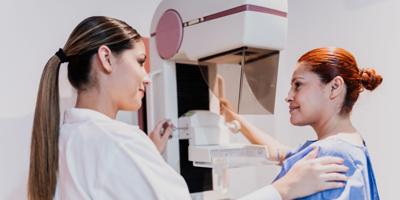
If you get a mammogram and receive your results, there are four words that may cause you concern.
Heterogenous dense breast tissue.
Does it mean you have cancer?
Let's talk about that.
Simply seeing "heterogeneous dense breast tissue" on your report doesn't tell you if you have breast cancer, but it warrants a conversation with your doctor.
And thanks to new regulations from the FDA that went into effect in September, your mammogram provider is now required to inform you of your breast density, what it means for your future screenings and how it affects your risk for breast cancer.
What Is Breast Density?
The National Cancer Institute defines breast density by the proportion of glandular and fibrous tissue (fibroglanlular) versus fatty tissue in the breast. It’s typically determined by a mammogram and is categorized into four levels:
(A) Almost entirely fatty
(B) Scattered areas of fibroglandular density
(C) Heterogeneously dense
(D) Extremely dense
Simply put, if you have more glandular and fibrous tissue than fatty tissue, you are said to have dense breasts.
Why It's Important
According to the National Breast Cancer Foundation nearly 50% of all women age 40 and older have dense breast tissue. So while it’s not uncommon, it should be addressed with your medical provider. And here’s why —
Dense breast tissue can make it more challenging for radiologists to spot abnormalities on a mammogram. Because both dense tissue and tumors can appear white on a mammogram, the dense tissue can essentially hide potential signs of cancer or other abnormalities. Additionally, the National Cancer Institute says that women with dense breasts also face a slightly higher risk of developing breast cancer compared to women with less dense tissue.
What You Can Do
If your mammogram report shows that you have dense breasts, there are a couple of things that could happen right away:
• You get a phone call to come back for an ultrasound so your doctor can be thorough.
• You’ll have a conversation about what your future screening routine will look like, and if you’ll need supplemental screenings, such as ultrasounds and MRIs, in the future.
Both of these scenarios are normal, so don’t freak out if you get a phone call.
But also keep in mind that breast density is just one aspect of your overall breast health. Other factors, such as your age, family history and lifestyle choices, also contribute to your risk and should be thoroughly discussed with your doctor to get a complete picture of your health.
What Questions to Ask
If you’re preparing for a mammogram, or you’re discussing your results, these questions may help guide the conversation with your medical provider.
• How does my breast density affect my breast cancer risk? Your doctor will help clarify the connection between dense breast tissue and cancer risk.
• Do I need additional screenings beyond a mammogram? Some women may require supplemental screenings (ultrasounds or MRIs) because of the limitations of mammograms in detecting some abnormalities in dense breast tissue.
• How often should I be screened given my breast density? Your medical provider will evaluate your overall risk and work with you to develop a personalized screening plan that may include interval screenings every six months.
The new FDA regulations encourage women to take a more proactive role in their health by empowering medical providers to develop personalized screening plans tailored to each patient’s needs. This also fosters stronger patient-provider relationships to enable more open discussions and effective strategies to reduce cancer risks and promote long-term wellness. By making breast density a key part of the conversation, these regulations are shifting the focus toward early detection and individualized care.


Commented
Sorry, there are no recent results for popular commented articles.