
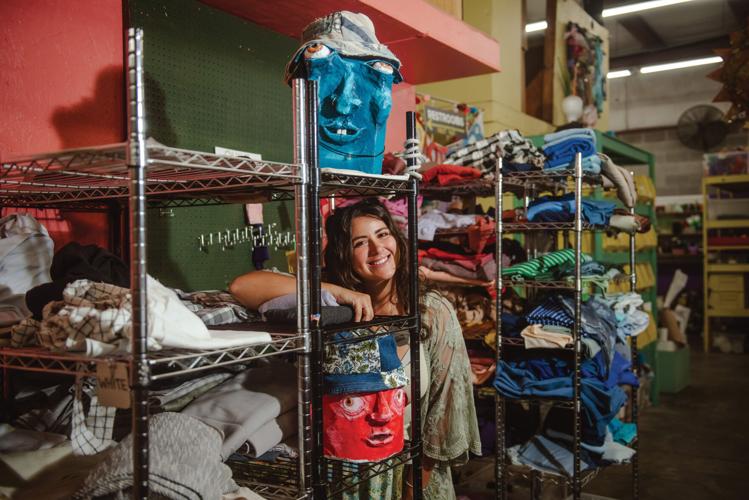
In a warehouse on 3rd Avenue, you may find a teacher sourcing affordable classroom supplies. Or a kid sifting through scraps, colors and trinkets to find pieces that unleash their curiosity. Or someone experiencing homelessness who’s found a creative outlet — and a community.
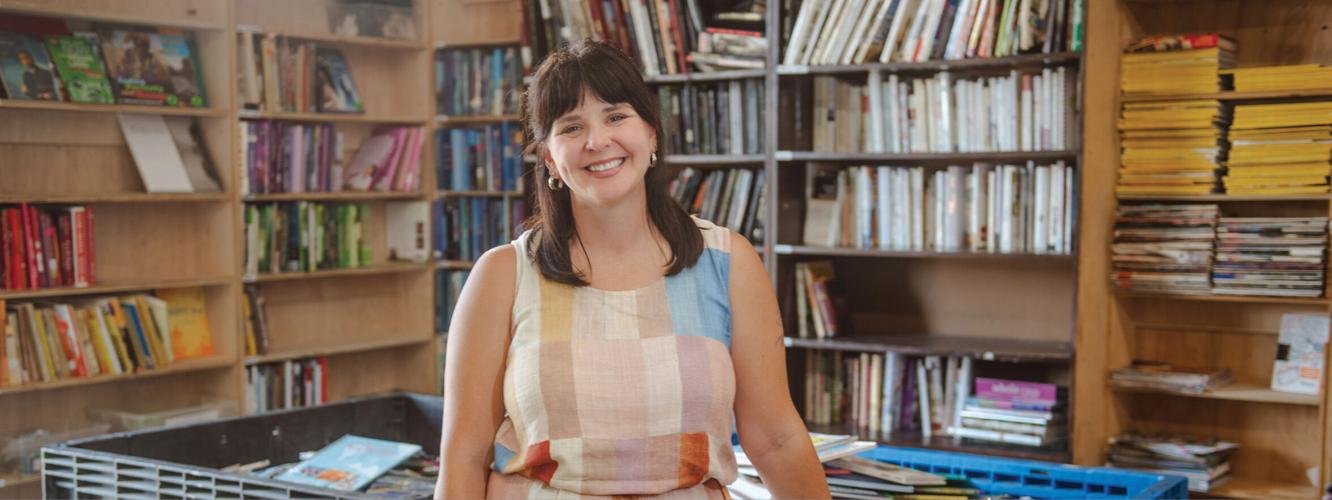
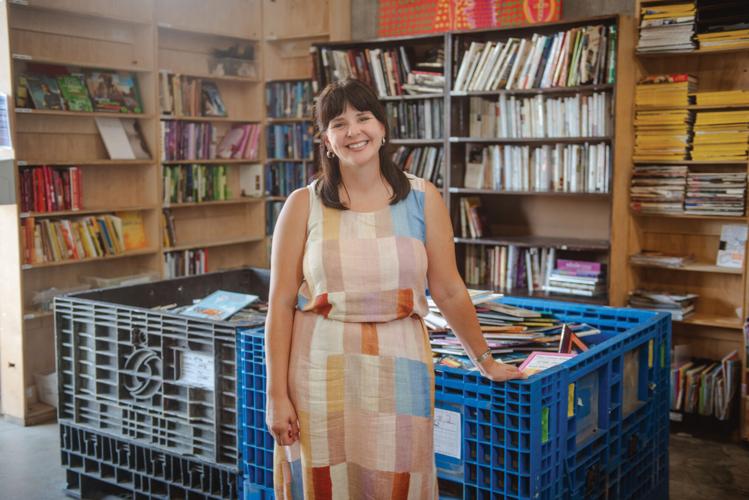
Moments like this happen every day at Turnip Green Creative Reuse, an organization dedicated to keeping unused materials out of landfills and making the arts more accessible. The warehouse’s vast selection of art supplies, materials and miscellaneous treasures is fueled by community donations, making it an ideal spot to shop for your next project.
“I hope people feel safe over time to just take things and try them out,” says executive director Erin Boddy. “You almost have to be a little vulnerable to do that, because it’s not typical of our culture to take as much as you want.”
Turnip Green’s pay-what-you-can model reduces financial barriers, encouraging guests to pick up new hobbies while prioritizing sustainability. “You can literally pay $1,” says Boddy. “It does not matter. … We want people to take stuff.”
For some, Turnip Green is craft heaven. But others, while wanting to shop sustainably, may feel overwhelmed by its seemingly endless inventory. Enter the Artist Marketplace — a colorful hub filled with artisan décor, jewelry, leather goods, wall hangings, gifts and more. Nashville artists craft each piece with recycled materials, breathing new life into discarded items.
“This stuff is not just trash,” says Boddy. “It’s stuff that people don’t want anymore that we can make into something really beautiful and new.”

No Scraps Wasted
The Artist Marketplace empowers up-and-coming artists by providing a place to showcase and sell their work, earning a 70% commission on each item. What do artists need to prove? That they can make things — and do so creatively with salvaged materials.
“We love scrappy, and we are scrappy,” says Boddy. “But it can also be really elevated — both handmade goods and giftable things, but also art that you’d want to hang up on your wall.”
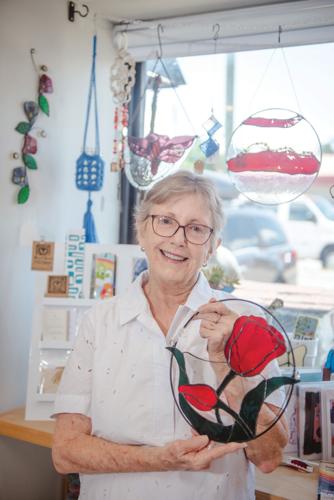
One of the marketplace’s youngest artists, a middle-school girl, rearranges stuffed-animal parts to make charmingly bizarre creatures. But others, like stained glass extraordinaire Cheri Tapp, harnessed their creativity later in life. “There are a lot of older women and artists who didn’t realize that they still had a gift or something to share,” says Boddy.
Tapp studied art in college and later earned her master’s degree in social work. During her career at a psychiatric hospital in Panama City, she uncovered her love for stained glass after taking a class with a friend. “I retired about eight-and-a-half years ago, and I just started right back up,” she says. “My son helped me build a little studio at home.”
Tapp now sells her work at Turnip Green and teaches the organization’s stained glass workshop, where she personally connects with her six students and helps them create one-of-a-kind pieces from salvaged glass. “Every single class, people come in [who] have never picked up a piece of stained glass and walk out with two pieces,” she says.
Most everything Tapp sells is made from scraps, and she rarely uses entire sheets of glass. She also sources classroom equipment from Turnip Green, including glass runners, grinders and unique shards she thinks will spark students’ interest.
Her favorite part of teaching? “Seeing the lights come on” as she witnesses her students getting the hang of their projects — and encouraging them to be good stewards. “There’s a lot of people on this planet, and we just need to take better care of what we have,” she says.

Being Resourceful
Many think you need money to make art. For reuse artists, what you really need is an eye.
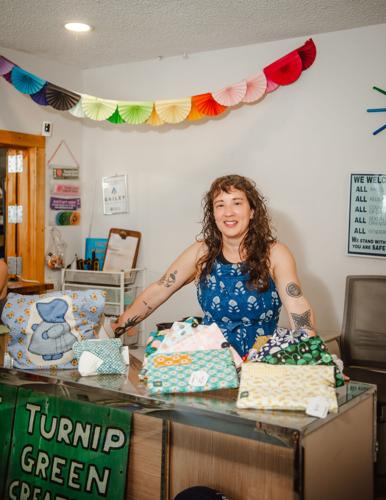
Jalena Baker calls herself an “eclectic sustainable artist.” Her clothing business, Rot Revive, was born out of her quarterly clothing swaps, which she started in 2020 to cut back on fast fashion. Baker takes donations and encourages people to trade what they have. She then upcycles leftover items, which are often stained or ripped, and freshens each piece with appliqués.
“I never was a very fashionable person, because I couldn’t afford to be a fashionable person,” she says. “But when I was able to have access to things that I was essentially getting for free, I was able ... to express myself and find things that fit my body.”
Baker’s work is impact-focused, not just reducing waste but also making clothing accessible to those in need. Along with her clothing swap and upcycling business, she donates to local homeless shelters and runs a boutique out of her church where people can “shop for free.”
At Turnip Green, she sells handmade tote bags and bucket hats, filling the Artist Marketplace with vibrant colors and funky patterns. Believing art is meant to be shared, she also teaches sewing workshops, which show students how to upcycle pieces using her signature appliqué technique.
Baker says the organization is devoted to developing artists, promoting their work and minimizing expenses. “It allows me to keep my prices more competitive and accessible to those I’m selling to, because I don’t have to spend $30 on materials when I got half of it for free, and then the other portion from Turnip Green,” she says.

Finding Beauty
While Turnip Green’s efforts to reduce waste are conscious, Boddy believes artists are intrinsically wired for sustainability. “I think artists naturally see the purpose in all things,” she says. “So many artists use cardboard or scraps from their receipts or the wax around their butter.”
Take Jill Anderson, for example, who cuts up and repurposes old quilts into one-of-a-kind textiles. She sources her materials on Facebook Marketplace, eBay and, of course, at Turnip Green, where she volunteers, sells her pieces and teaches sewing workshops.
“One of the advantages of volunteering there is that you get dibs on stuff,” she says. “The unfinished product section for quilts is a great find when you’re just trying to get little accent pieces.”
Anderson, who grew up in a single-income household, was raised without the stigma of thrifting. To this day, she loves the thrill of digging for secondhand treasures — and having items catch her eye from across the room. “I have so much amazing fabric that I was just drawn to, because stuff speaks to me, and I bring it home,” she says.
When Anderson doesn’t use fabric in her collection, she gives it to her students, furthering the reuse cycle. She attests that upcycling is a different artistic process — one that requires out-of-the-box thinking and creative workarounds, especially when materials have odd cuts or noticeable wear and tear.
“Nothing is mass-produced when you’re doing that sort of thing,” she says. “Everything is unique, everything comes out differently, everything might not meet your expectations. But the great thing about selling your work is that it might speak to somebody else.”


Commented
Sorry, there are no recent results for popular commented articles.