
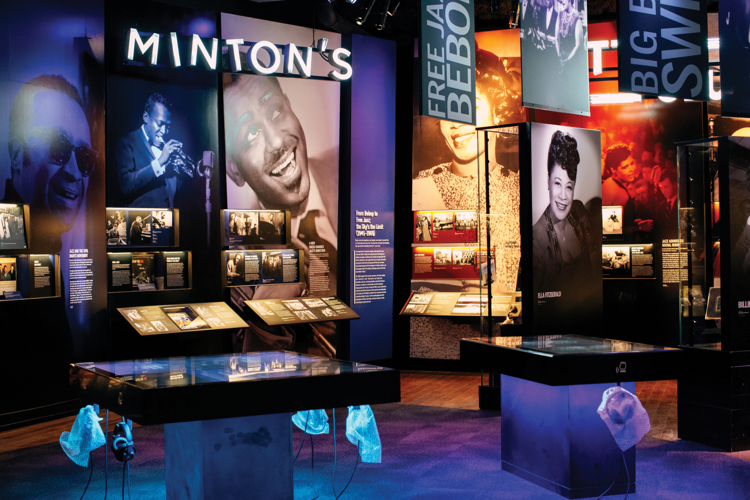
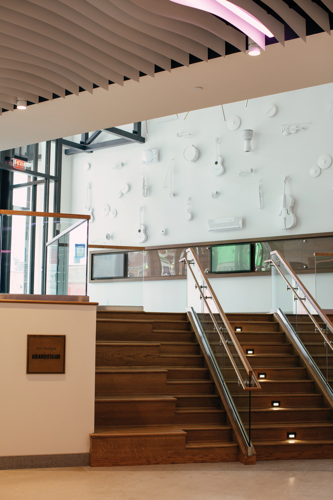
Nashville is now home to the National Museum of African American Music (NMAAM), and according to its curator, it’s a perfect pairing.
“From a historical perspective,” says Dr. Steven Lewis, “Tennessee has really been the crossroads of many different African American and American musical styles, including the blues, gospel music, soul music and country music, which has an African American influence and presence that is often underrecognized.”
After a COVID-19-related delay, NMAAM recently opened on Jan. 18, Martin Luther King Jr. Day, but its history stretches back more than two decades. In 1998, community leaders Francis Guess and Dr. T.B. Boyd III came up with the idea to start a museum that celebrated African American cultural contributions. The idea evolved from there. Located at the corner of Fifth Avenue and Broadway, NMAAM consists of 56,000 square feet of space and is dedicated to honoring more than 50 musical genres that were created or inspired by African Americans. Steven points to many connections between the history of African American music and the Volunteer State.
Two decades in the making, the museum, located at the corner of Fifth Avenue and Broadway, consists of 56,000 square feet of space and is dedicated to honoring more than 50 musical genres that were created or inspired by African Americans. Steven points to other connections between the history of African American music and the Volunteer State.
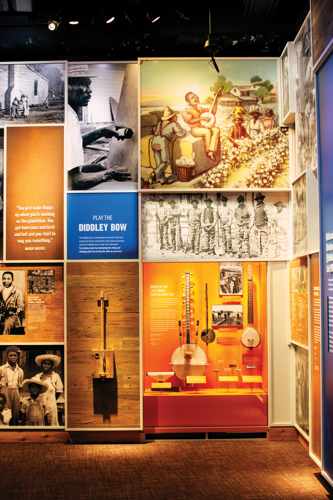
“There’s the banjo,” says Steven, “which is kind of an icon of Tennessee music, like bluegrass and country, which was developed by African Americans and brought to the United States by Black people from the Caribbean a few centuries ago. You have the role of the Fisk Jubilee Singers, a Nashville-based group, who were the first group to bring African American music to an international audience, beginning in the 1870s.”
Steven says both Nashville and Tennessee have played a significant role in the history of African American music and its becoming part of the broader American culture. In the wake of George Floyd’s and Breonna Taylor’s deaths and as the country confronts systemic racism, Steven believes the museum can play an important role.
“I think this is the time when the American public is coming to terms with aspects of the Black experience that are often ignored or dismissed, like the persistence of racism in contemporary society,” he says. “For that deeper understanding to really take root and for there to be a cultural shift, there needs to be a deeper understanding of, and appreciation for, African American cultural traditions, right? I think the museum’s role is in facilitating that understanding of African American culture, because we’re the only museum that provides such a comprehensive view of Black music and the connections to the Black experience, broadly speaking.”

Music Lessons
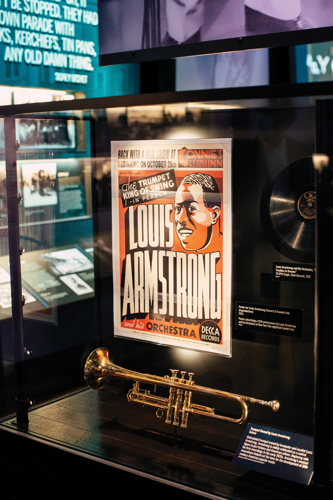
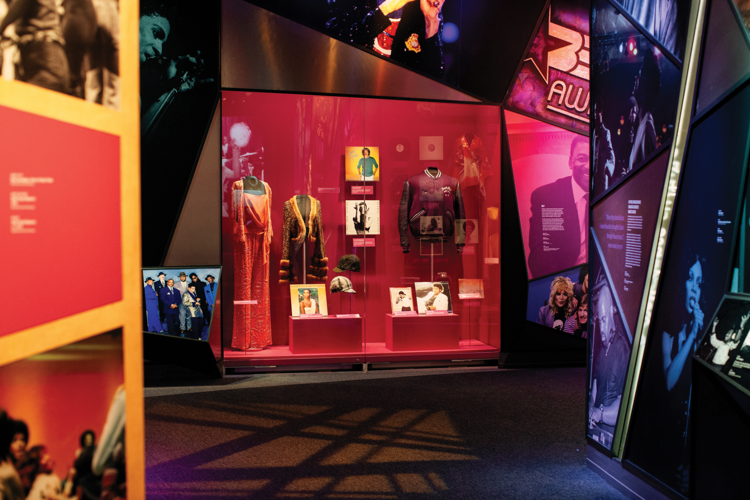
The museum has six different galleries that showcase musical genres including gospel, the blues, jazz, Broadway, soul and hip-hop. There are 1,500 artifacts and objects, including a robe and wig donated by George Clinton — whose musical collective, Parliament-Funkadelic, was given a lifetime achievement award by the Grammys — and a trombone donated by Helen Jones Woods, a former member of the International Sweethearts of Rhythm, a successful female jazz band in the ’40s. There’s also a guitar donated by blues musician and five-time Grammy winner Keb’ Mo’.

Outreach programs
One mission of NMAAM is to work with area schoolchildren. “Even before the museum was ready to open, we’ve been operating as a museum without walls,” says Steven. Staff members and musicians have been visiting schools as part of the From Nothing to Something program, showing students how African American musicians with little resources fashioned instruments out of what they had, and they teach children to do the same. Now, schoolchildren will be able to visit the museum, COVID-19 safety precautions permitting.


Commented
Sorry, there are no recent results for popular commented articles.