
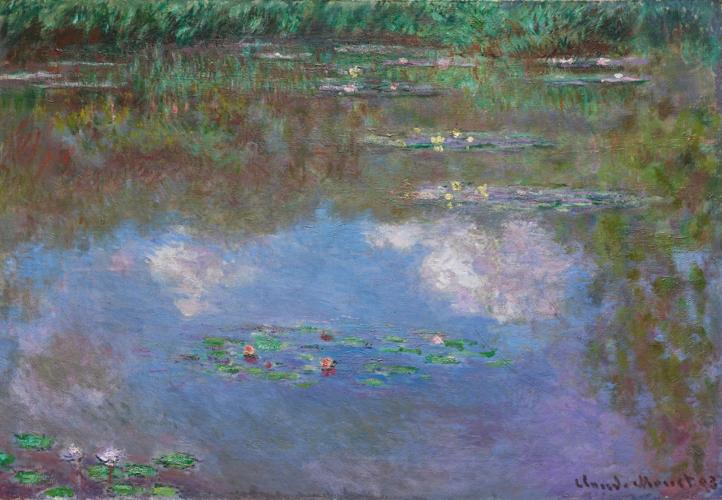
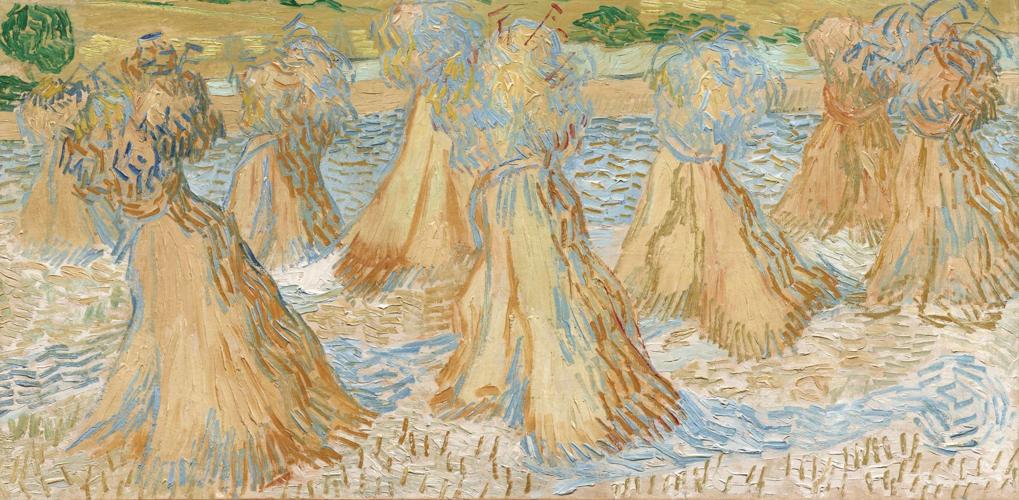
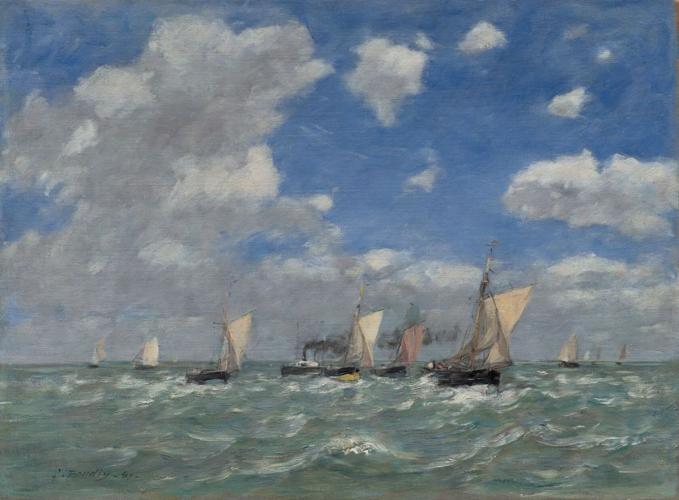


Claude Monet. The Water Lily Pond (Clouds), 1903. Oil on canvas; 29 3/8 × 42 1/2 in. Dallas Museum of Art, The Eugene and Margaret McDermott Art Fund, Inc., bequest of Mrs. Eugene McDermott in honor of Nancy Hamon, 2019.67.13.McD
Frist Art Museum’s latest presentation, The Impressionist Revolution: Monet to Matisse from the Dallas Museum of Art, doesn’t just highlight the still lifes, vibrant brush strokes and pointillism that formed a well-known aesthetic. Rather, it rightfully frames Impressionism as a movement, exploring how its leaders revolutionized the art scene through creative rebellion.
“Although today, we use the term ‘Impressionism’ to loosely describe the aesthetic of short, staccato strokes of bright pigments applied rapidly, Impressionism as it emerged in the 1870s wasn’t a single, unified style,” says Nicole Myers, chief curatorial and research officer for the Dallas Museum of Art, in a press release. “Rather, it reflected a shared desire among a small group of avant-garde artists to capture their experience of contemporary life through subject and style.”
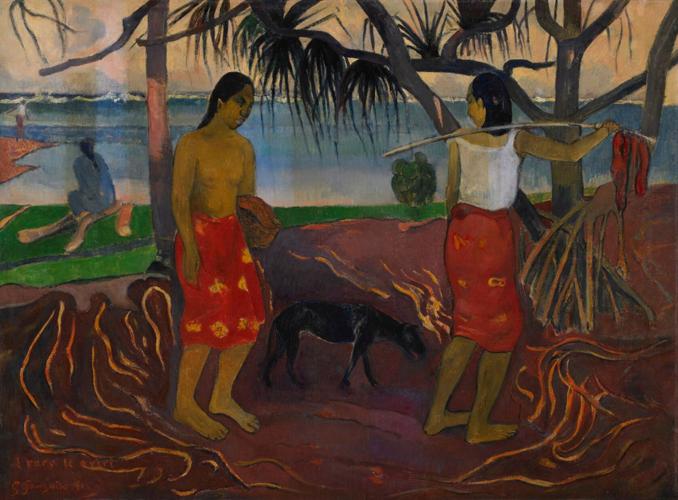
Including nearly 50 paintings and sculptures by Paul Cézanne, Paul Gauguin, Henri Matisse, Piet Mondrian, Claude Monet, Vincent van Gogh and others, the exhibit opens with a striking fact — the term “Impressionism” was coined as an insult. Impressionists’ work featured a sketch-like quality that, at the time, was viewed as an inability to create complete pictures. Instead of being revered, the movement’s key players were scandalized by society.

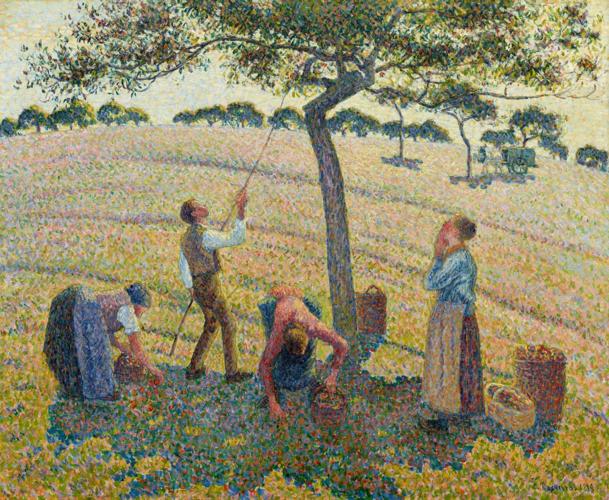
Camille Pissarro. Apple Harvest, 1888. Oil on canvas; 24 x 29 1/8 in. Dallas Museum of Art, Munger Fund, 1955.17.M
The Impressionists organized eight exhibitions between 1874 and 1886 as the Anonymous Society of Painters, Sculptors, Printmakers, etc. Their work featured scenes from everyday life, such as fruit bowls, table settings, strolling pedestrians and pastoral settings. “The Impressionists’ insistence on depicting modern subjects in an equally modern style and displaying their works on their own terms was nothing short of a revolution,” says Myers.
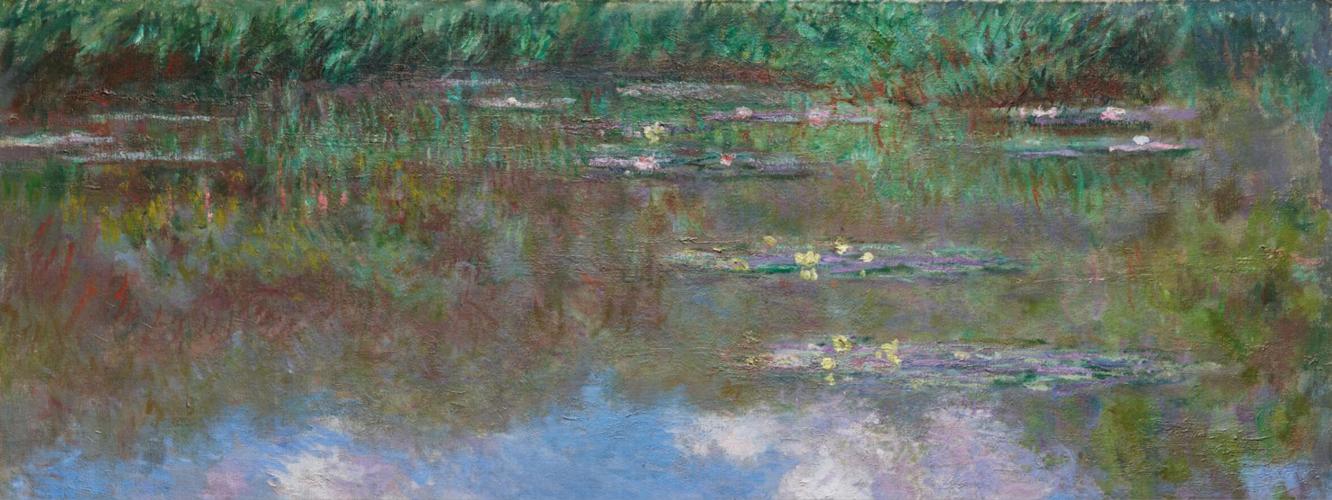
The Impressionist Revolution provides a well-rounded glimpse into the movement’s range, from two of Monet’s iconic Water Lilies to Camille Pissarro’s “Apple Harvest.” It’s also organized thematically, starting with the section “Rebels with a Cause,” which explores the style’s humble beginnings. The exhibit closes with “Ever After,” a section that emphasizes how Impressionism set the stage for 20th-century contemporary art.
“Almost every stylistic breakthrough from this period — Cubism, Fauvism, Expressionism, Futurism, Abstraction — had its roots in the Impressionists’ subversion of traditional academic values, from the subject depicted to the finish of the brightly colored surface,” says Myers.
The Impressionist Revolution is open now until May 31. For more information, visit https://fristartmuseum.org/exhibition/the-impressionis-revolution-monet-to-matisse/.


Commented
Sorry, there are no recent results for popular commented articles.