
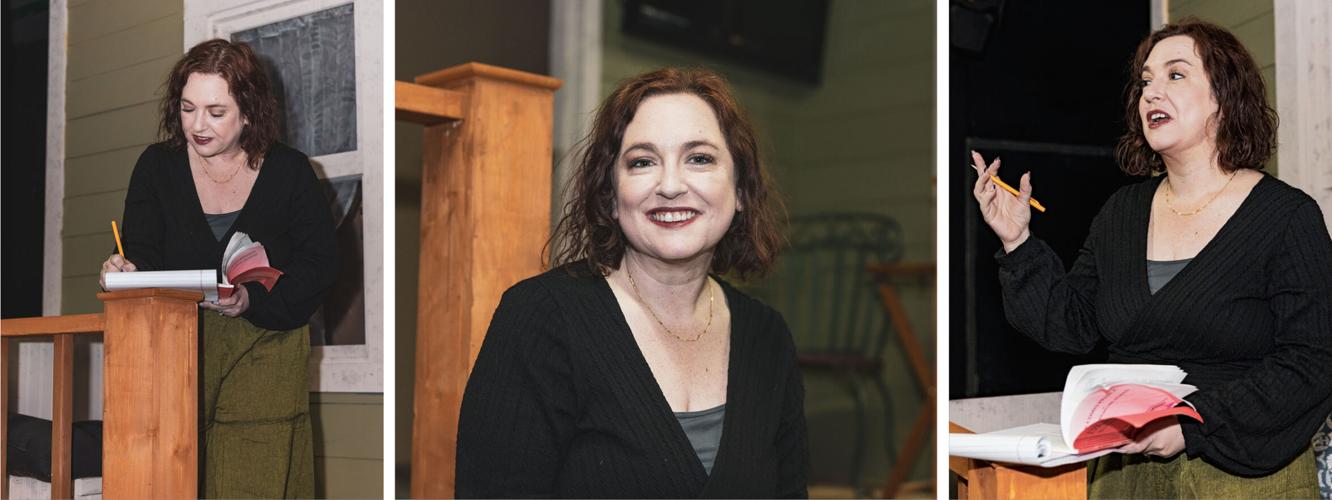

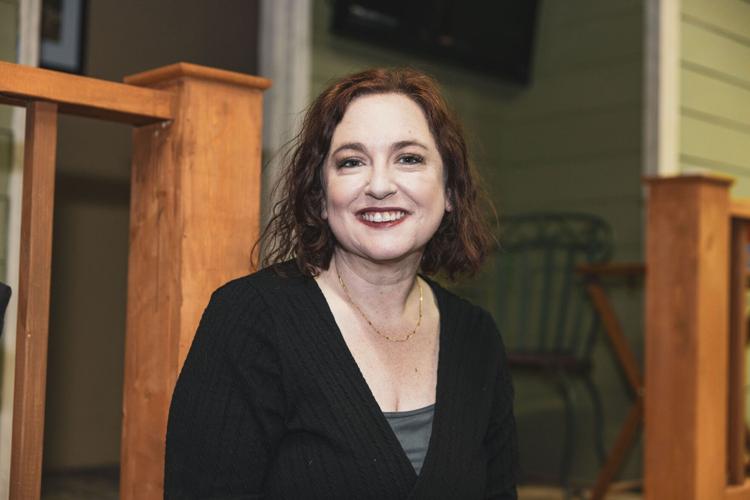


In early December, a local treasure, the Nashville Repertory Theatre, announced a close to its nationwide search for an artistic director. Enter Jessica Francis Fichter, a director, author, playwright and teaching artist with production credits spanning the coast, from the Carolinas to New York City.
She most recently served as artistic director at South Carolina’s Trustus Theatre and is also the founder and artistic director of Evolving Door Theatre Company, a nonprofit that helps creatives develop new plays and musicals. Her playwriting experience greatly informs her approach to directing — and vice versa — as she believes concise writing and directing are key to effective storytelling.
Jessica, based in Columbia, S.C., wasn’t job hunting when Nashville Rep posted the opening, but she applied, hoping to live closer to her sister in Nashville. After roughly two months — filled with Zoom interviews and, eventually, a flight to Nashville for in-person evaluations — she solidified her new position.
At the time of writing, Jessica was preparing for her move to Nashville, balancing both the transition into her new role and the shift from her previous position. Stepping in during Nashville Rep’s 41st year, she believes the company is poised to reach new levels of success and community engagement.

How do you aim to advance the legacy Nashville Rep has grown for over 40 years?
I am very excited to be in the artistic hub that is Nashville. It’s such a cool town, obviously from a music standpoint, but from an art standpoint in general. Nashville has grown significantly in the last 10 to 15 years as a tourist destination, but also a place where artists want to live and create.
I’m excited to find new audiences, get to know the community and really make Nashville Rep top of mind for folks when they want to go see theater. I [also] do have national connections, so I’m very excited to bring in artists from other places to expand the canon of work we’re doing.
What sparks your interest in a show and makes you think, “I’ve got to direct that?”
I am a storyteller first and foremost. For me, it has to be a story that speaks to my heart and soul. In the script, I’m looking for a story [that is] relevant to our times and to the community I’m serving.
Number two: I’m very interested in art that is of today — what shows are being published right now [and] what has come out of other areas in the country. Diversity, equity and inclusion are incredibly important to me. I think, when planning a season, you want to make sure you are being inclusive with all members of the community — and all artists.
What’s your philosophy for rallying company members together to put on an effective show?
I think directors are more facilitators than they are directors. The goal is to bring artists and community members into a room and let them play and bring their ideas to the table. When you do that, it feels like everybody is creating the art. That collaboration is how you get excellent art, and it also creates unbelievable buy-in from everyone involved.
In terms of the community, it’s a similar thing of bringing community members into the discussion of the art we’re creating and the “why” and building excitement around the stories we’re telling.

How do you plan to further Nashville Rep’s community outreach initiatives?
One of the things that drew me to Nashville Rep is its commitment to inclusion and community outreach — to diversity, to access. Those things are the backbone of theater, and especially theater in the future. Theater is how we tell the stories of our time, and the stories of our time don’t work if people don’t have access to them.
I’d like to — and have in my past experience — find other organizations that connect to the plays we’re doing. At Trustus, we did a play about addiction. We partnered with several institutions to bring in groups that were in recovery [and] bring in counselors to watch the show and participate in talkbacks about the work. That itself creates access. I think community partnerships with nonprofits that are show-specific work really well.
I would also like to grow our education initiatives. I find that partnering with both universities and K-12 schools creates access for children, but also builds audiences for the future.


Commented
Sorry, there are no recent results for popular commented articles.