
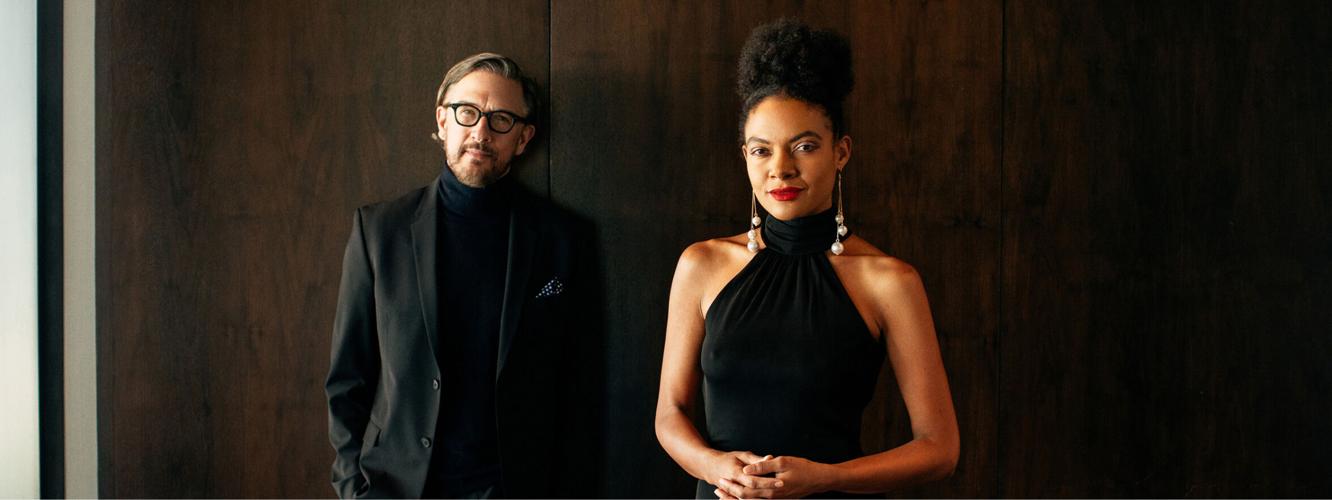



When the Nashville Ballet returns to Schermerhorn Symphony Center on March 12 for its annual black-tie gala, guests will be fêted with a celebration of midcentury elegance. Co-chairs Joanne Sowell and Brooke Trusley are drawing inspiration from Frank Sinatra and Twyla Tharp for an evening of music, dance and artistic expression. As in former years, the Ballet Ball has tapped a local artist to perform live alongside Nashville Ballet dancers in what is truly an only-in-Nashville collaboration between the arts. This year, Grammy-nominated folk artist Allison Russell will headline the event, working closely with the ballet’s artistic director and CEO, Paul Vasterling, to produce an original piece of music and choreography that promises to be a thought-provoking and moving work of art. We chatted with Allison and Paul about their creative process, this unique collaboration and what Ballet Ball guests can expect to be different about the 2022 event.
When the idea of the Ballet Ball was presented to you, what was it about the event that got you excited and made you say yes?
Allison Russell: I’m excited about Nashville Ballet and the really innovative programming that Paul has been engaged in for some time. I became aware really of how special the programming was with Lucy Negro Redux. My chosen sister Rhiannon [Giddens], was the composer on that piece, along with our partner Francesco Turrisi and my friend Caroline Randall Williams, who wrote the book. … I’ve never experienced a ballet like Lucy Negro Redux. I’ve never felt that connected and that represented. I grew up seeing ballet with my grandma in Montreal, and there’s a beautiful ballet company there, but there was not one dancer of color in that company. And that might have changed by now. But when I was a child, I didn’t even know that Black people could be ballet dancers. So, it was Kayla Rowser, of course, who originated the role of Lucy, and I got to bring my daughter to see The Nutcracker with Kayla Rowser as the sugar plum fairy queen, and it was just magical and very healing. It felt very healing. And so, I got really interested in the work that Paul and the ballet are doing from that time, decolonizing a space that has been very whitewashed for a very long time.
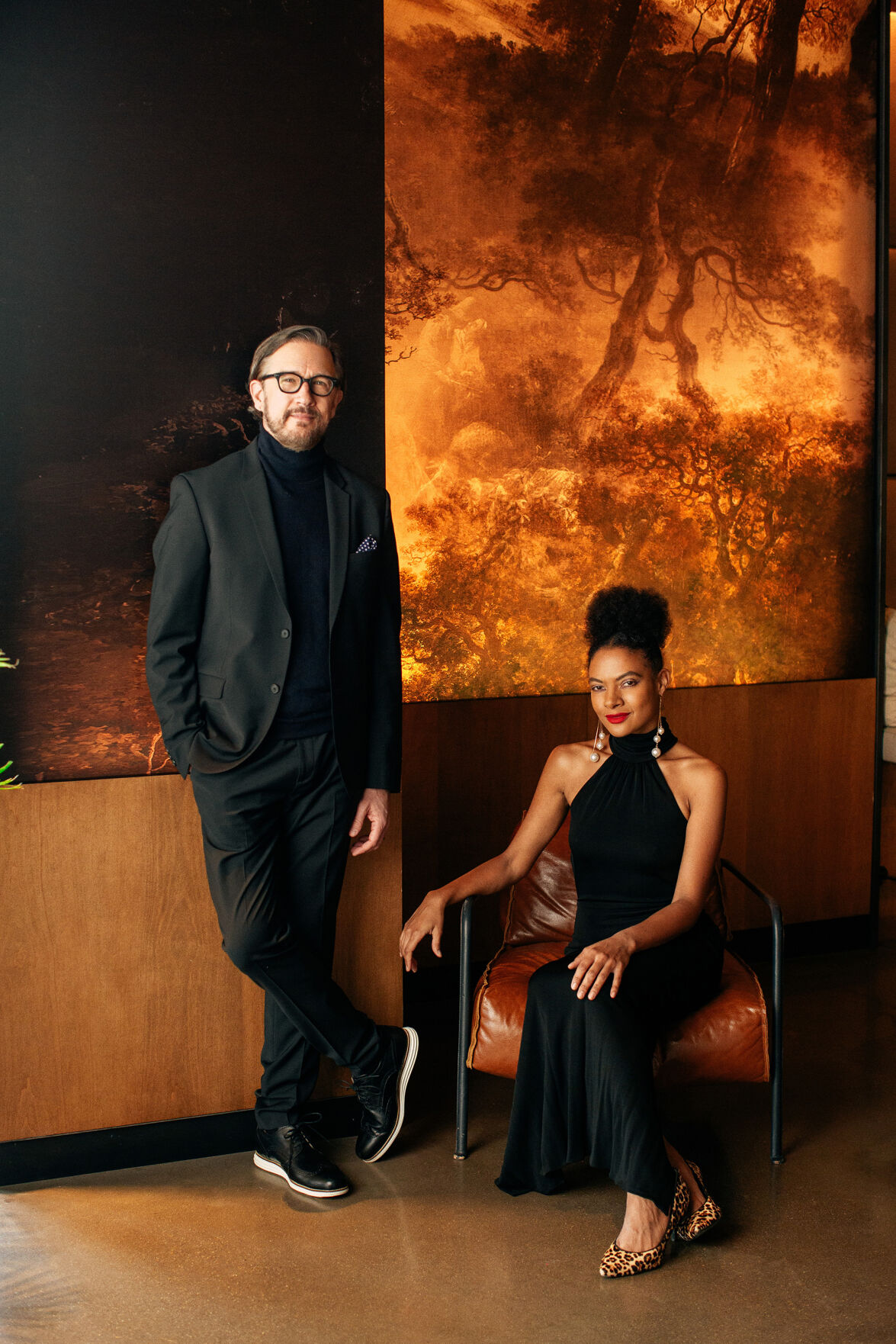
Tell me about the work that you’re doing together, because everything that I’ve heard about how you’re approaching this year’s Ballet Ball seems very different than it has been in some recent years, where artists have come and they’ve performed their own songs while the ballet performed. But it sounds like there’s much more of a collaboration happening between the two of you. Can you share a little bit about that experience and what it’s been like?
Paul Vasterling: I just want to say that what I love to do is make relationships with collaborators that are long lasting. And so, we have other things going on. I still am working with Caroline [Randall Williams] on things here and there, and I love making these longer-term relationships because it blossoms and everybody’s inspired. I certainly hope to [do that] with Allison. The entire ballet company is inspired by what we get to work with. This year, the chairs had an idea for a midcentury modern theme. And I found out that Allison said, “Yes, I would like to do that. I’d like to work with you on this.” And I was like, “Well, what about if we did this idea? I have this song, because of the midcentury modern theme. But I’m going to go back and I’m going to listen to your album so that I get a feel for who you are now.” And so, that’s what we’re doing — this meshing of these two songs.
Allison: I think it’s going to be really interesting, and I think it’s going to work. I’m bringing in a couple of collaborators on it, as well: Megan McCormick and Larissa Maestro, who are wonderful. Larissa has written for the ballet, as well. She’s a brilliant composer and plays cello. She moonlights in my band, sometimes playing cello, along with Monique Ross, who’s in SistaStrings. But she’s really remarkable, just beautiful in the way that the depth of emotion that she conveys in her playing is moving and remarkable. And so, we’re doing something special and different where we’re uniting an original song of mine with a very classic midcentury song.
So you’re merging the two? A song that will be familiar to audiences and something entirely new?
Allison: Entirely new.
How long is this piece going to be? Do you know at this point?
Paul: It’s about six minutes, and we’re doing a couple of duets by Twyla Tharp, as well; it’s Sinatra songs. So, it’s going to all go together really nicely. This is different for us because, normally, we just get the performers, the artists, who will pick a song of theirs and it doesn’t usually have this level of collaboration, which is really nice.
I can see how excited you are just talking about it.
Paul: Yeah. This is what makes my day.
Allison: Me too. I think we have a similar ethos in that way, because I’ve always felt that the most interesting work and the work that I’ve been the proudest of has almost always come from collaboration, where you arrive at something together that none of us would arrive at individually on our own. And I think that’s humanity; any human progress is collective progress, is collaborative progress.
Paul: I’m a big believer in that too. I call those my “God moments” when we’re together. However you think of a higher power. When we’re in the room together and we come together and then there’s something there that I was like, where did that come from?
Allison: Where did it come from? It’s magic. Exactly.
Paul: It’s us together that made this. It’s not me. It’s not you. It’s all of us.
Allison: It’s us, and it couldn’t have happened any other way. I agree with that. I’m a hopeful agnostic, and I’ve understood for a long time now that the role, that creative, the mysterious inspiration that comes from working in collaboration and in creative communion with kindred spirits, that is as close to a religious sacrament as I have in my life. That’s my —
Paul: Art.
Allison: That’s my religious sacrament — art.
Walk me through the mechanics of this. Allison is writing this new piece of music, incorporating this song that Paul selected, and then, as far as the actual performance and the choreography, is that something that you are weighing in on it all, Allison? Have you already started to work on that, Paul, or are you waiting for the final song? How does that actually work for it to come together as a finished piece?
Paul: My normal process is that I’ll start some movement. I have some movement that I’ve done already, that I did a while ago. But I’m really interested to see how [the songs] come together, and then it’ll start to shape itself. And then, hopefully, Allison can come and watch. And we talk more. That’s been some of my favorite things to do.
From a performance perspective, is there anything else that you can or want to tease?
Paul: I just want them to know that this is a really rare and wonderful moment to have the artist performing with us, with her collaborators and the dancers together. Only in Nashville, too.
Ballet Ball is truly one of the most special events for that very reason. It is such a beautiful collaboration of all of the artistic talent that is in this city. Is there anything else that either of you want to share that you haven’t yet?
Allison: Just one of the reasons I was so excited to participate in this is because I love that community spirit of fundraising around really important arts work. And I think I want to emphasize that arts work isn’t just for entertainment. It’s deep empathy work, and we are struggling through a terrible empathy deficit right now, globally, and certainly in our country. … And I think the arts help heal that. It’s so important on so many levels.
Paul: I couldn’t say it better. It’s lovely. I love you. We haven’t had that much time together, but hearing you speaking. … She’s speaking my language about art being a connector and it builds empathy. It’s the perfect thing when you start to understand someone else’s perspective by experiencing their art.


Commented
Sorry, there are no recent results for popular commented articles.