
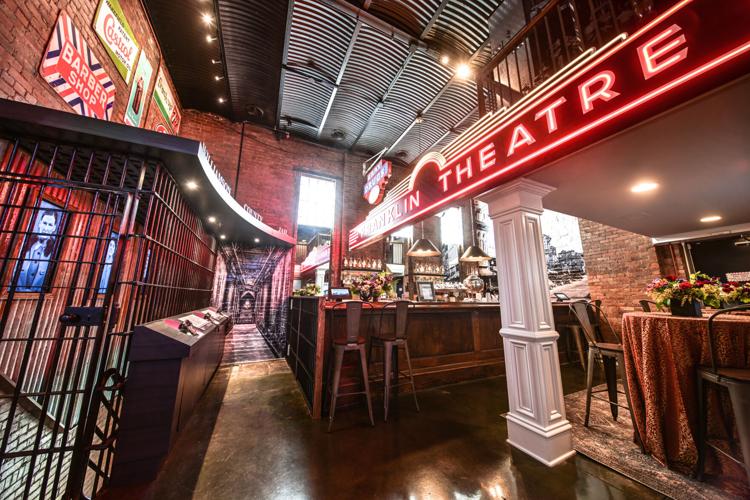
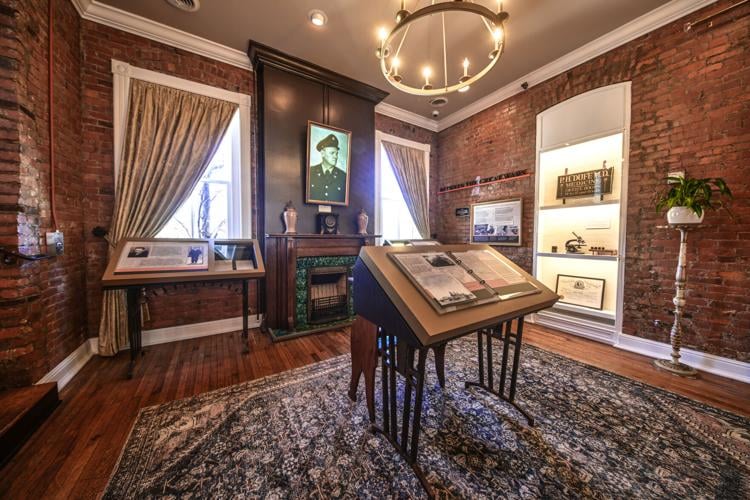
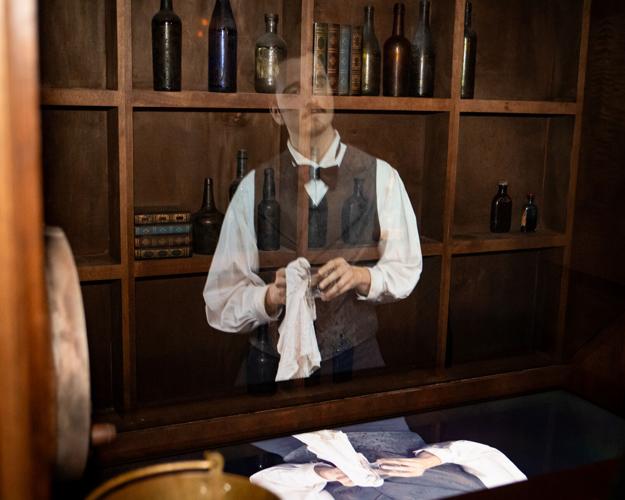
In the recreated1803 White’s Tavern at the Moore-Morris History and Culture Center of Williamson County, a fire flickers in the (now electric) fireplace and there’s a faint smell of bourbon. The room is dotted with small round tables and chairs. You can hear the (piped in) sound of a bartender clinking glasses and customers chatting among themselves. A portrait of Civil War soldier Freeman Thomas hangs above the fireplace. As though out of a scene from Harry Potter, like magic, he begins to speak.
The motion-activated portraits in the newly opened culture center “teach history in a way that reading from a little plaque doesn’t,” says Nat Taylor, the center’s managing director. There are eight interactive portraits throughout the center, most representing noteworthy figures from the past. “Their words are taken from the historical record,” says Nat. “There are actors portraying them, but their dialogue is taken right from their words.”
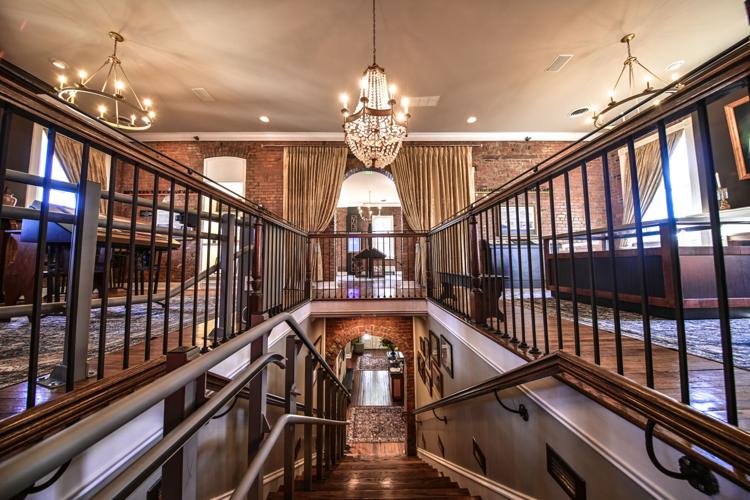
The three-story, 6,400-square-foot building at 108 Bridge Street in Franklin is on the National Register of Historic Places and dates back to 1905.
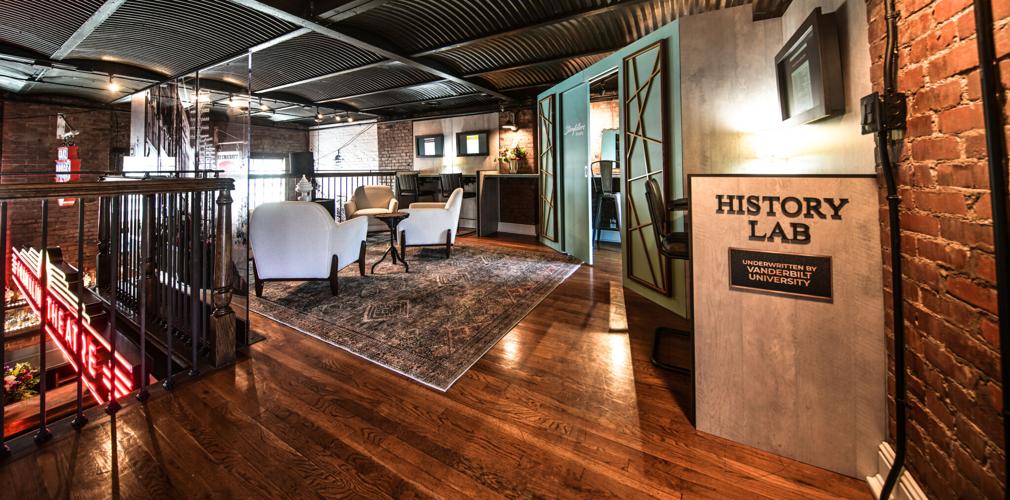
The building once housed a jail and has had numerous incarnations, the most recent being the McConnell House event and catering headquarters. It was purchased in 2022 by The Heritage Foundation of Williamson County. The $10 million project has resulted in an impressive culture center with state-of-the-art interactive displays.
“We didn’t know exactly what the concept would be when the board initially wanted to acquire it,” says Morgan Floyd, director of event and tourism sales for The Heritage Foundation. “There were many different concepts that were thrown around.” Eventually, they settled on creating a history and culture center. “We felt like that was an opportunity in the area,” she says. “We didn’t have something that was really focused on that hyper-regional storytelling, and really not just the history, but the stories of the people.”
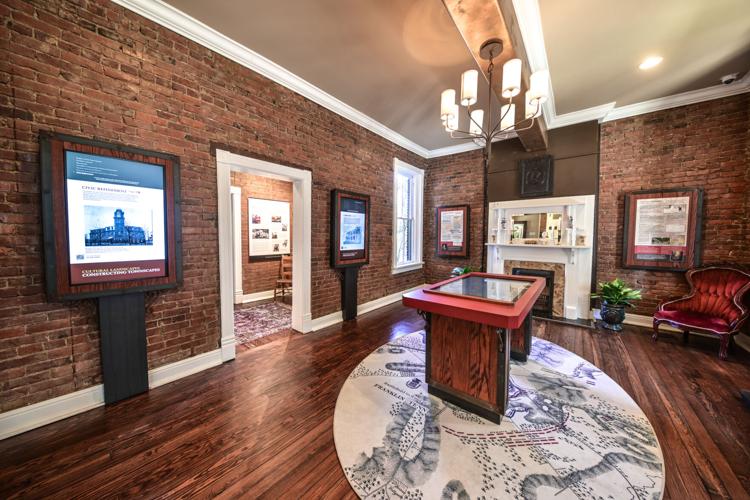
The initial exhibitions include: The Emerging Commercial Union (1783-1865), which details how the early 1800s agricultural landscape gave way to plantations in the 1840s and ’50s; The Industrial Landscape (1866-1917), which explains how new railroads connected Williamson County to other states after the Civil War; and Managing Townscapes (1930s-1950s), which shows how the success and failure of local businesses played a crucial role in the development of Franklin and other small towns throughout Tennessee after World War II.

Double Duty
The interactive table displays can be converted into actual tables for guests who want to rent the space for, say, a cocktail party. “We wanted everything to be very digitally driven so that it would be very easy to change out, not only with historical content, but also for events,” says Meg Hershey, capital projects consultant for The Heritage Foundation. Exhibits can be ever-changing — created and swapped out with ease — detailing the area’s rich history. “That’s also what makes [this] different from other museums,” says Meg.

First Impressions
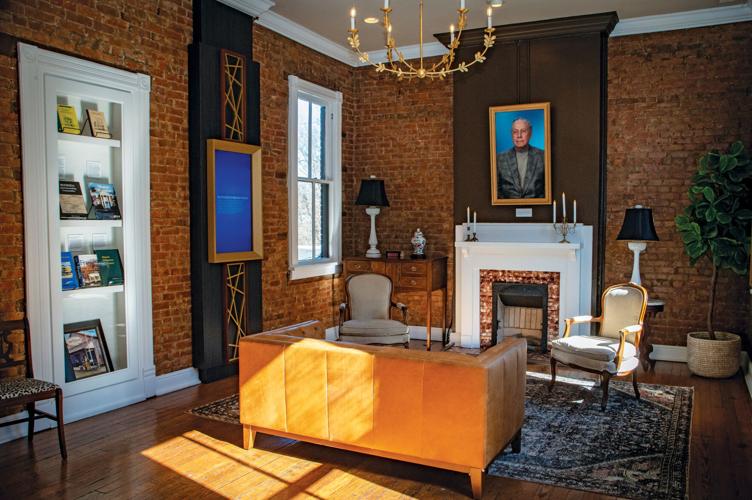
Like a well-thought-out wedding invitation sets the scene, so does the center’s first-floor jewel box of a powder room, with exposed brick, Bunny Williams wallpaper and period art in oval frames. Whitney researched designs from the historical periods represented at the center before combing antique malls for treasures, like an old copper tip jar that now sits in White’s Tavern. In the living room with the motion-activated Calvin LeHew portrait, for instance, the idea was to create “a beautiful, warm, cozy space to help tell the story.”

By Design
Franklin-based 906 Studio Architects + Interiors, which also worked with nearby Southall Farm & Inn, helmed the renovation. Nashville-based Whitney Elaine Interiors rounded out the creative team, alongside Birmingham-based Culton Companies, Inc., which created the exhibits. In a beautifully appointed living room, tufted leather sofas, Persian-style rugs and Louis XVI chairs add warmth and elegance against a backdrop of original exposed brick. There’s also a motion-activated portrait of the community leader and preservationist Calvin LeHew — not an actor — above a fireplace.


Commented
Sorry, there are no recent results for popular commented articles.