
It’s not unusual for a restaurateur to listen to customer requests and tweak an ingredient in a dish or add a garnish to a cocktail. A chef might even consider a new menu item if patrons persuasively plead their case. But creating a whole new restaurant? That’s going the extra mile.
The Hall family, who brought the Charleston, S.C., favorite Halls Chophouse to Nashville’s Broadwest complex in 2022, had planned for the adjoining space to be another one of their brands, Slightly North of Broad, a Southern bistro. But over and over, locals kept requesting a seafood restaurant. The company listened.
“It finally stuck, and here we are with a fine-dining seafood restaurant,” says general manager Vladimir Simich. While the restaurant is the first of its kind for the Hall family, in typical fashion, the quality of the food is first and foremost.
“Our seafood is 24 to 36 hours out of the sea, and the Atlanta airport is our loading dock. Everything flies in,” says Chad Ellis, senior general manager of both Halls restaurants in Nashville. “Although we’re landlocked, this is the freshest seafood you can get in the country — if you’re not sitting outside fishing.”
While seafood dominates the menu, overseen by Executive Chef Morgan Lewis, the ode to the sea is subtler when it comes to the design. The 7,000-square-foot restaurant, which seats a little over 200 guests, was intended to complement Halls Chophouse — only a hallway away — but have its own identity. Garvin Design Group out of Columbia, S.C., helmed the architecture and design for both restaurants.
“We wanted it to be very clean and fresh and new and modern — being in contrast to Halls [Chophouse], which is dark and moody and classic-clubby,” says Kim Moon, who was on the Garvin team that oversaw the project.
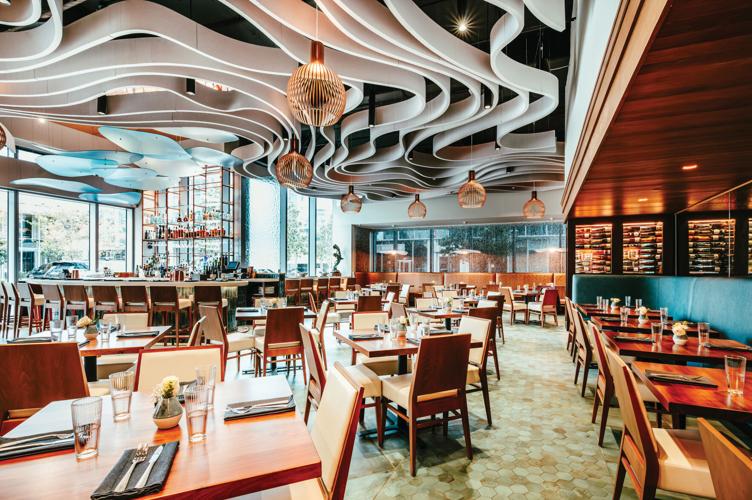
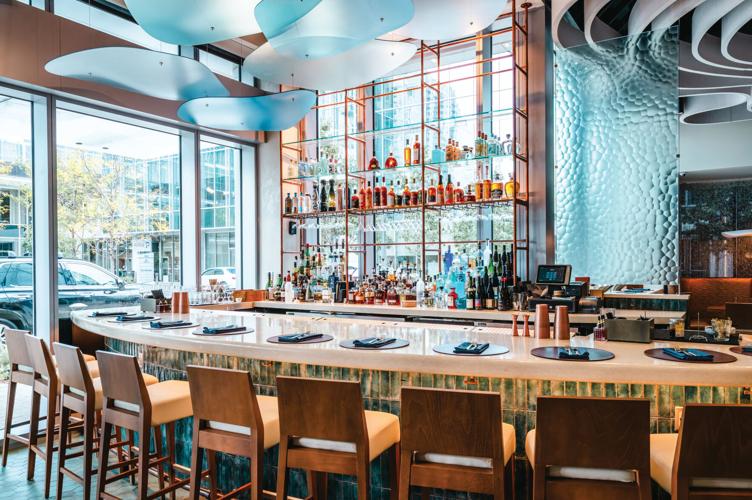
There are no fishing nets hanging from the ceiling and no anchors on the wall. The references are more nuanced. Two large abstract marine life paintings by well-known South Carolina artist Mike Williams flank the front door. The upscale restaurant features an oceanic blue-green and brown tile floor. The bar has copper accents and a white quartz top with a pearl finish. The curved white ceiling in the main part of the restaurant evokes the ebb and flow of the ocean. “It’s very organic, rather than orthogonal,” says Kim.

Letting the Outside In
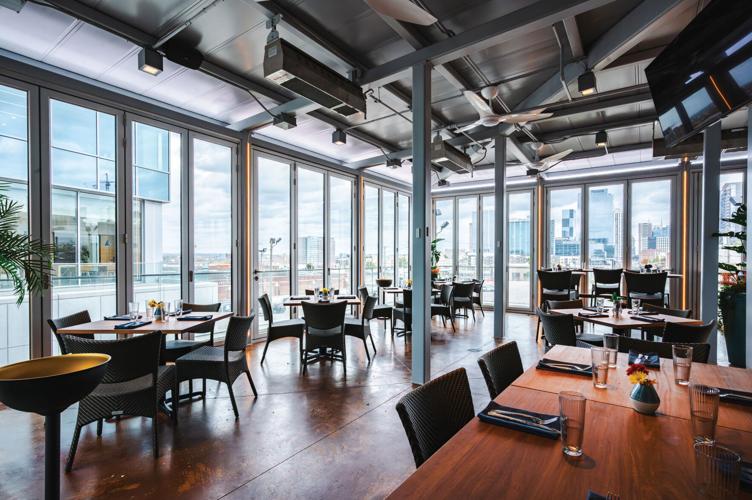
A popular spot is the year-round heated patio, which has a beautiful view at night. All the concrete and commercial buildings in midtown seemingly fade away, replaced by colorful, nighttime city lights. Floor-to-ceiling windows can be fully opened, weather permitting. Dark-brown rattan chairs surround light wood tables, and the room is dotted with plants. There’s a large-screen TV above the patio bar, so dinner out doesn’t mean missing a big game. As Vladimir says, “It’s fine dining, but relaxed fine dining.”

A Hall-way Apart
Halls Chophouse and Catch are separated by a rug-clad hallway. They even share staff on occasion, especially if a customer visiting one restaurant has a favorite server from the other. They share the Port Room, a private dining room that can be used for corporate meetings. “The design does capture components of both spaces,” says Kim. The dining room is a little darker than Catch, but features white mesh light fixtures with silver elements — which, Kim says, remind her of oysters.

Dinner Is Served
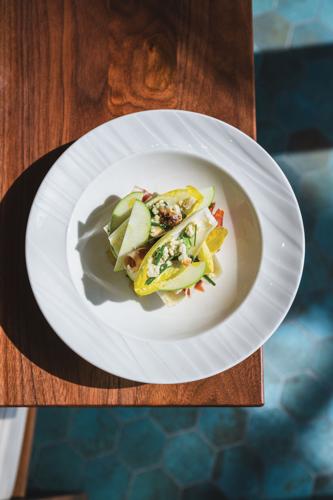
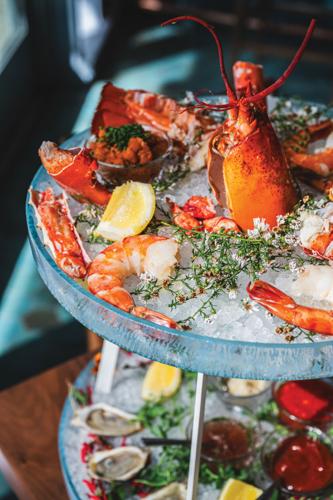
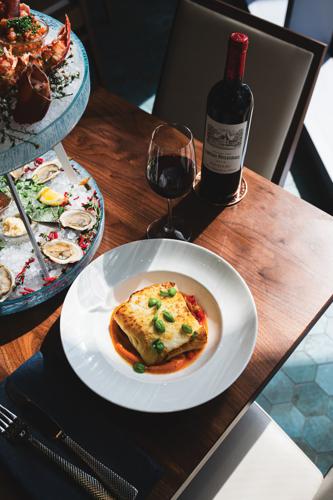
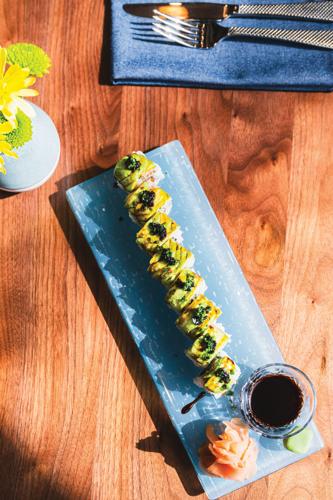
The restaurant, open for dinner every day except Sunday, includes a sampling of sushi rolls, raw dishes and delicacies, like pure Beluga caviar at $750 for 30 grams. Seafood entrées include a Maine lobster, a whole Icelandic sole carved tableside, and a seafood stew featuring Alaskan king crab, mussels, clams, prawns, calamari and halibut in a tomato-saffron broth. For those who prefer turf to surf, there’s a petite filet mignon, a Kansas City bone-in strip steak and Japanese Niigata Wagyu.


Commented
Sorry, there are no recent results for popular commented articles.